
If you conduct a general internet search for ‘Things to see and do in Korea’ or ‘Things not to miss in Korea’, guaranteed Andong Hahoe Folk Village will pop onto that list. It’s also possible that watching a mask dance might also make the cut. And as of this moment, I have done both.
I can indeed say, if you are visiting Korea, have an interest in folk culture or a total obsession with hanoks (like me, don’t be ashamed about it), and are near enough to make the trip to the village; do it.
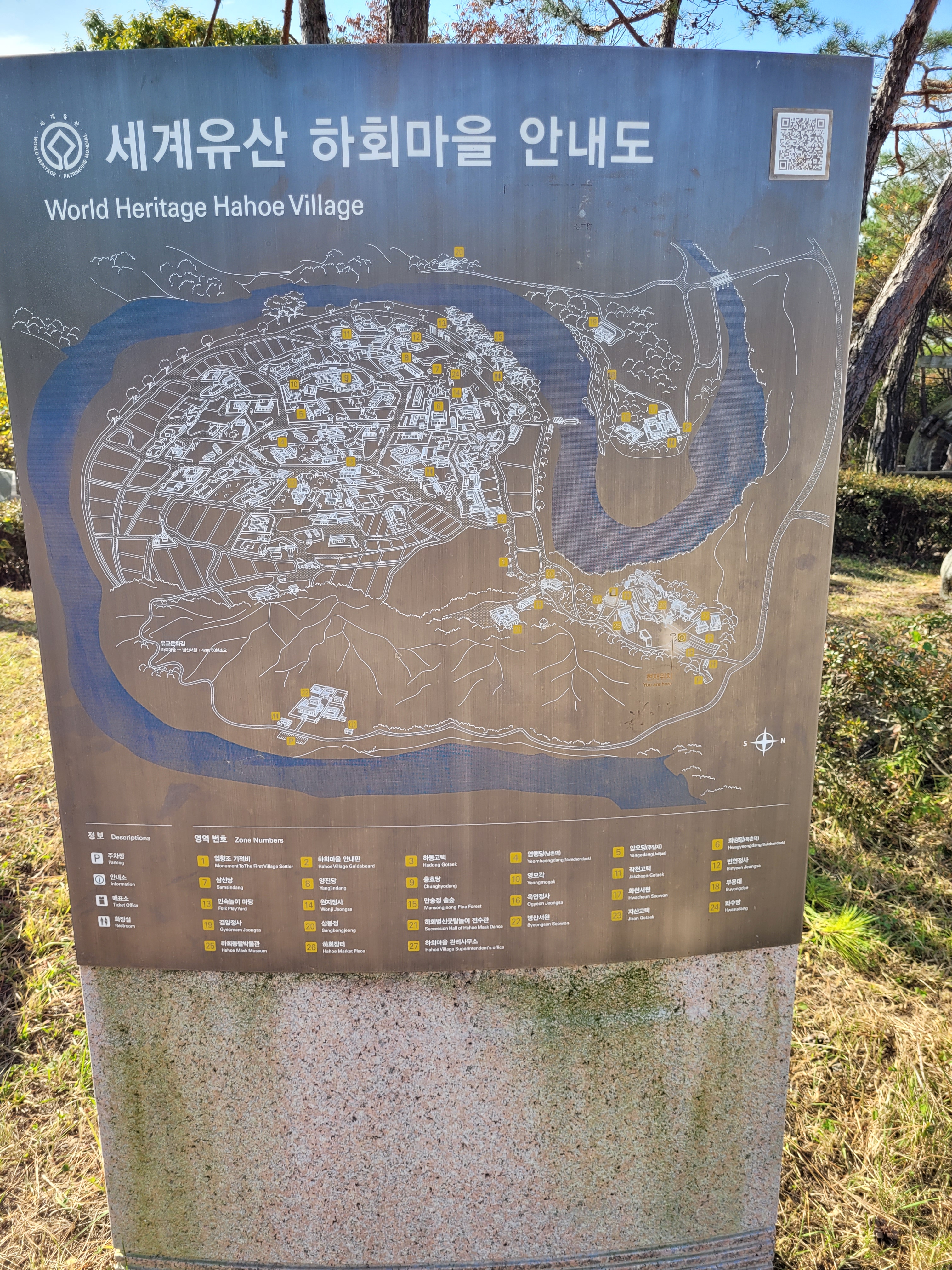
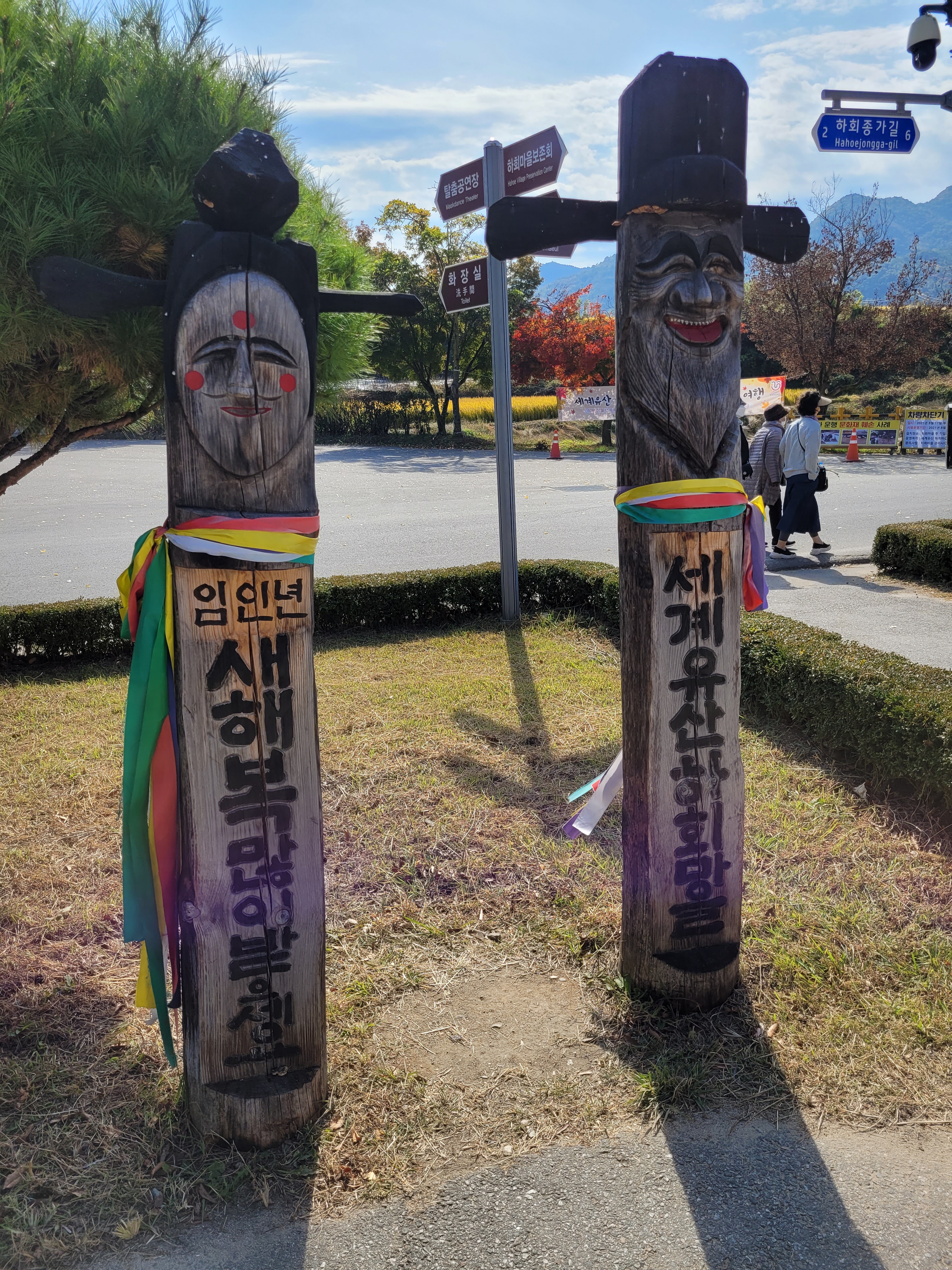
For those of you who have yet to hear of Andong Hahoe Folk Village, here’s the historical scoop…
The village was settled some 600 years ago by the Ryu family, and members of the family have lived there continuously since this time. There are two well-known brothers from the village – one went on to be a great Joseon Dynasty Confucian scholar and the other was Prime Minister during the Japanese invasion in the 1500’s. The village today still contains lived-in hanok houses, both of the thatched and tiled variety; so when you visit, you should be aware you are actually in a proper working village with residents. Additionally, players demonstrate the traditional Hahoe Byeolsingut Mask Dance Play, with a performance every day for visitors to watch. And if my description here doesn’t do it justice as to why you should visit, take it from the UNESCO people, who have deemed it a World Heritage Site and describe it as “one of the most representative historic clan villages in the Republic of Korea and reflects the distinctive aristocratic Confucian culture of the early part of the Joseon Dynasty (1392-1910)”.
So there you have it.
I’m simply going to break down aspects of the village into a few sections here for you, to tell you what I enjoyed most.
First, let’s kick it off with the houses. I want to live in a hanok so badly it hurts. They are the most beautiful and calming buildings to me. So undoubtedly I walked the village several times and probably took about 2951 photos just of hanoks.
Here’s just a few…
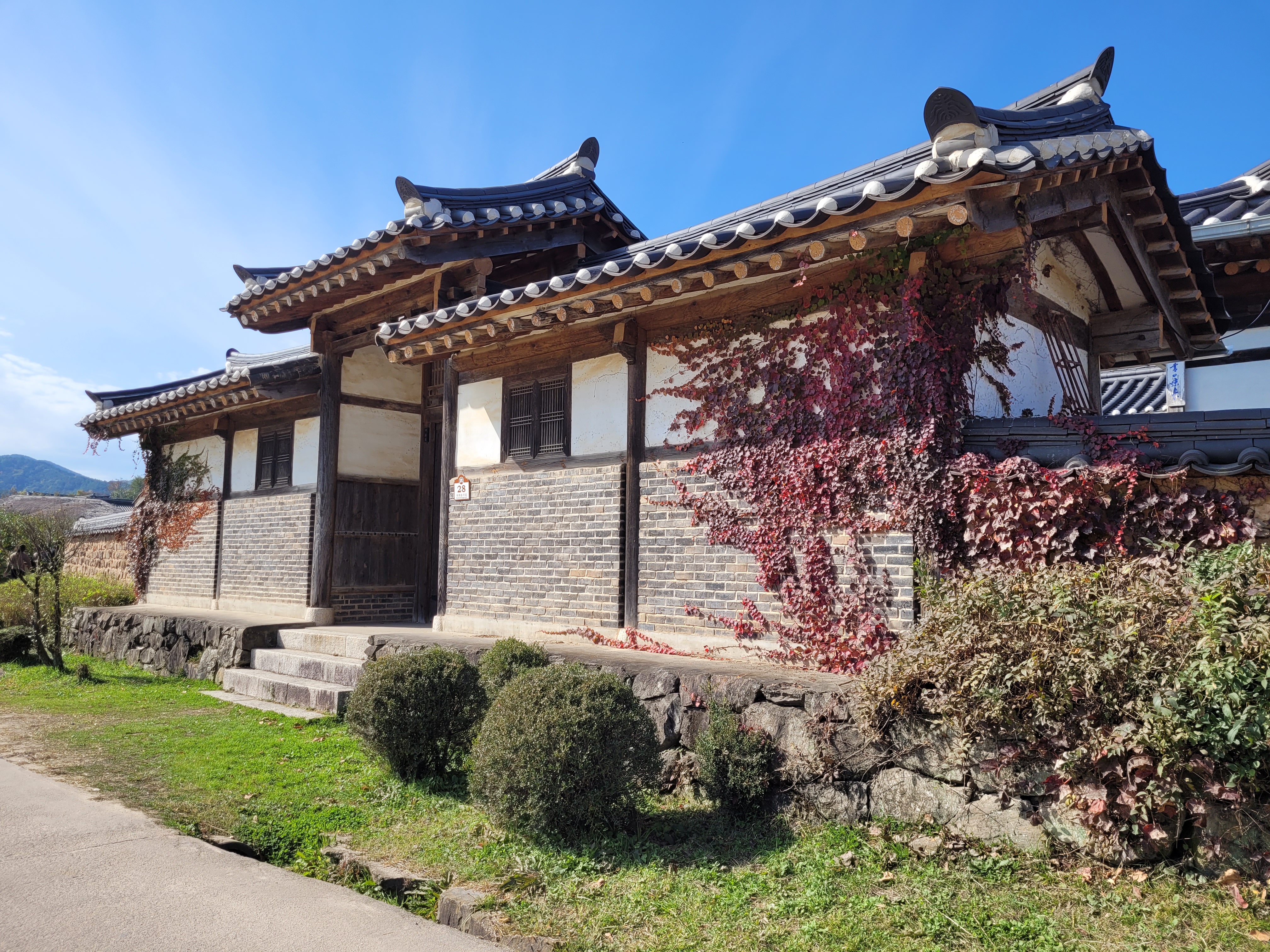
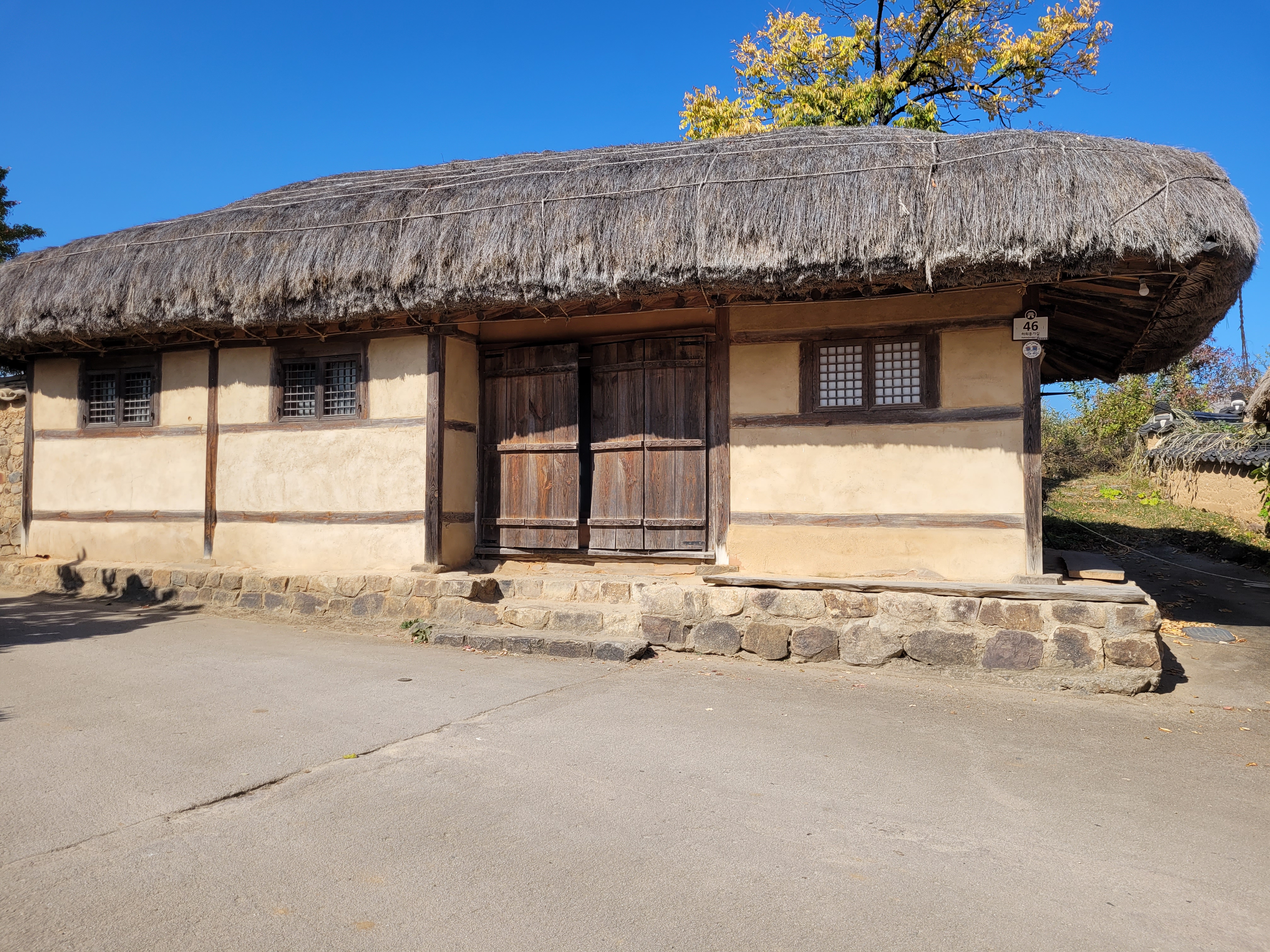
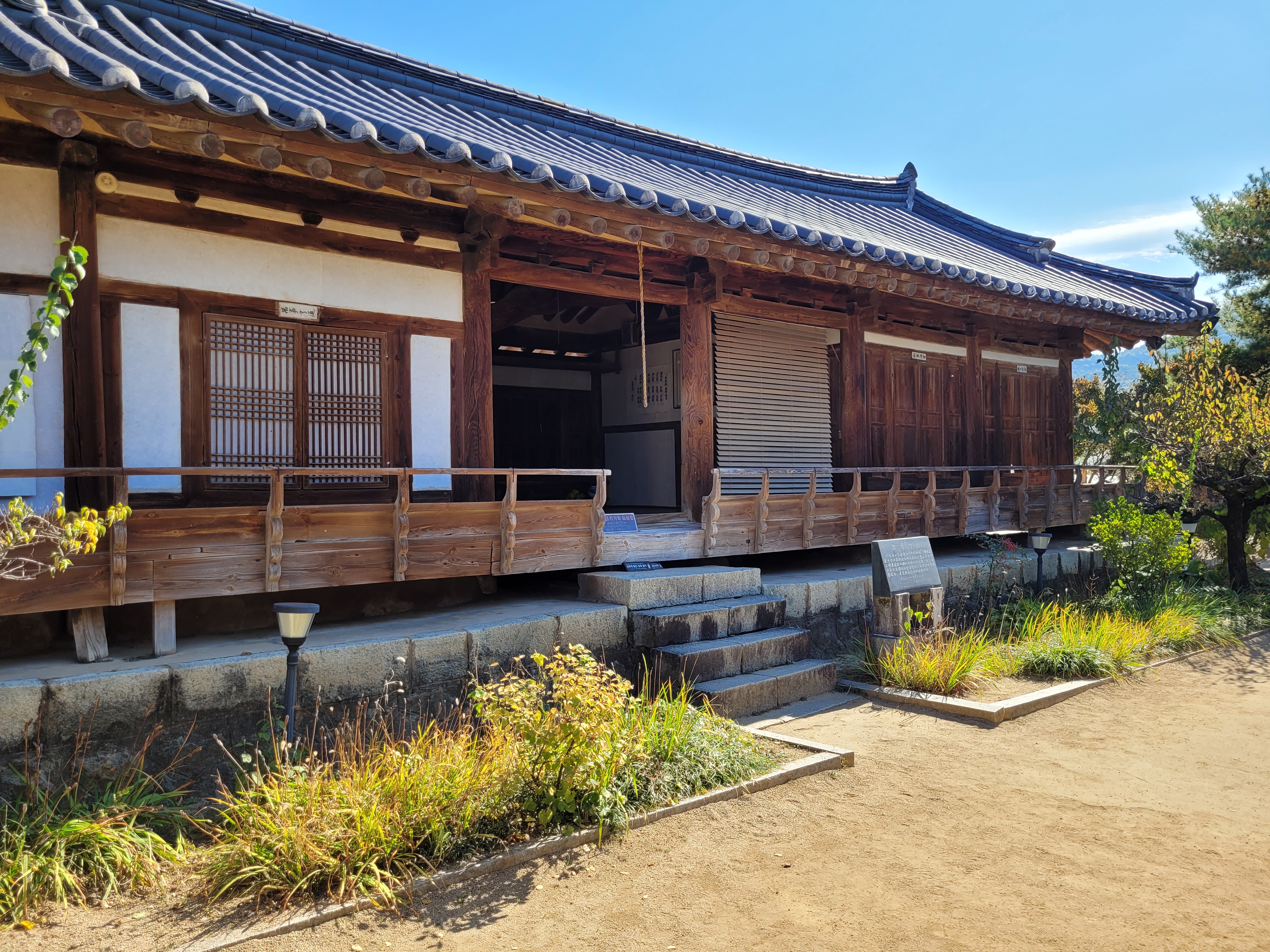
There was actually a new hanok being built and one being repaired as part of it had caught fire (not sure if that was human error or something like a lightening strike). I took tons of pictures from every angle possible of the one being built and then immediately sent them all to Flea in England to wake him up and get his assurance that he would be able to build me one on my return using just the photos I had taken.
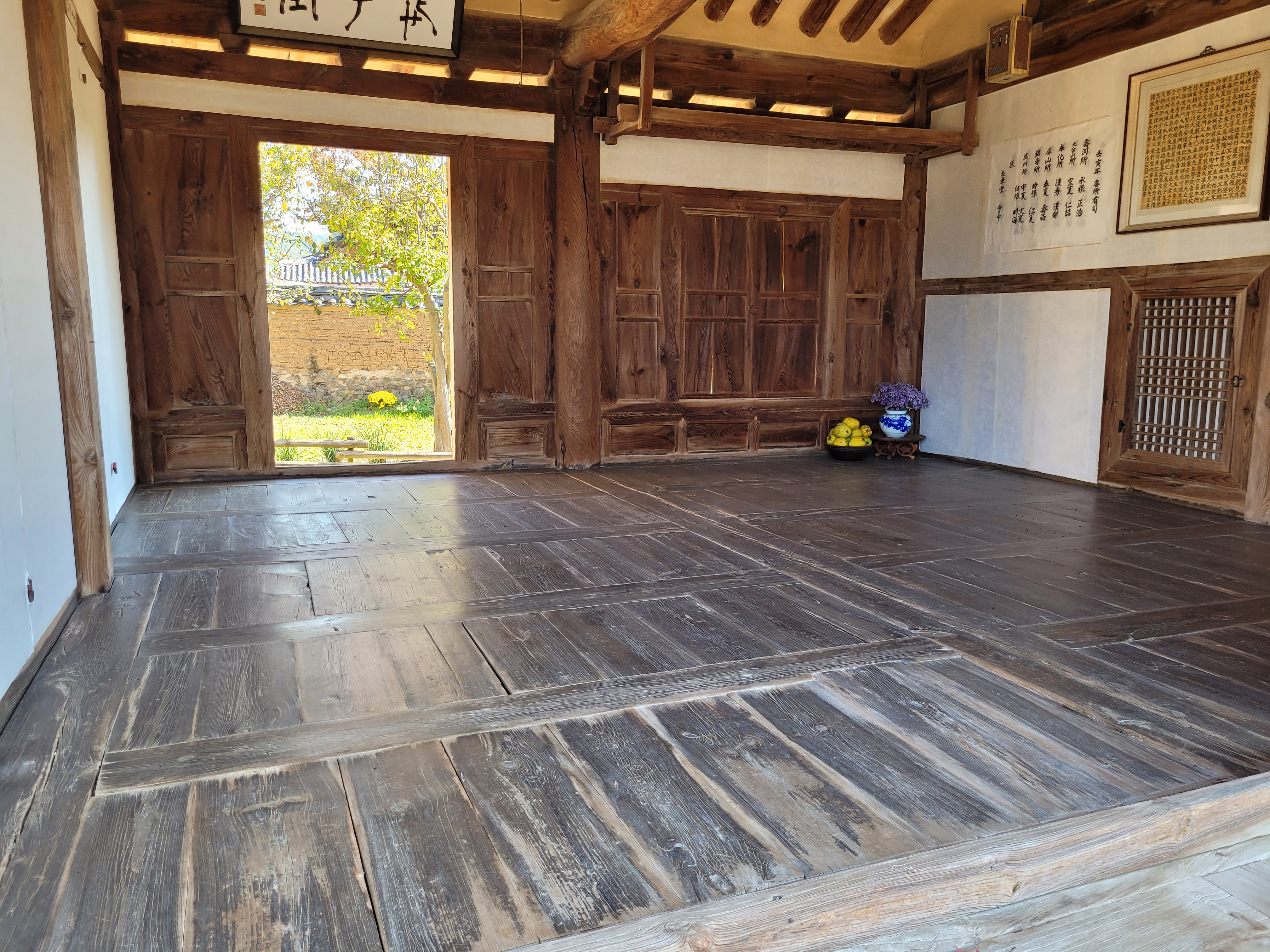
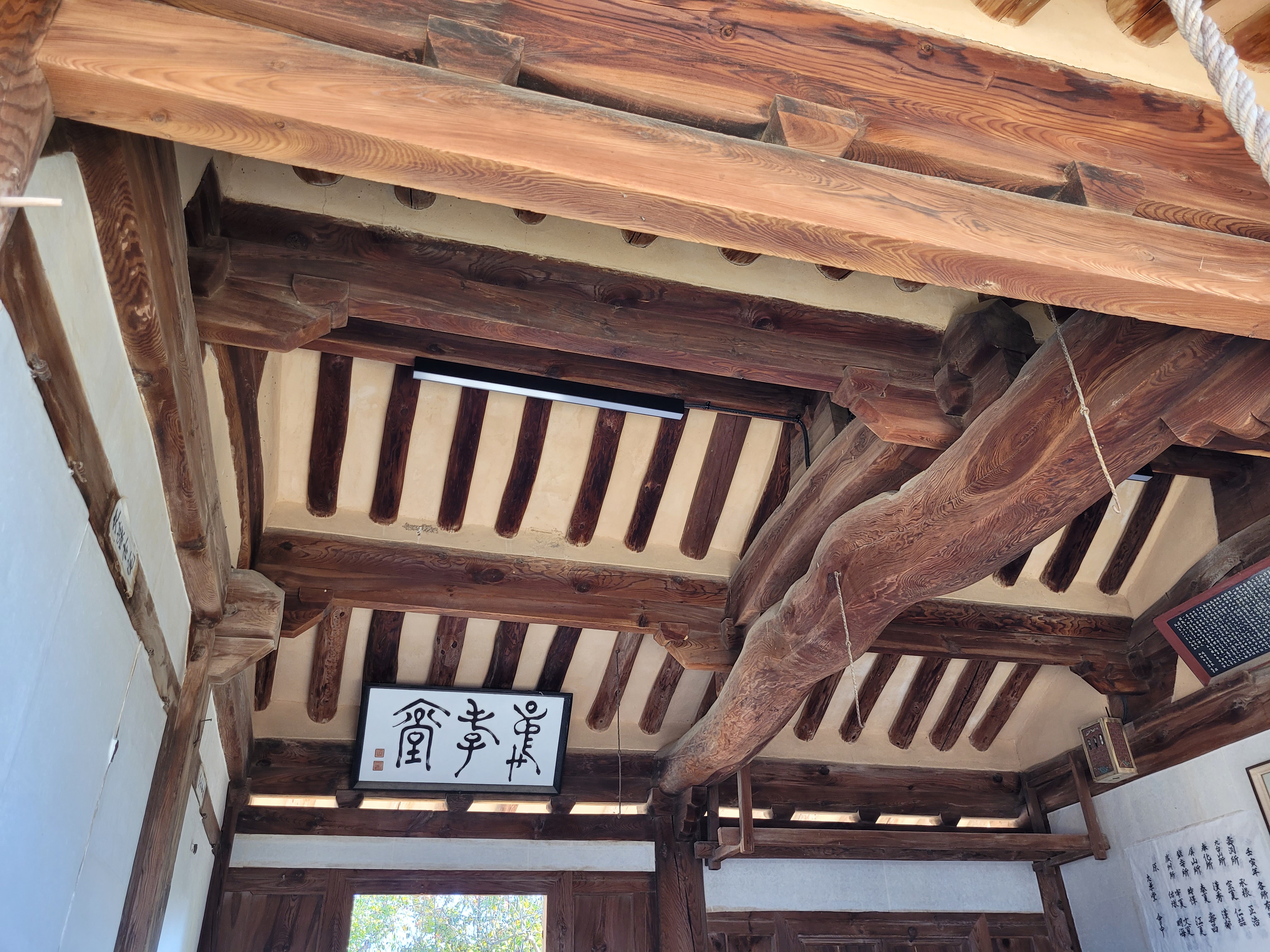
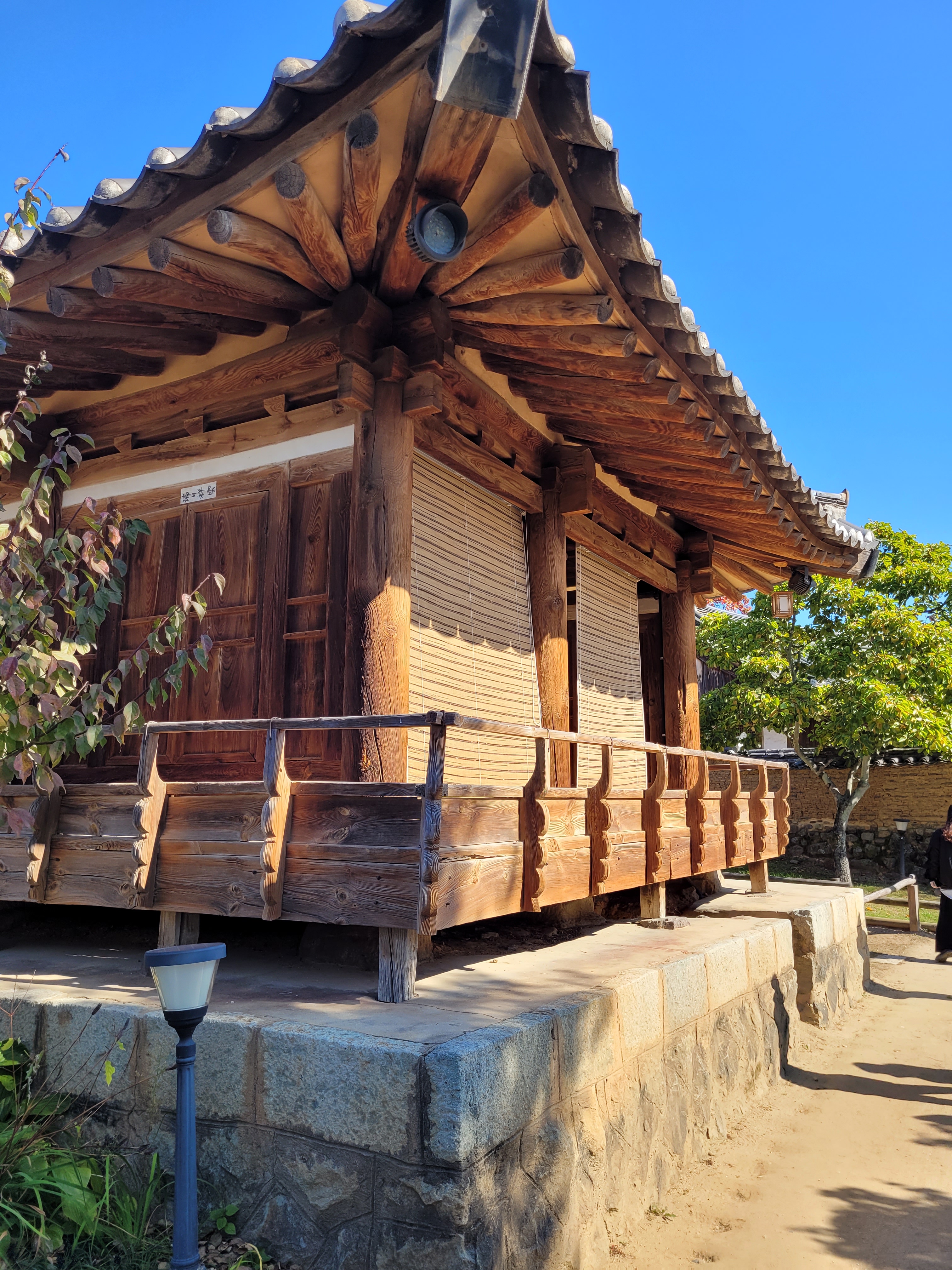
What was even nicer than simply looking at the buildings, was to see them in use; with people’s belongings dotted around, the table on the porch ready for dining, and the gardens all planted out.

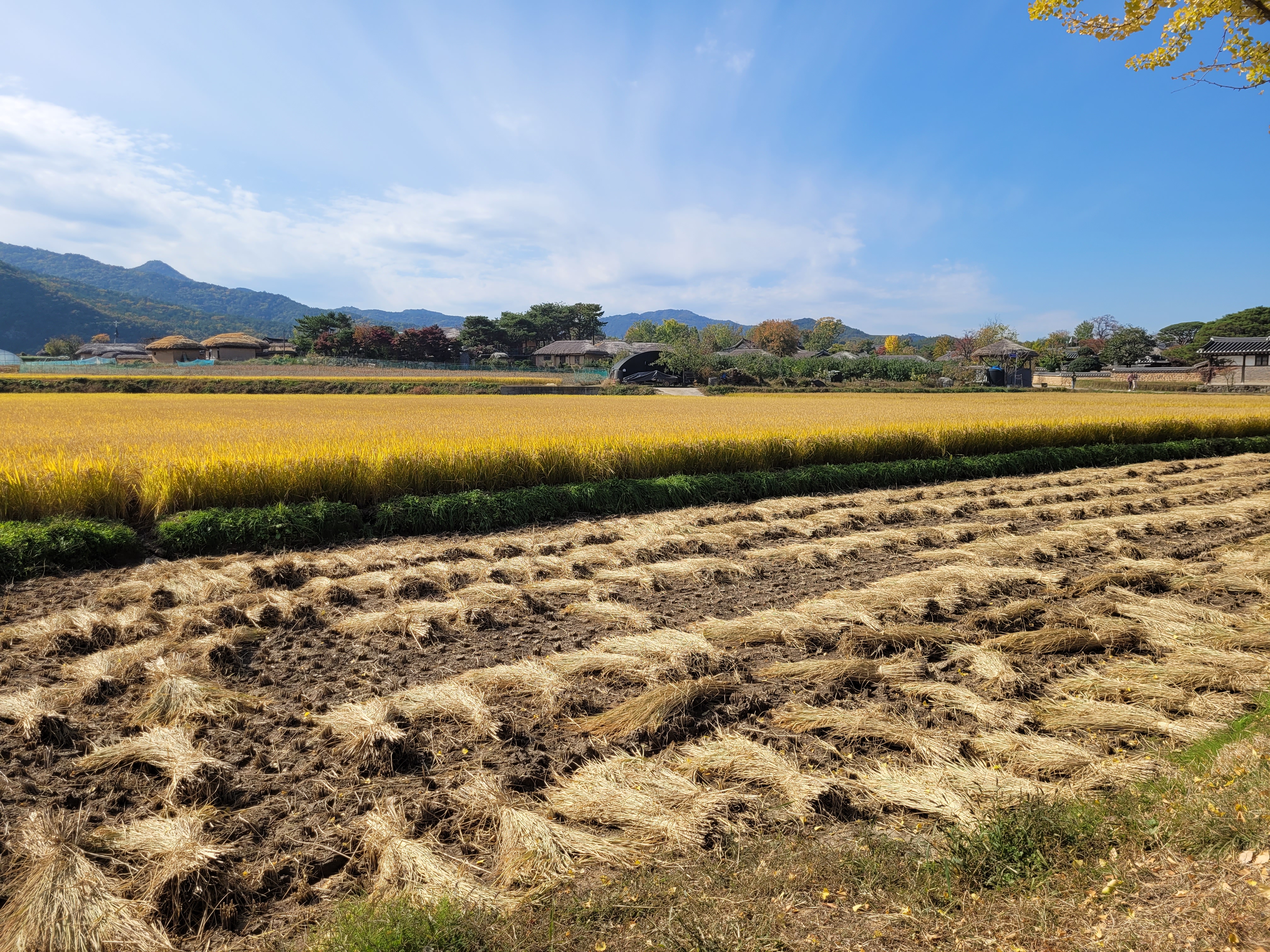
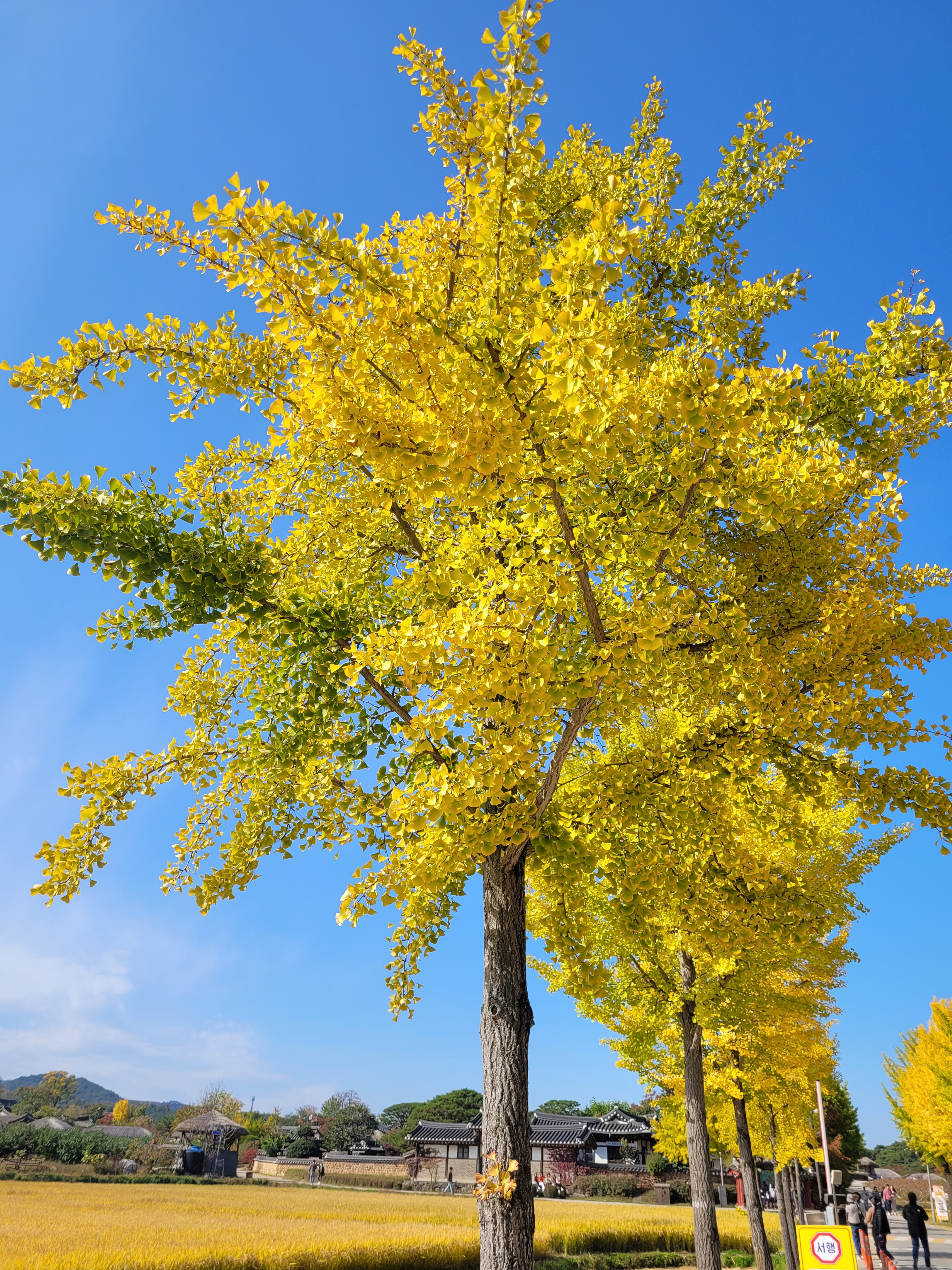
Next to the houses, the trees and general landscape were my favourite things. The whole village is scattered with ginko trees and I have hit them at just the right time for the colour change. I simply cannot get over how vivid the yellow of the leaves is, it’s startling to see and does make you gasp in wonder.
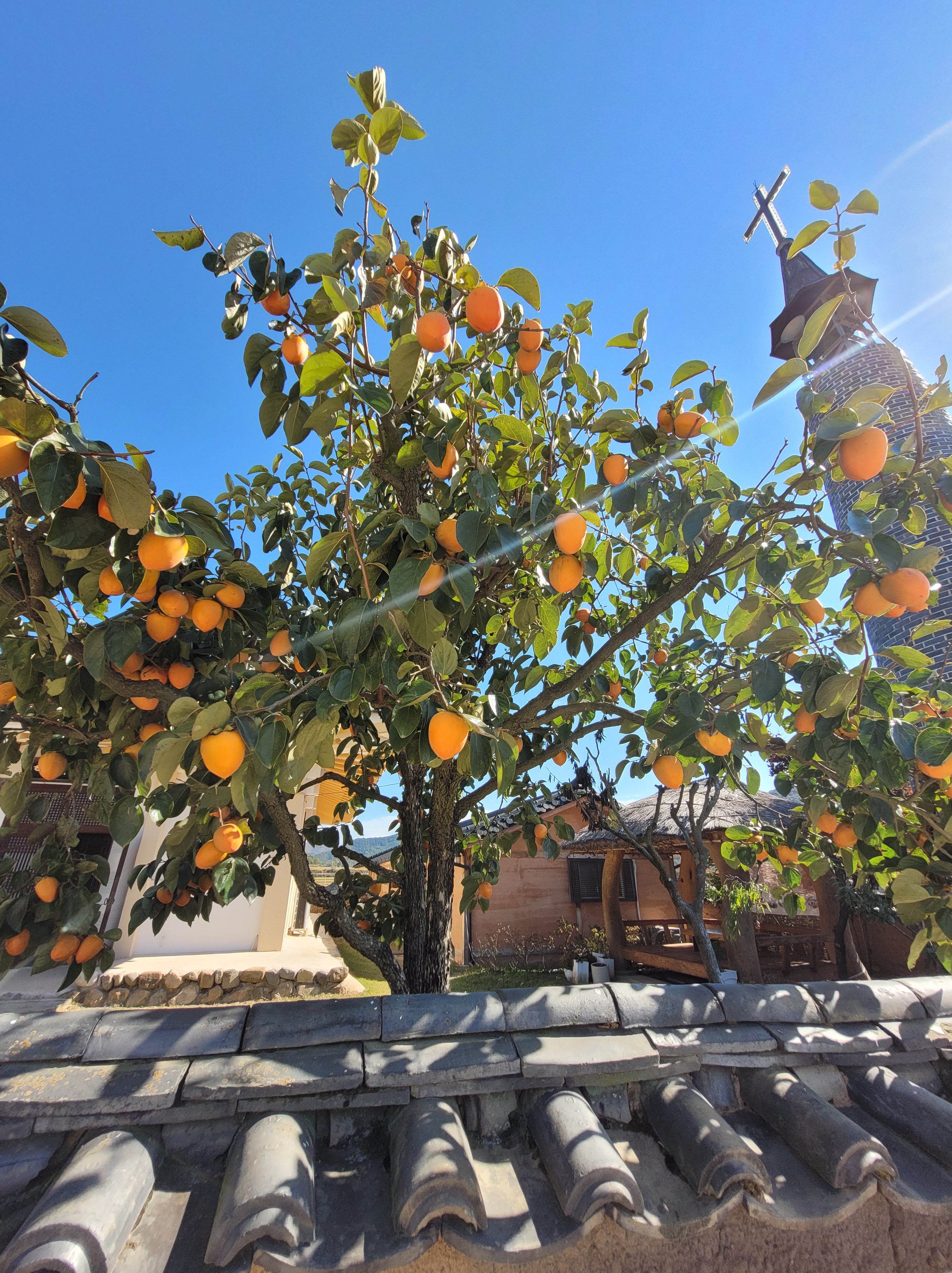
I am also becoming increasingly fond of persimmon trees. The fruits when ripe are actually red, but most I have seen hanging are still an intense orange colour. They also interest me because the trees I’ve spotted always seem so sparse of both leaves and fruit, which I find quite odd. I have recently been watching a drama (If You Wish Upon Me – Ji Chang Wook looking particularly fine in this I have to say) and an old man in the show wanted to see his persimmon tree bearing fruit one last time before he dies, and so good old JCW goes out and makes fake ones for the tree, but when I saw it I thought how silly because he only puts a handful on the tree; but in reality I can see this is actually exactly correct, cause that’s what I have now observed myself. Funny, the things we learn.
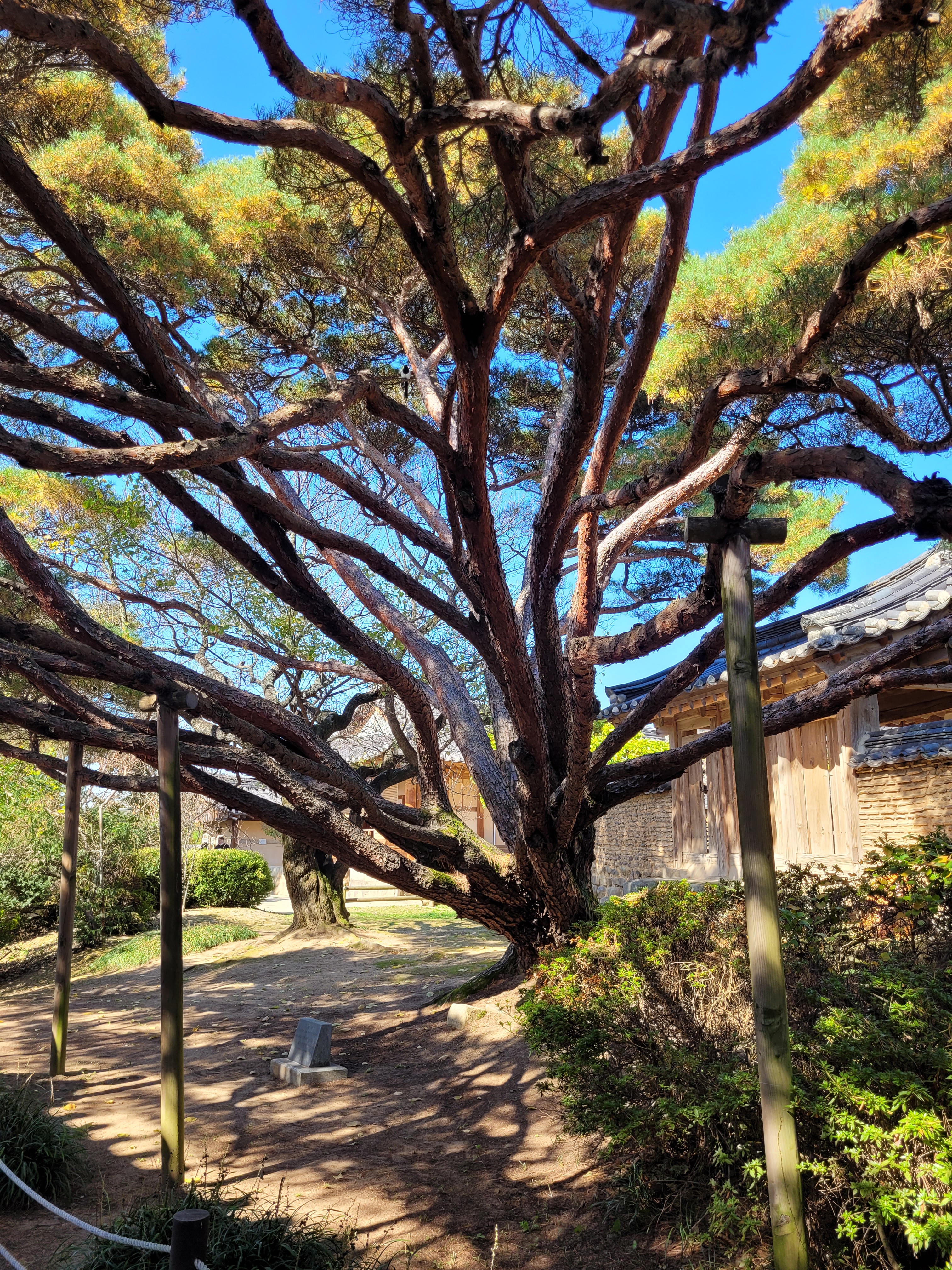
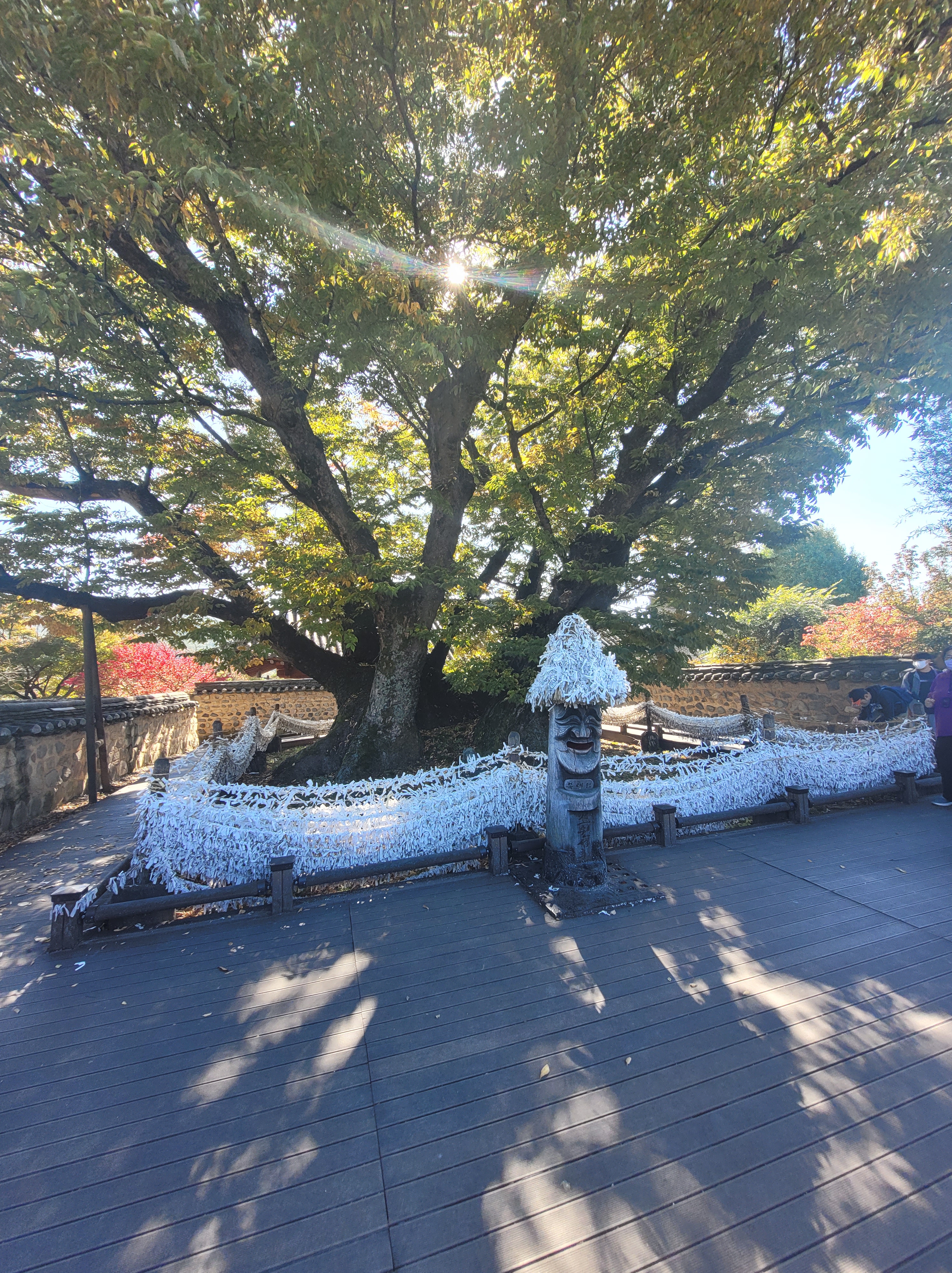
The last group of trees are basically any old ones, or those that people deem to have special properties; for instance, trees that are thought to contain a god and therefore act as village guardians. One of the trees in this village is thought to grant wishes, so people write theirs down and tie them around the tree. Yup, I did that too. I’m happy for any help I can get in life.
And finally, the mask dance. I’m going to try and explain this here, but I might be a little bit off so bear with me. As the name suggests, traditional Korean mask dancing is a form of drama or theatre usually containing singing and dancing and performed while wearing some type of mask. Different provinces have their own type of dance with a specific name, story, and masks to be worn. There are some common features that may run through the different dances however, an example of this is that most dances will contain stories featuring noblemen, monks, and old women and most of these stories will contain satire where these characters are ridiculed in some way.
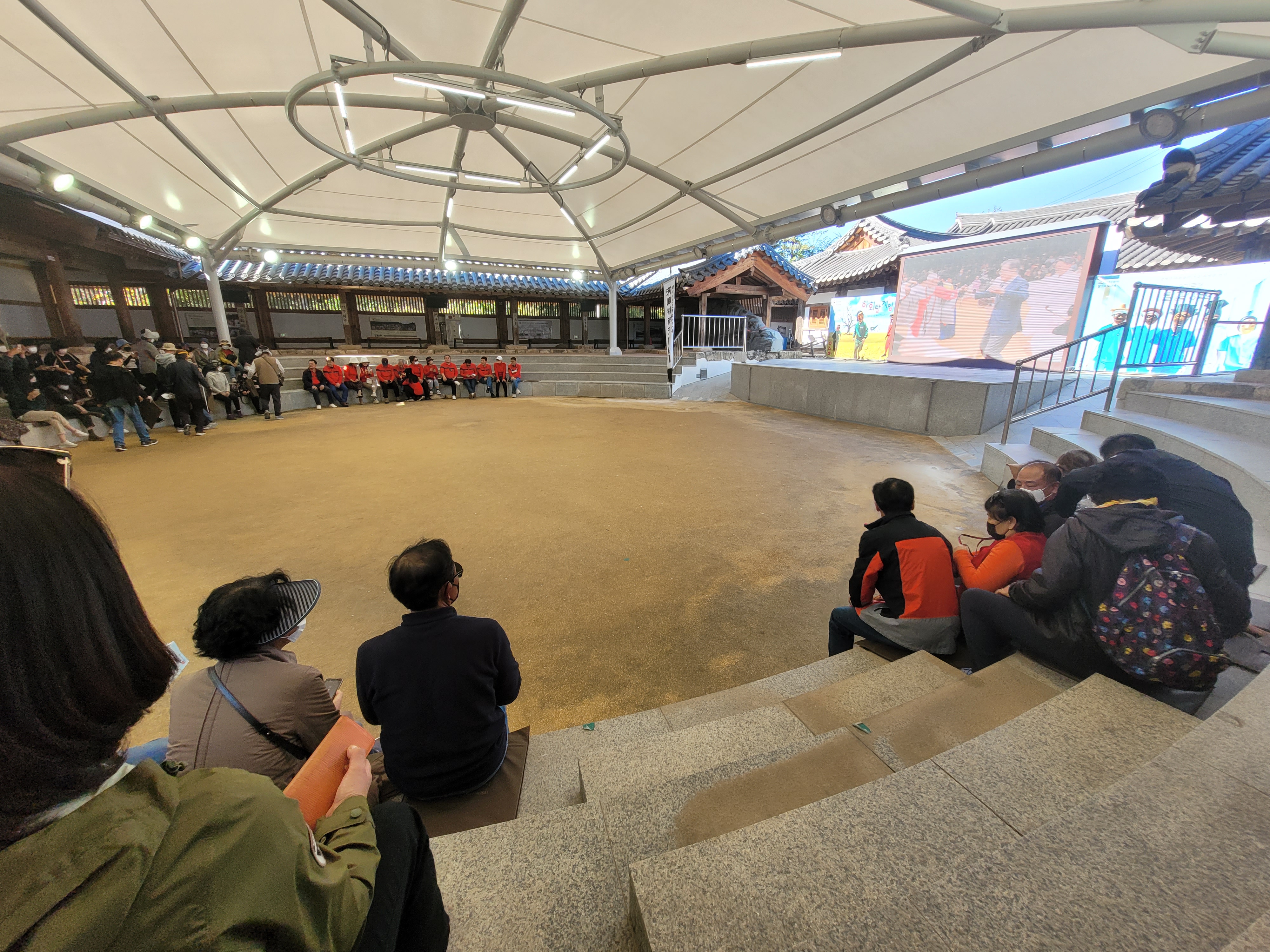
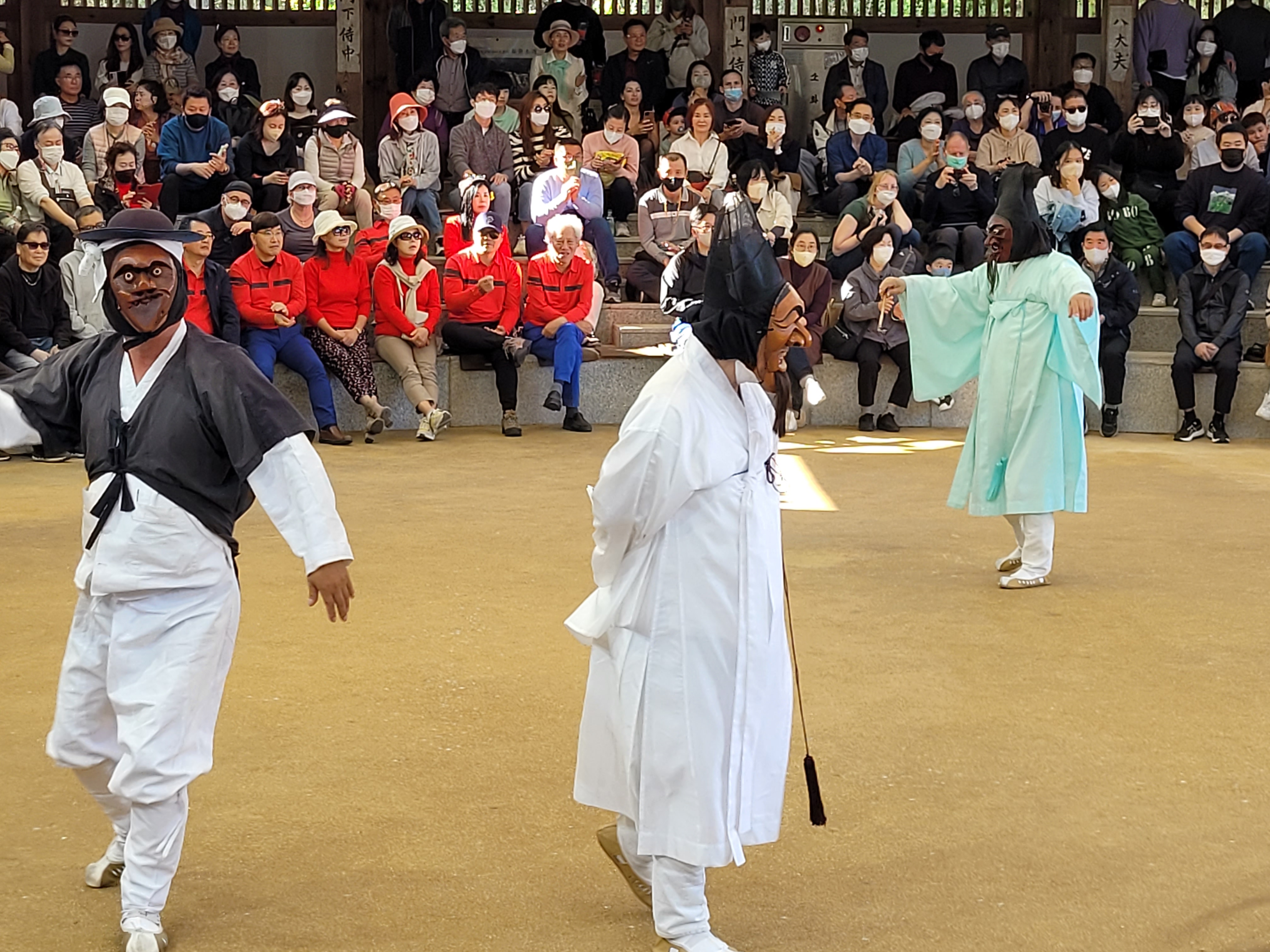
The dance at Andong was interesting to watch (both for the performance and the crowd itself), but following the story was a bit of a disjointed process, so you just have to try your best.
To start with, there is a screen in the theatre that begins by telling a bit of a backstory (with basic English and Japanese/Chinese subtitles) and this screen also provides the subtitles for the other bits spoken later in the dance. If I followed it right, the general story setting seemed to suggest of a legend or folk tale from long ago in the village when there was a drought, or things in the village were not growing or dying, and one of the chaps had a dream where if he was to lock himself away and carve 14 (I think) specific masks, then the curse or bad luck of the village would be lifted; but it was vital no-one looked at him or watched him do this. Right, got that bit fine.
Then followed lots of seemingly random short stories that got a little strange and lost on me a bit; tales featuring a butcher chopping off a bulls testicles and trying to sell them to a nobleman and a scholar teasing them about their virility, a monk watching a pretty lady pee in the woods and then try to convince her to run off and ‘play’ with him, an old lady with some sort of issue with her husband that led to a lot of complaining about him eating all the fish…and then the conclusion which – spoiler alert – shows the young girl who is in love with the chap carving the masks missing him so much she pokes a hole in the paper doorway of his house and peers through…which kills him dead on the spot. As a result there are only 11 masks that got made (I think) and the other designs were lost to history. Or something along those lines.
Traditionally, the mask dance was to be performed in January at the beginning of the lunar New Year as a shamanistic/exorcism rite, to pray for peace and good harvest. But obviously now you can watch this every day at the village.
The dance, while obviously a bit lost on me as a foreigner with not enough Korean to follow the spoken and singing bit and the subtitles only providing the bare minimum needing to catch the gist of the scenes, was still well worth spending the hour or so watching. The crowd got into the drumming and music, there was lots of clapping and laughter, and obviously some lewd humour going on that they really enjoyed. The players were very animated and the masks both creative and quite disturbing all in one go.
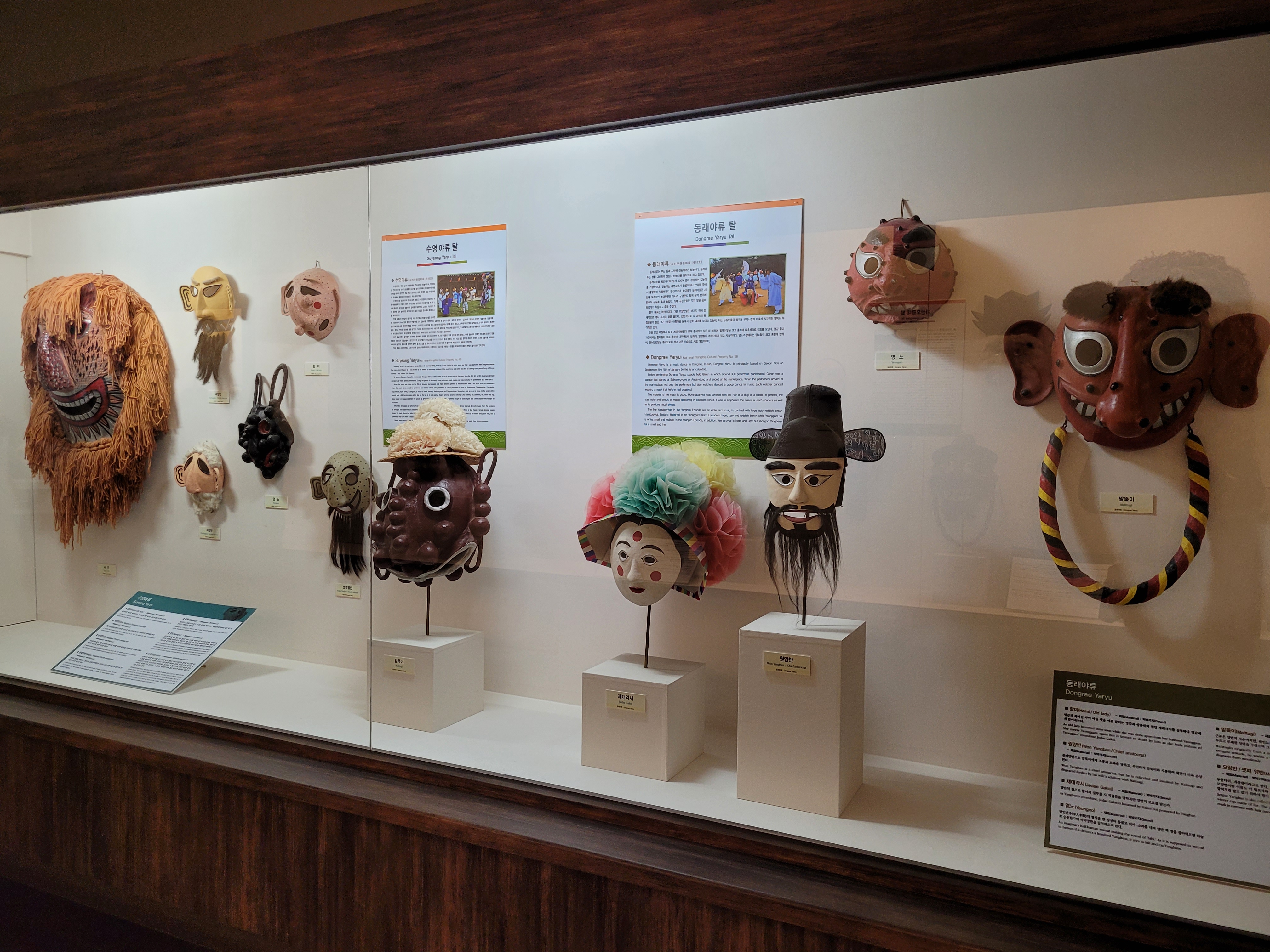
The icing on the cake after watching the dance was being able to pop into the mask museum on site, where there are fabulous and fascinating displays of masks from various regions of Korea with explanations as to their use, as well as masks from other countries as well making the museum a full, enriching, and highly recommended experience.
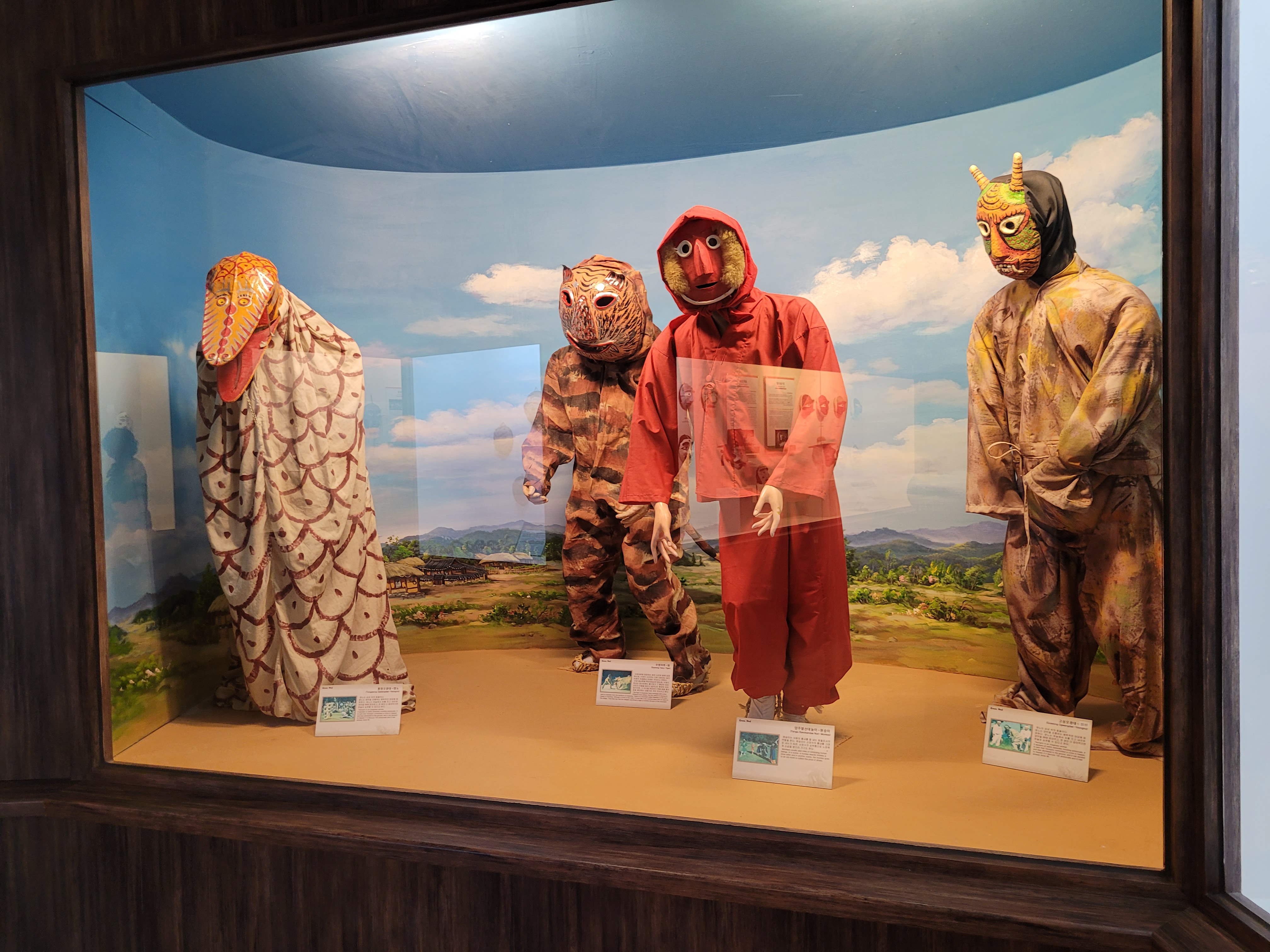
So that was my day at the Andong Hahoe Folk Village.
Oh, apart from the fact I mustered my courage and asked a market stall vendor for something new to try:
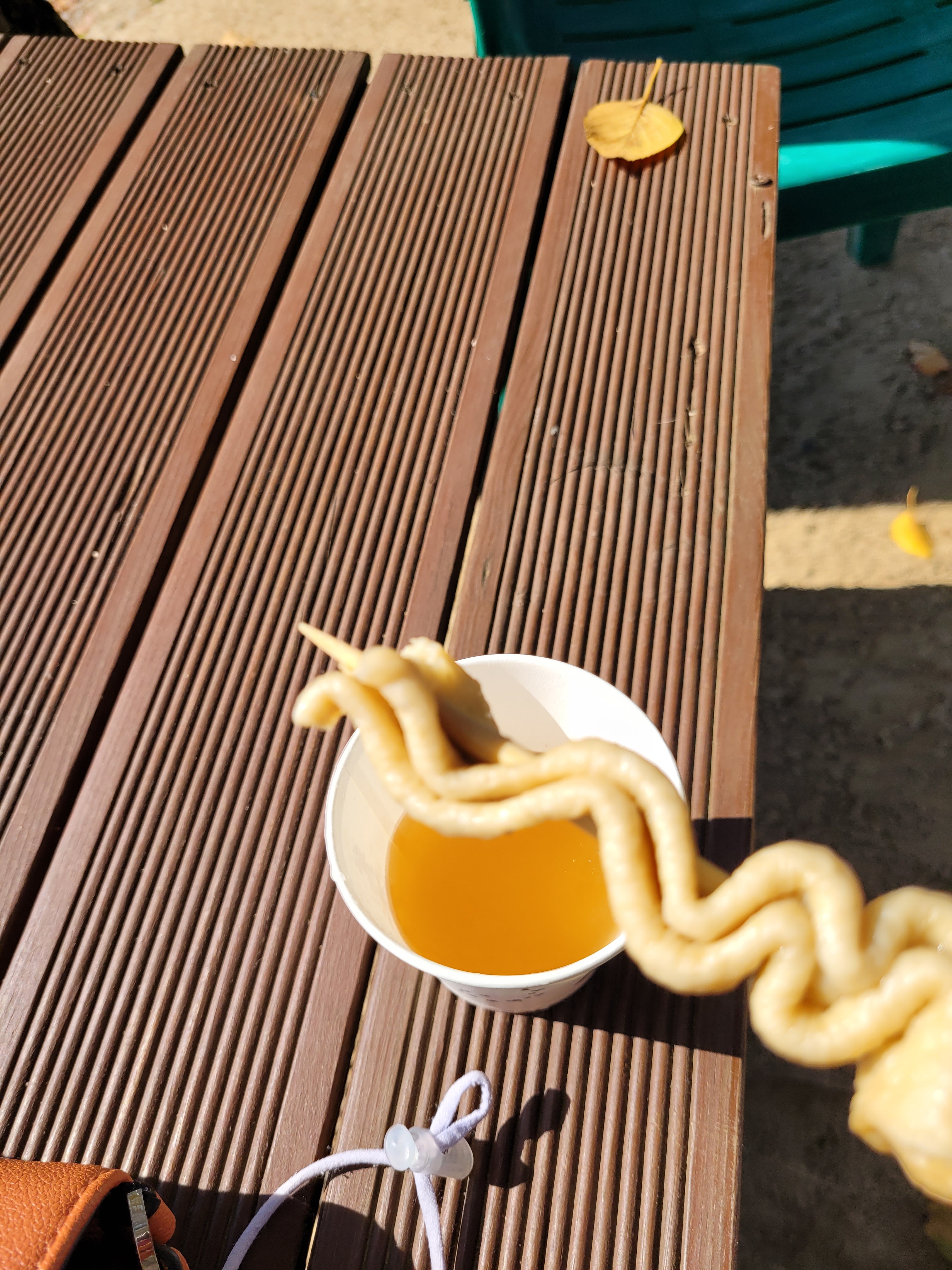
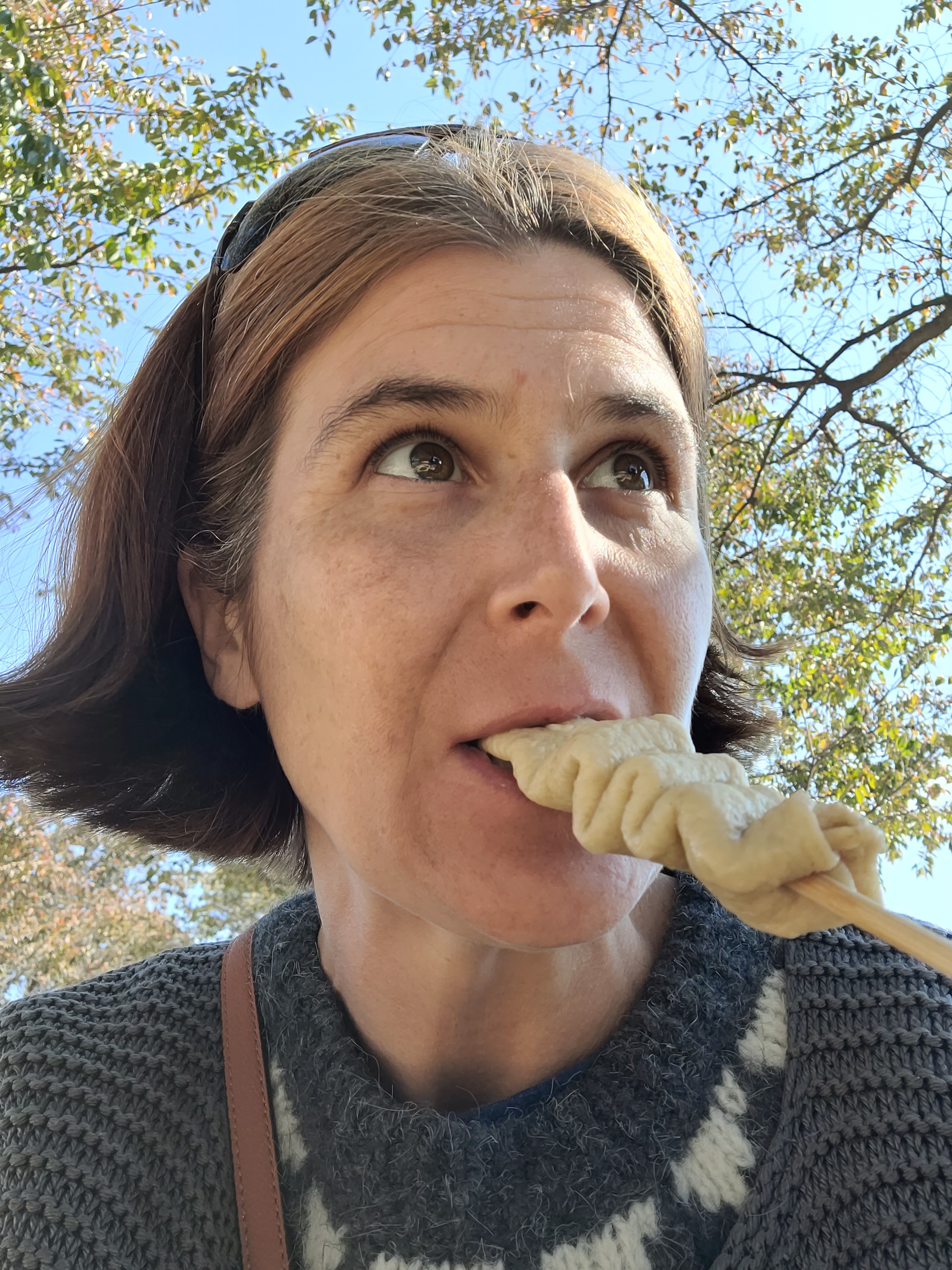
This is eomuk. It’s a fish cake on a stick. Here in Korea, fish cake looks very different to what you might expect in England from your local chippy. I think it is made of bits of minced fish mixed with eggs and flour and then flattened into thin strips. You find fish cake in lots of dishes here, I’ve seen it mostly in soup and also sold by pretty much every market vendor. But I’ve never been brave enough to ask for one.
Today, with no-one else around, I googled the name of what I was asking for and then approached the lady for one. They are usually kept warm in a great big pot of liquid soup broth, and just plucked out when needed. Grasping my stick I sidled off to a nearby bench and proceeded to munch. I really like fishcake I have learned. I never would have thought it, because in general I am not a fishy person, I don’t like the strong taste of fish, a bit of cod is mostly what I’ll stretch too. But as I am discovering with a lot of foods here, I am actually more open to new and different flavours than I would have imagined and am enjoying my culinary journey.
As I was chewing away happily (yes, the texture is a bit chewy and stretchy), the vendor approached me holding a cup. Ahh, it turns out that usually you eat the sticks at the stall, dipping in sauce (probably soy or chilli-based), and drinking a cup of the soup (I have since watched others do this – it’s all a learning experience!). It was nice of her to bring me the soup, obviously noting how clueless I was, and as I enjoyed the skewer so much, I went back for a second.
And there, that really was my day.
The only other things to note down for you today, I am staying in Andong city proper, in the downtown.
I appear to be staying in a ‘Love Motel’, which are really quite common in Korea, and if you are wondering how I know, well, these were the welcome gifts in my room…
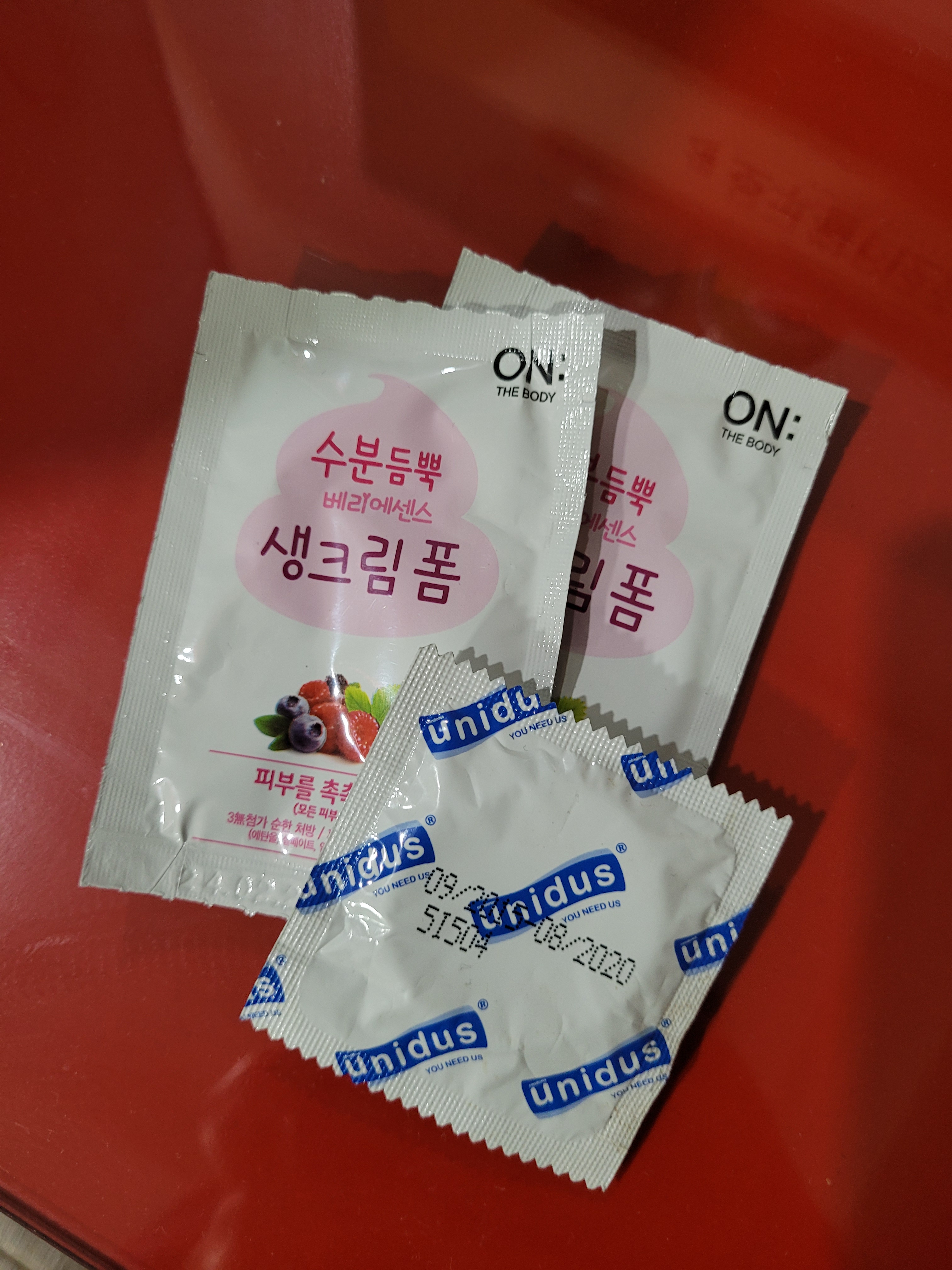
Having said that, it’s a great room. It’s huge. It’s actually really quiet. I have a window with a view. I seem to be the only person on my floor. I have also seen for the first time a lift that doesn’t have a number 4 floor, but an ‘F’ to select instead (I believe this is something to do with Hanja characters and the number 4 sounding like the same word as death).
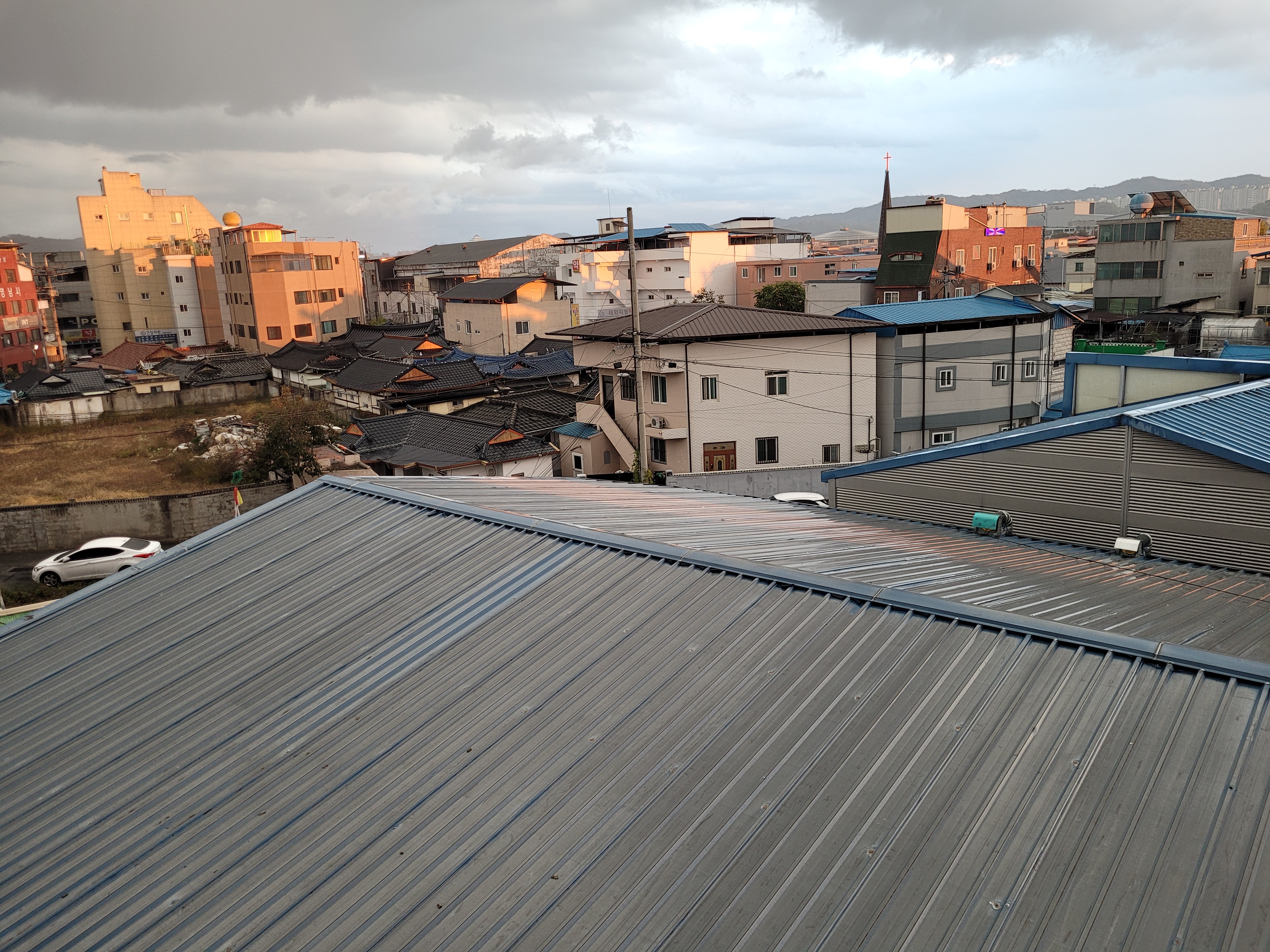
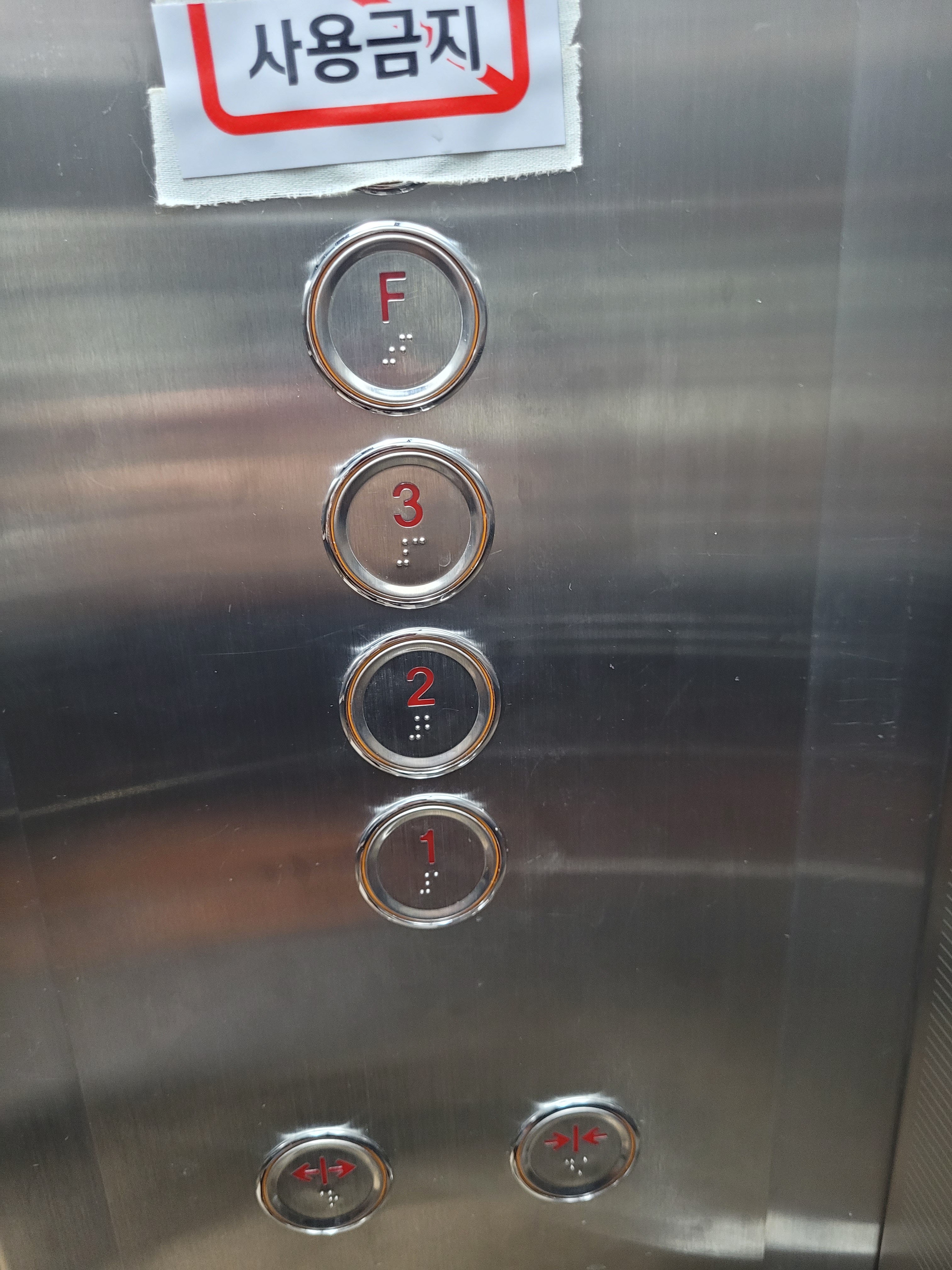
And to top it off, I have discovered that I have both a pizza and a chicken takeaway within walking distance and guess what…

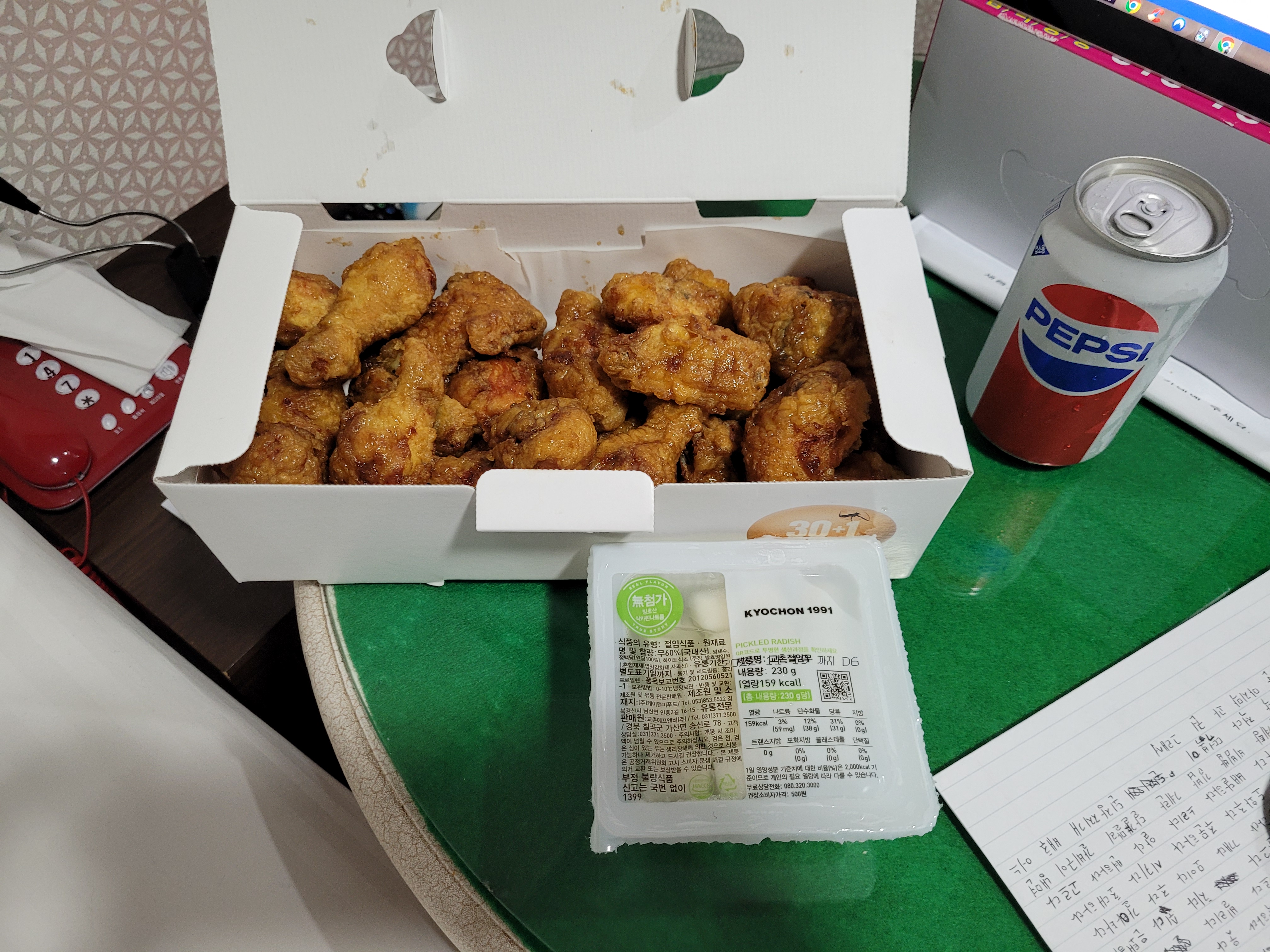
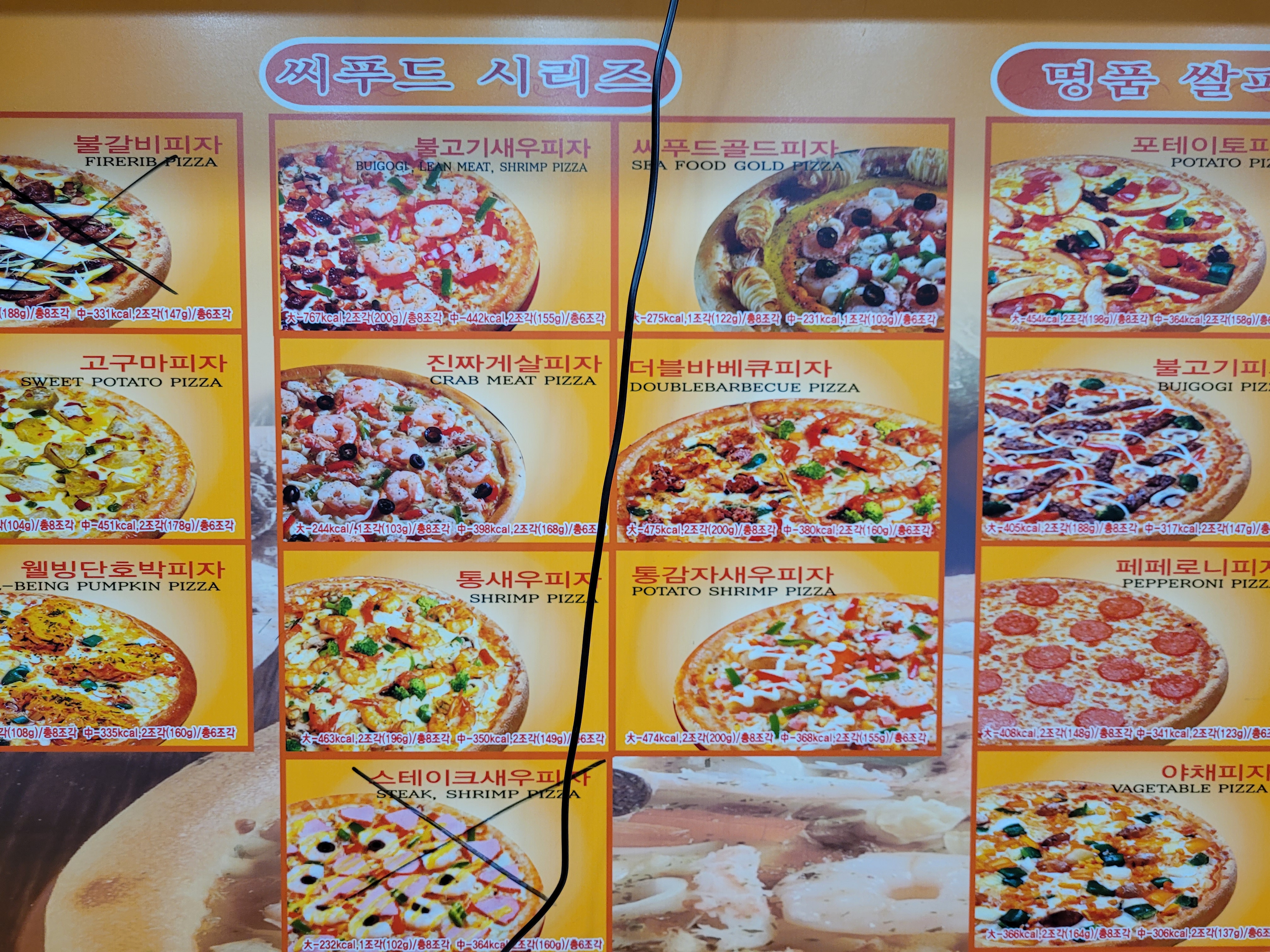
And I will leave you today with this thought…what would you order?
 Kerry's Korean Quest
I want the pizza you had! It looks sooooo good! Couldn’t tell which it might be but otherwise one of the shrimp pies.
LikeLiked by 1 person
Pizza was awesome. Won’t deny it, scoffed the whole thing in one sitting.
LikeLike
Does AJ know she’ll be having a hanok instead of Gary in her garden? Laughed at “a monk watching a pretty lady pee in the woods and then try to convince her to run off and ‘play’ with him”, could just hear you telling me about it 🤣🤣
LikeLiked by 1 person
That’s one for the conversation log at Bento then…
LikeLike