
Just because I know you are all at the edge of your seats, let’s start with the important stuff – yes, I found the grocery store. Let us all celebrate for I have found the elusive food shop and now have eggs, tuna, Pocky and more packeted porridge that is probably good for someone.
My Korean friend’s advice came good and I have now wandered the halls of Homeplus which I suppose could be compared to a Tesco or Sainsburys, with normal home goods such as cleaning supplies, shampoos, pet food and the like as well as general food items.
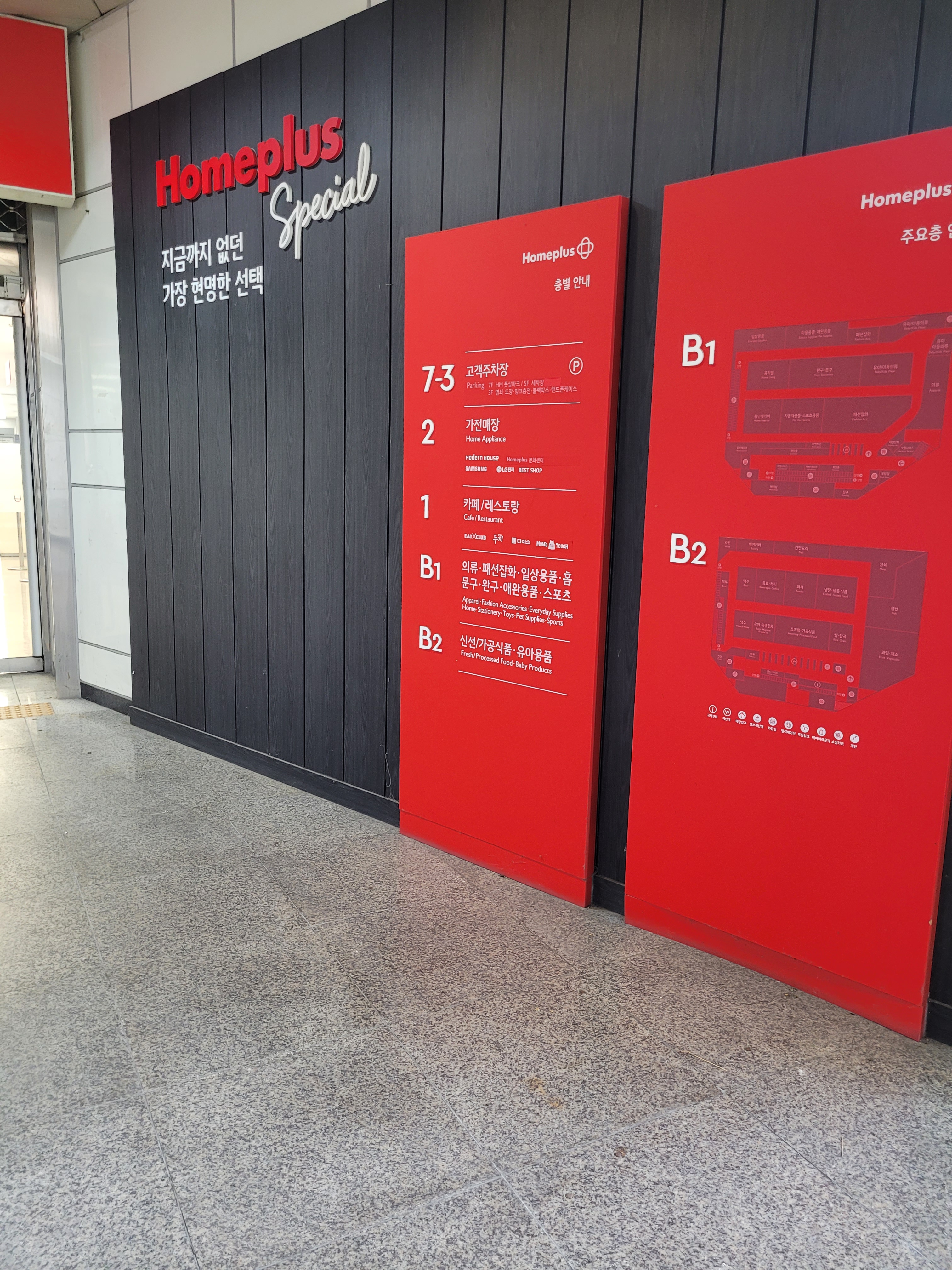
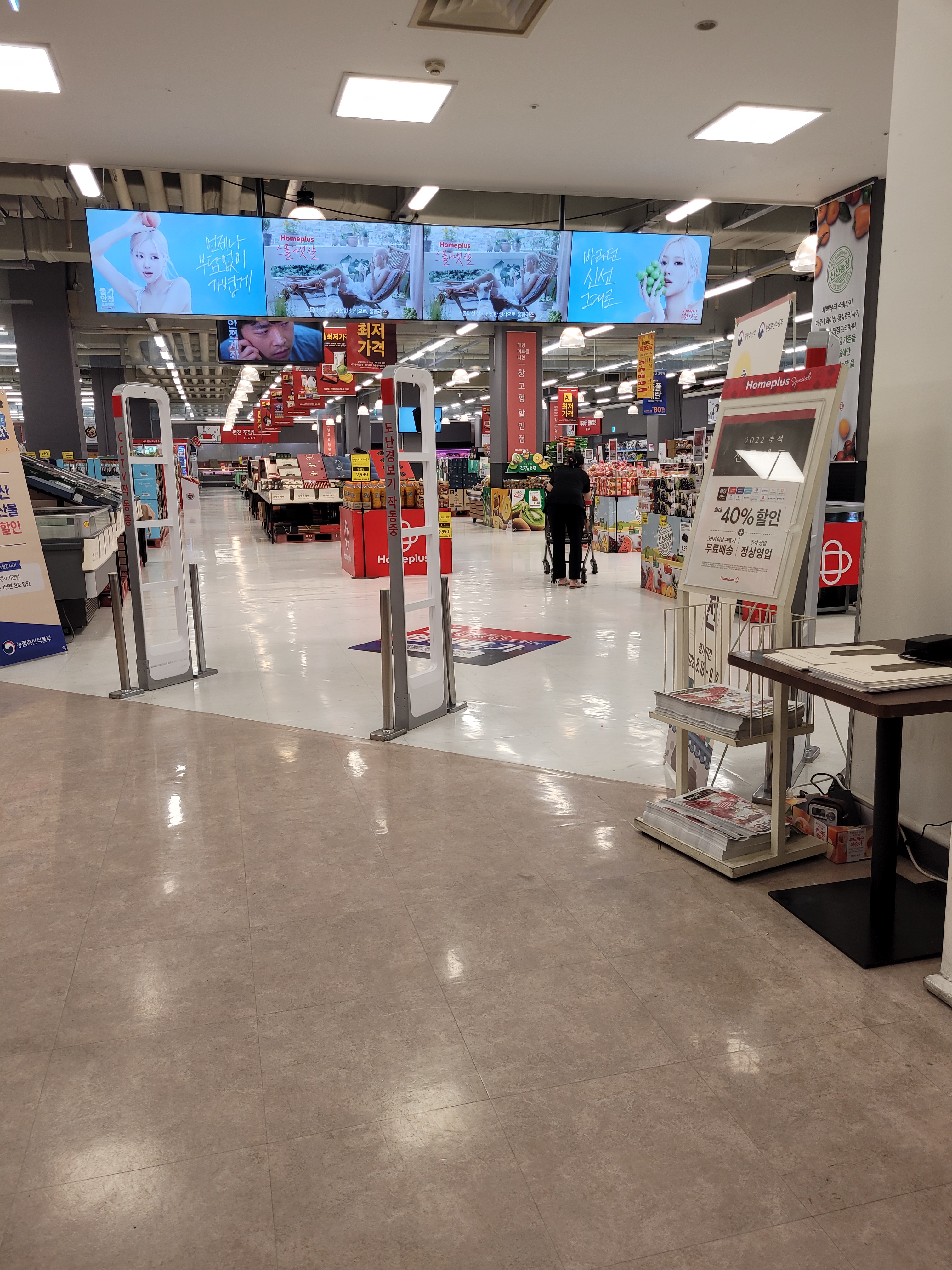
Two quick subways rides and there I was at the door (literally, the shop entrance is right at the subway exit). First discovery; household goods are downstairs, food is upstairs. I wandered the bottom floor out of curiosity and ended up buying a pair of bathroom slippers (foam rubber ones) because these appear to be a thing when you have a wet-room bathroom. My room came supplied with a pair, but as I have no idea of their origin I just grabbed a new set. Pink, of course. At this point I discovered that my bank decided to stop allowing me to use my credit card (so much for a travel rewards card that doesn’t like you travelling), but handily I had cash to hand and mobile banking to sort my issue so that by the time I reached the next floor I was ready to spend, spend, spend!
Wandering a food store in a foreign land is quite a delightful and slightly stressful experience. Trying to identify food items with basic Korean and by sight alone can be a challenge, for there are any number of vegetable, fruits, and meats that I have never seen before and so randomly have to take a guess at what they may be. It is fascinating to see what items take prominence here verses home. Tofu – big section. Kimchi options – many. Porridge packets – lots (and for clarity, porridge here is kind of like a stodgy rice soup, not breakfast oats). Fermented pastes for cooking – go wild. Tuna and Spam – you’re good to go. Sweets and snacks – moderate amounts. Breakfast options as I know them (cereals and the like) – limited. There are a fair amount of American brands that I have spotted here to buy vs. anything I would recognise from the UK.
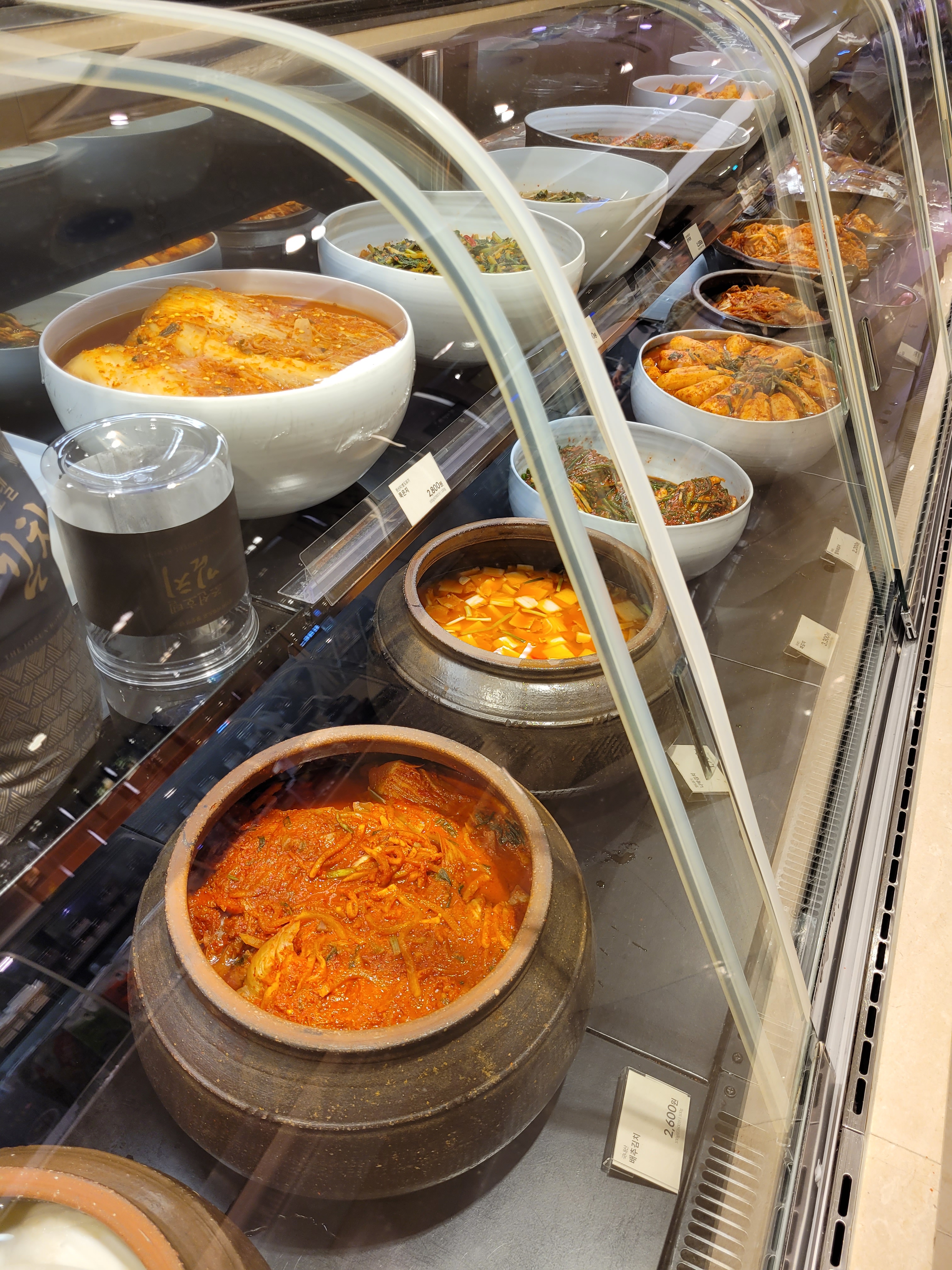
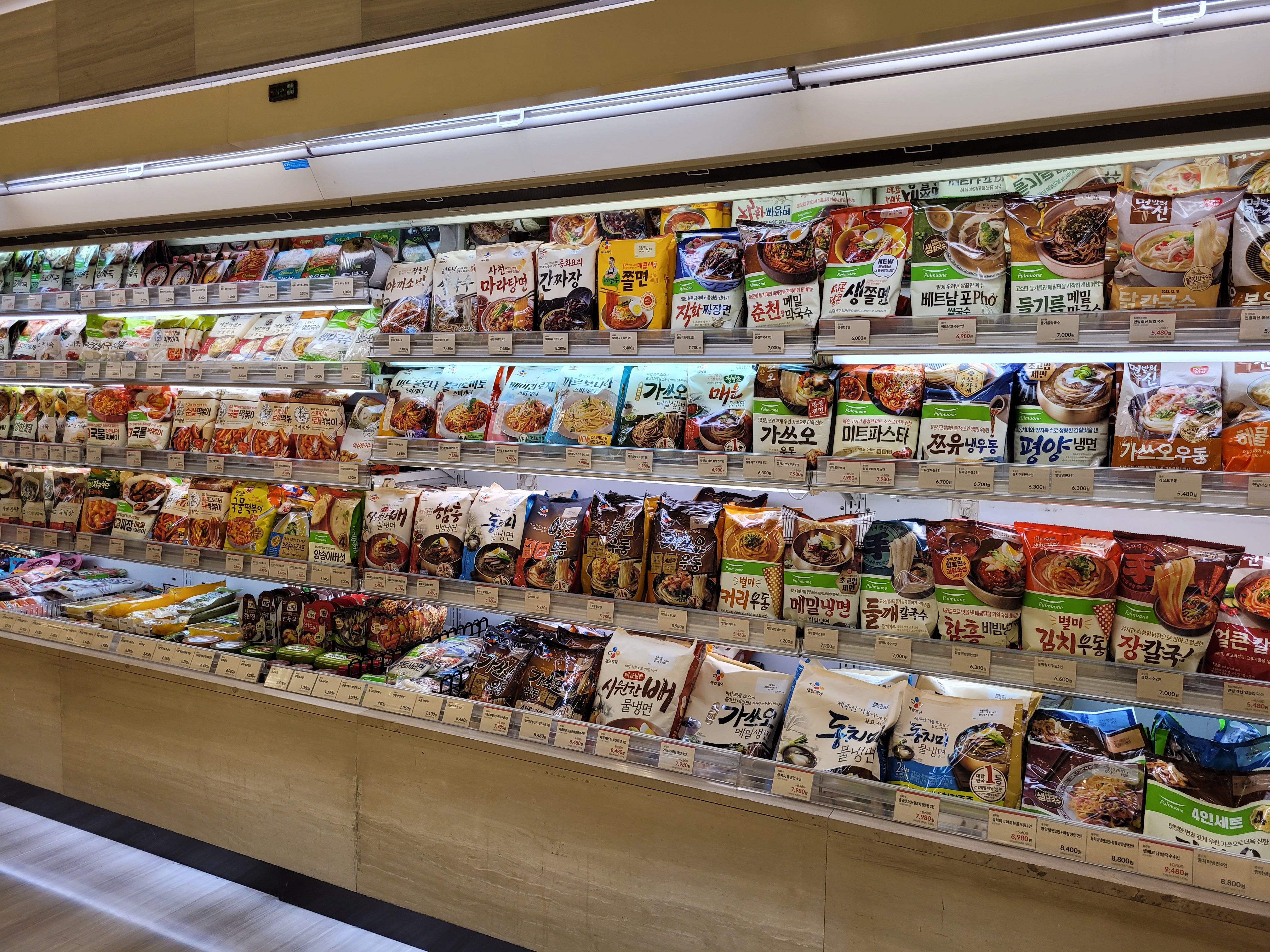
As this was my first time trying to buy anything, I settled on a few types of porridge (it seems the easiest thing to deal with both in flavour and cooking method right now), Pocky (including a new flavour!), cereal (though it turned out to have the format/consistency of popcorn mixed with crushed oat bars, so I ate it as late night drama/movie snacks instead), tuna (though I’m not sure really of what I have bought as they seem to have spicy flavoured tuna here too, I will let you know when I open it), tofu, and onions (the last three items are to make tuna kimchi jiggae later this week – very simple to do, it’s basically a soup, which is why I chose it – have to buy the kimchi later as in my excitement and confusion over the many types I forgot to buy it!).
My only slight issue with the food shopping came at the till where I got in way too deep with the cashier upon discovering I had bought a 2 +1 deal on my porridge, but one of my porridge choices wasn’t included and had to dash back to grab another. To both our credit – with me having not that level of Korean and her having no English, we managed to understand and work out the situation between us. Yeah us! That’s one to rack up for international communications right there. Solving complex world problems here I come!
It’s worth making a mention right now that I have arrived here in Korea during the weekend of Chuseok (추석). This is a national holiday here in Korea – the mid-autumn harvest festival – most often compared to Thanksgiving in the USA, where people traditionally travel home to spend the weekend with their families. Due to this, most smaller shops and ‘things’ are closed in the country. Having said that, so far I am discovering that most chain-type shops are open (thank you rampant commercialism) as are some of the tourist destinations.
Therefore on this day, after my food shop adventures, I chose to go all proper tourist and visit one of the palaces close to where I am living – Changdeokgung Palace. While this is a palace in its own right, it is pretty much twinned with another royal residence that sits next door, Changgyeonggung Palace. The two are in fact so interconnected that I wandered from the grounds of one and into the next without really knowing I had done so.

As it turns out, today was a good choice of day to visit. With it being Chuseok, entrance to the palace was actually free (interesting side note – if you wear hanbok to visit any of the royal palaces they let you in for free). However, with it being Chuseok, the palace was also heaving with people, both Korean and foreign. While a little cramped and crowded at times, it still provided ample people watching opportunities which I am all for.
Right, let’s do a little basic history first. There are five royal palaces that have been preserved in Seoul and are all from the Joseon era of history, which lasted roughly 500 years. They were built by a variety of different kings, as primary and secondary palaces, and also because apparently the kings changed their locations several times due to wars and other reasons.
According to the official guide, Changdeokgung Palace was constructed in 1405 as a secondary palace, but was destroyed during a Japanese invasion and rebuilt in 1610 when it then served as the main palace for around 270 years.
The palace features several main buildings, the largest being Injeonjeon, the throne hall. The others include the King’s and Queen’s residence (each had a separate building), a council hall, as well as a number of pavilions and complexes. Changgyeonggung Palace next door has a fairly similar layout but apparently was used mainly as a residence for queens and concubines.
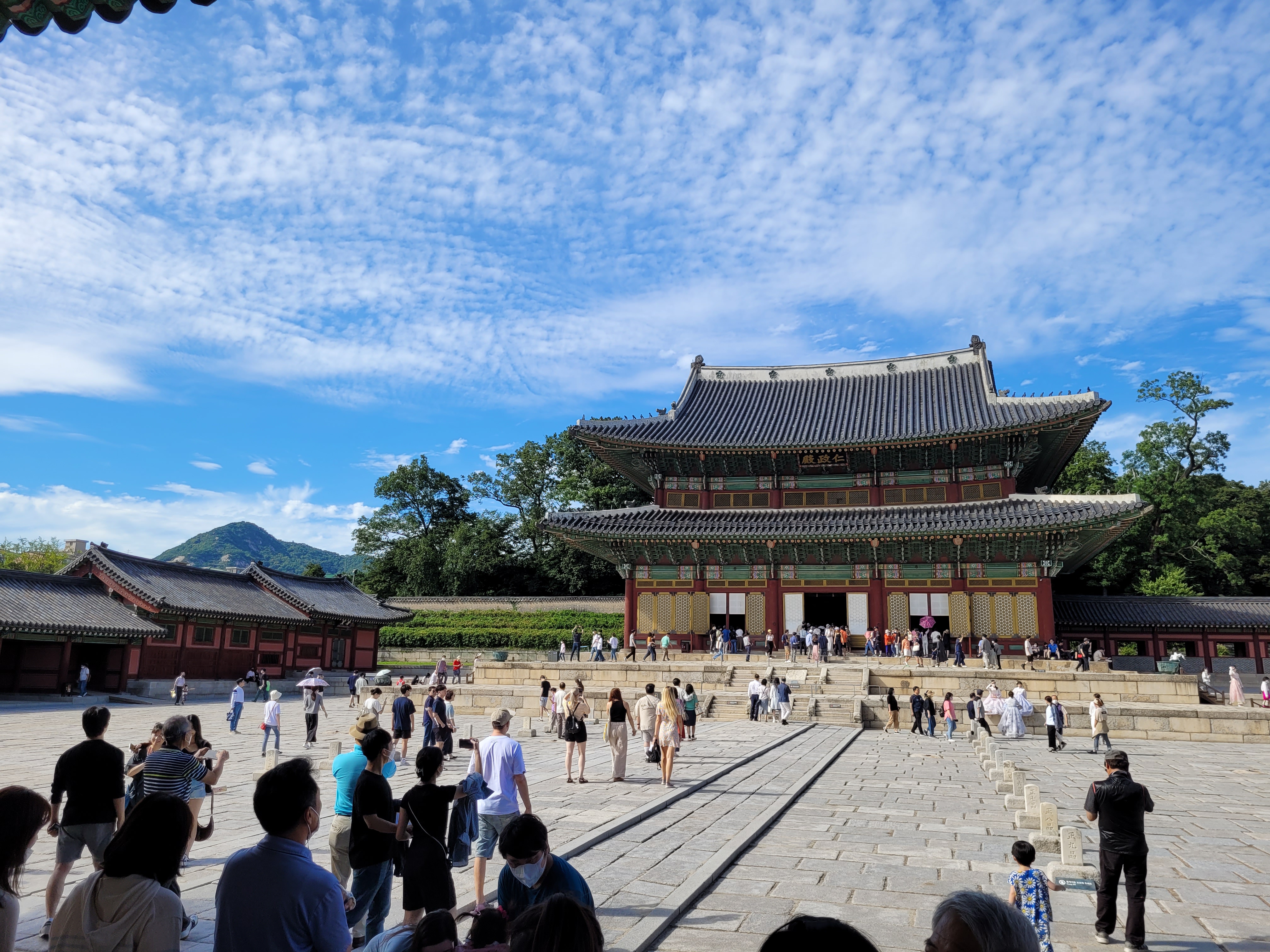
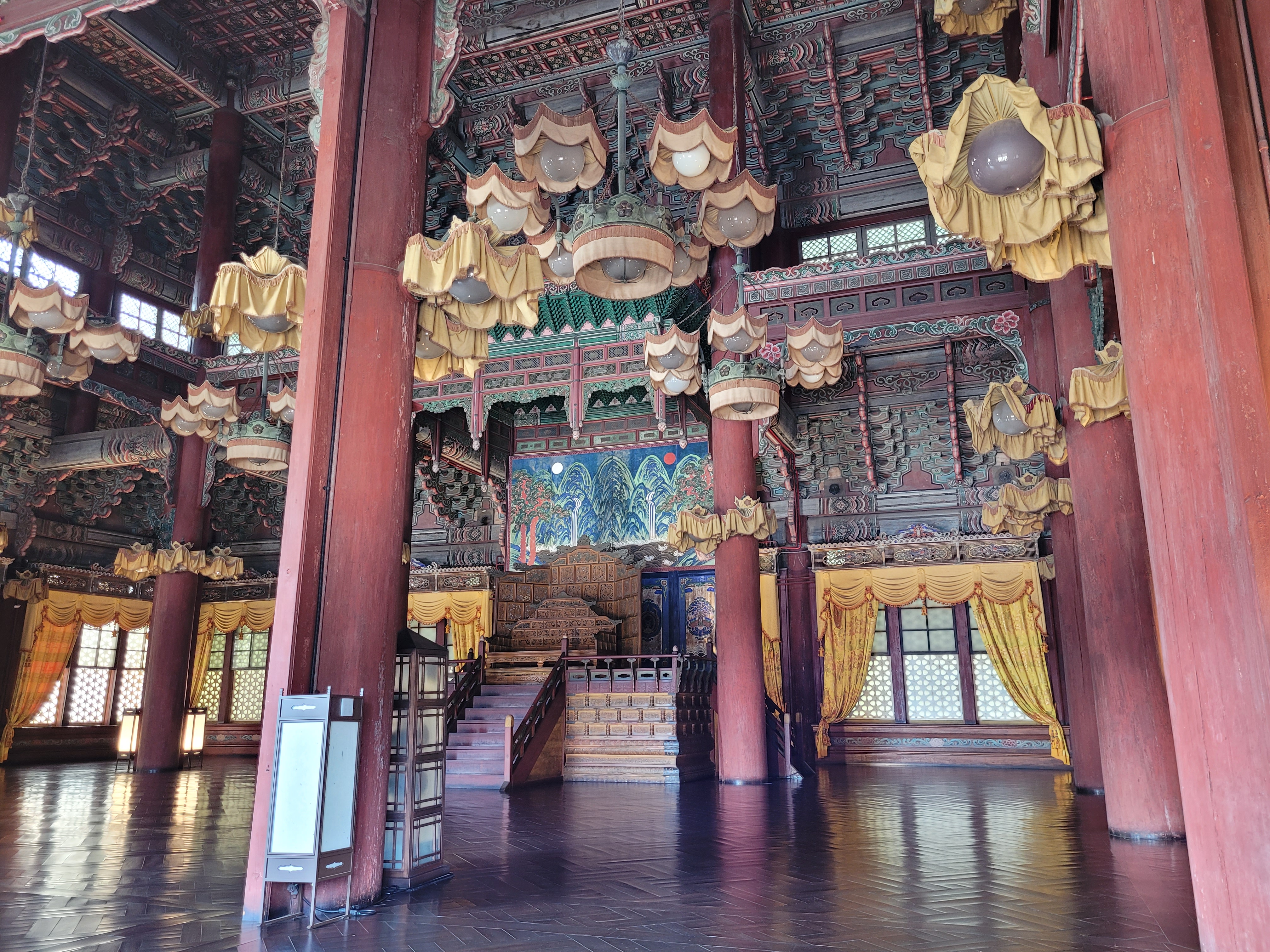
The main feature of Changdeokgung Palace, and why it was apparently so beloved by royalty, is the large area of landscaping and gardens at the back of the palace. However, The Secret Garden is only available by a private tour and unfortunately as I had made my decision to visit rather suddenly, I didn’t book to get into it. Sorry, I will probably go back and see it another day though.
Even without this, the palaces are impressive. While we have some pretty decent old buildings in the UK, we obviously don’t have the same type of architecture at all. The palaces here are constructed entirely of wood, are grand in scale and design, and radiant in colour and detail.
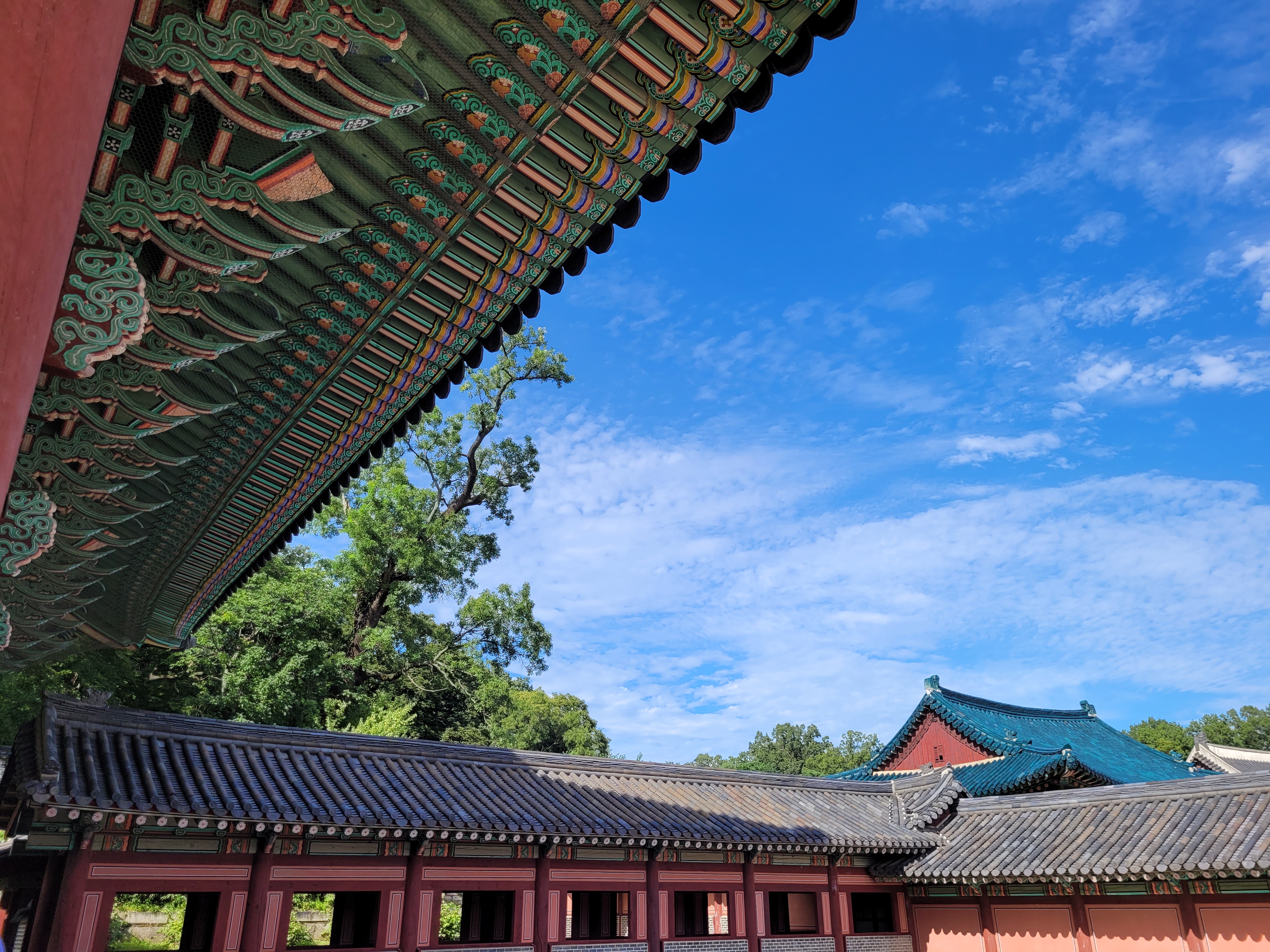
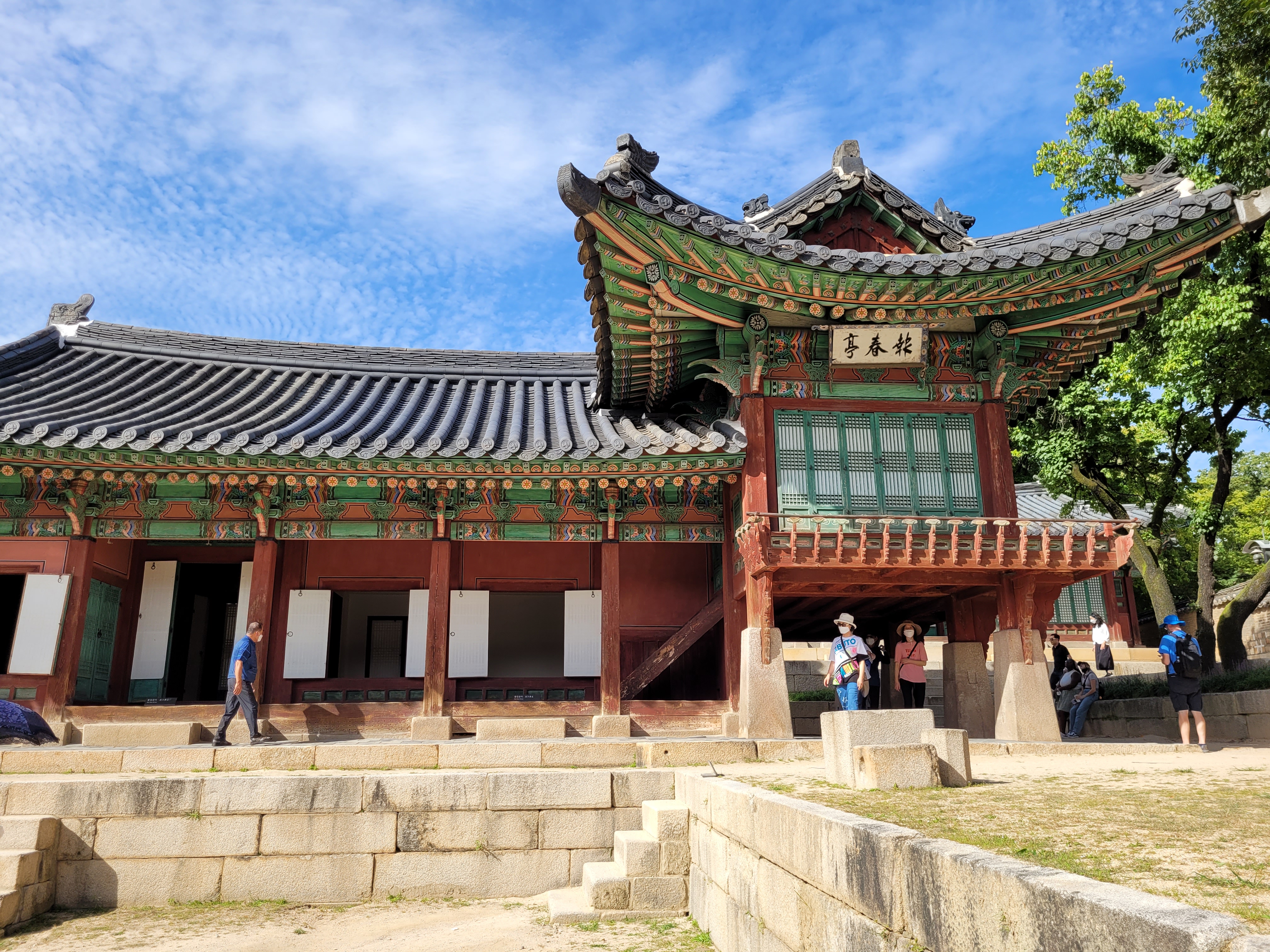
Personally I think it can be hard for people to connect with history; especially when you are simply looking at empty buildings, and even more so when you are doing so in a different culture with no real association to it. For me though, I feel my pleasure and delight at visiting the palace stems from my enjoyment of watching sageuk dramas (historical drama). Having seen a number of stories, the majority taking place in the Joseon era, I come with a fuller sense and picture in my mind of what the rooms would have looked like when in use, the people that would have wandered the palace grounds and the clothes they would have worn. Therefore, for me, it isn’t just looking at a beautiful old building, it resonates on a bit of a deeper level.
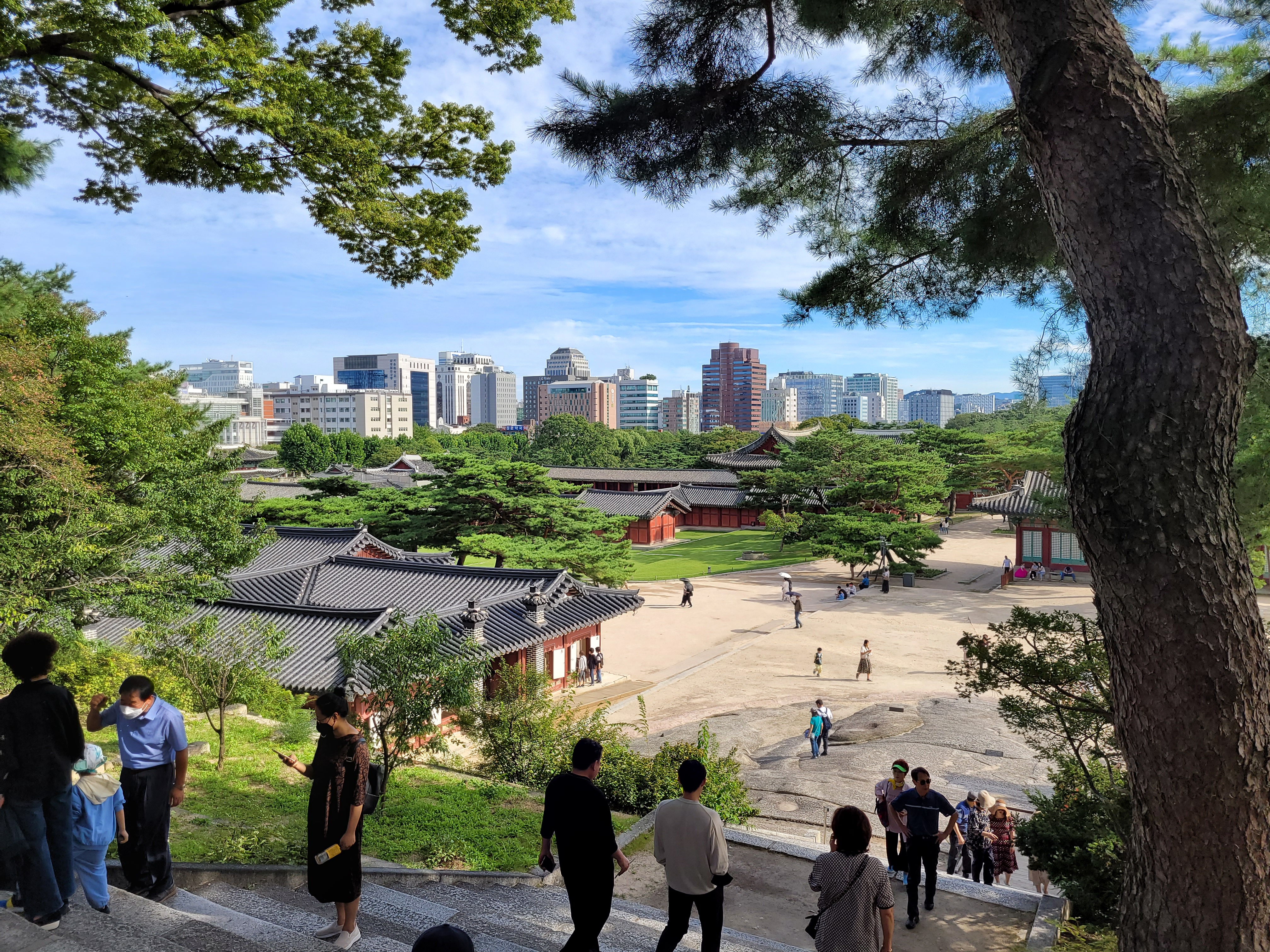
What I did find incredibly interesting though was the mix of modern and ancient. Stand facing one direction in the palace grounds and you are in Joseon times, your sight filled with majestic structures and surrounding mountains in the distance. Turn around and you see the palace wall guarding against the encroaching Seoul sky scrapers that press down on it. It produces an incredible contrasting feeling inside to see both time periods side by side.
Wandering around I of course can’t help but take note of the people. I very much enjoy seeing younger people who have chosen to wear hanbok for their visit, though they must be absolutely sweltering in the heat. I find hanbok beautiful on men and women alike. While I know it is generally worn only on special occasions and perhaps not as prevalent as it once might have been, I still think it’s lovely that there is an example of national clothing. I don’t know why, but when I think about my own British culture, I often feel there isn’t much to it. Or maybe there is but I can’t think of what it may be, or maybe I just don’t partake in it? I can’t think of an example, for instance, that would compare in my country to hanbok.
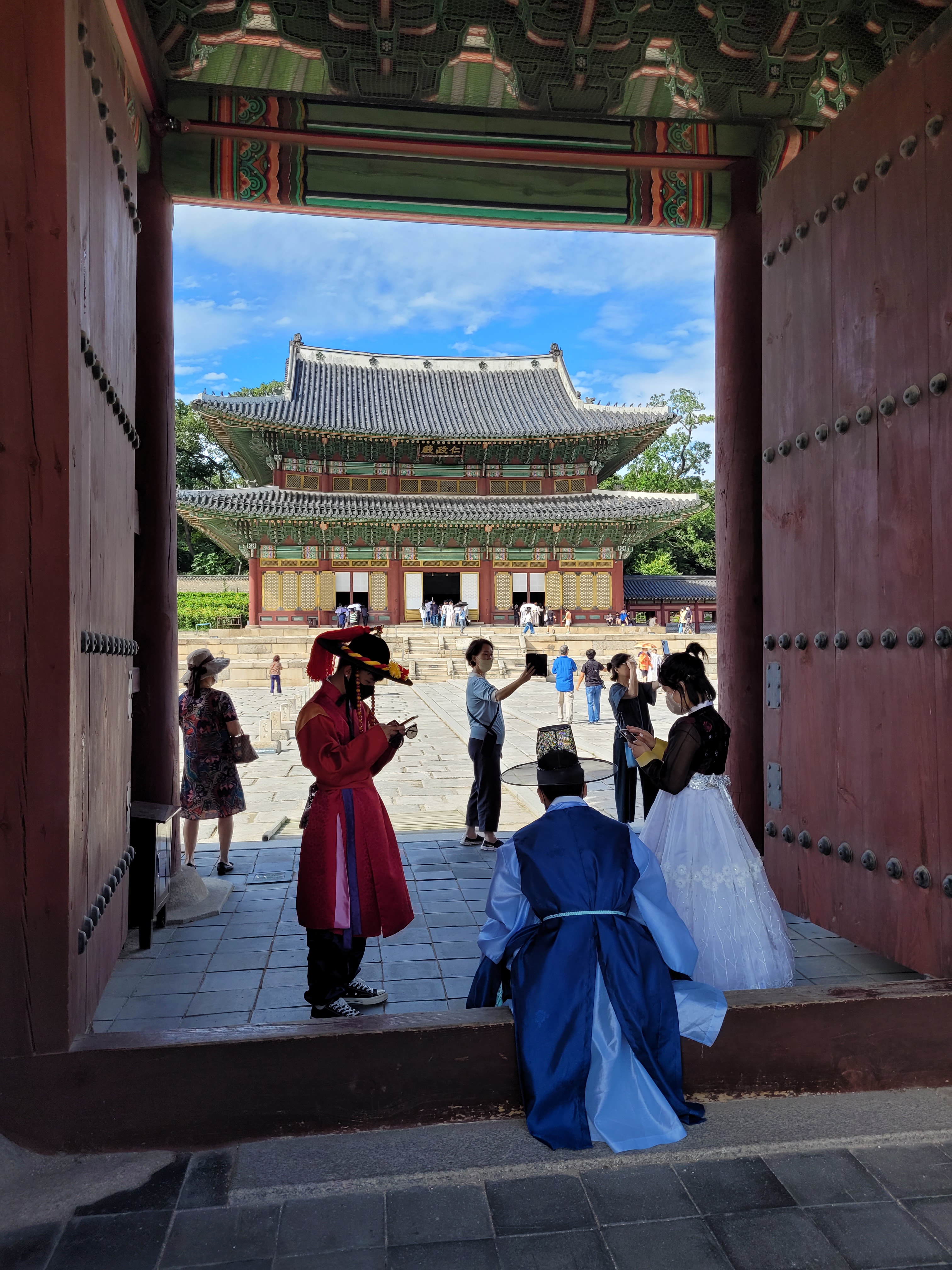
One thing however that is incredibly prevalent here, annoyingly so, are mobile phones and selfies. I have never in my life seen a ‘people’ so obsessed by their phones. Constantly in their hands, can’t put them down, walking around looking at them, sitting down looking at them, sitting with other people and all of them looking at their phones. Oh my good god, it’s absolutely crazy and overwhelming. And here in the palace is no different. Everyone posing for photos, to the point that it seems like this is literally the only reason they have visited, to take a picture of themselves in front of things.
Such an interesting country and population. So much to learn.
And on that note, off to make a plan for tomorrow. I think it’ll be another wander.
Additionally, just a quick FYI for you lovely readers, if you would like to see any of the locations of places I am referencing or find out more about them, do have a quick peep at the map that is here on the blog (it has its own section) as I am updating it every time I visit somewhere new and quite a few have links to official websites (often with English translation options).
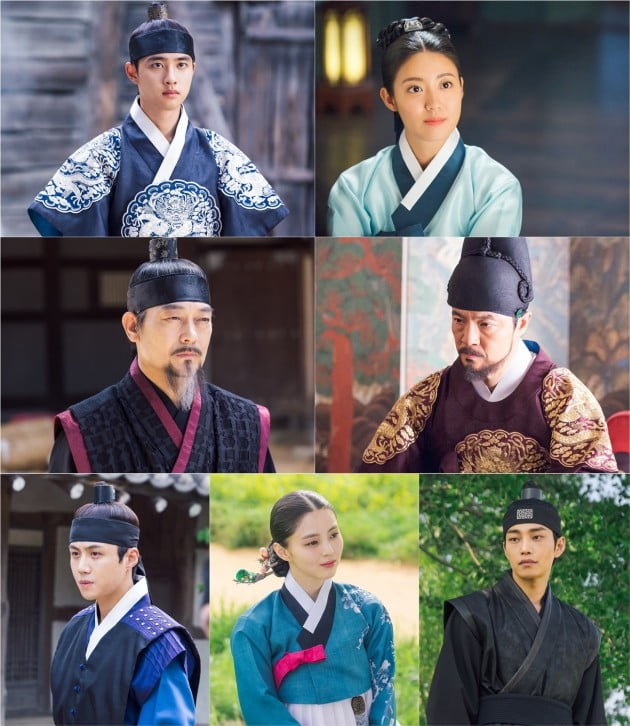
Also, for those of you that may be interested in taking a dip into a historical drama just to see an example of the era, I thoroughly recommend 100 Days My Prince (light-hearted), The Clowned Crown (medium-weight), Kingdom (right era but with zombies) and Empress Ki (full on heavy-weight with 51 episodes). All on offer through Netflix, I believe. Enjoy!
 Kerry's Korean Quest
Where’s the photo of the pink foam bathroom slippers? I need to see these 🧐
LikeLiked by 1 person
Freak. 🤣
LikeLike
I love that they let you in for free if you wear hanbok- whether it be to honor tradition or because they know it adds to the ambiance!
LikeLiked by 1 person
I hope next week to go to the local cultural centre as I hear they let you try on hanbok for free.
LikeLike