
Korean culture fascinates me. All aspects of it, good and bad.
Having lived a ‘Western’ lifestyle my whole life, the idea that half-way around the world people are living lives based on an entirely different history from my country and with such vastly differing customs from my own intrigues and enthrals me.
And yes, I know that you can say this is true for the rest of the world too, there are numerous cultures that vary from what I perceive as the ‘norm’, but for me, it just so happens that I stumbled upon this country by happy accident and was captivated.
As I’ve mentioned before, I am particularly intrigued by the language here. I am particularly tickled that I hear it all around me every day at the moment, and even though I can only glean the odd word here and there, I like the sounds floating around me.
Today I have decided to explore both of these aspects with a double museum trip. Yes, a lofty goal, I know. But luckily for me, someone very handily decided to locate the National Hangeul Museum and the National Museum of Korea right next door to each other, so you really have no excuse not to visit both. And they are both totally worth it, let me tell you.
Personally, I found the Hangeul museum the more fascinating of the two. It is beautiful and informative in equal measure, telling the story of the invention of Hangeul.
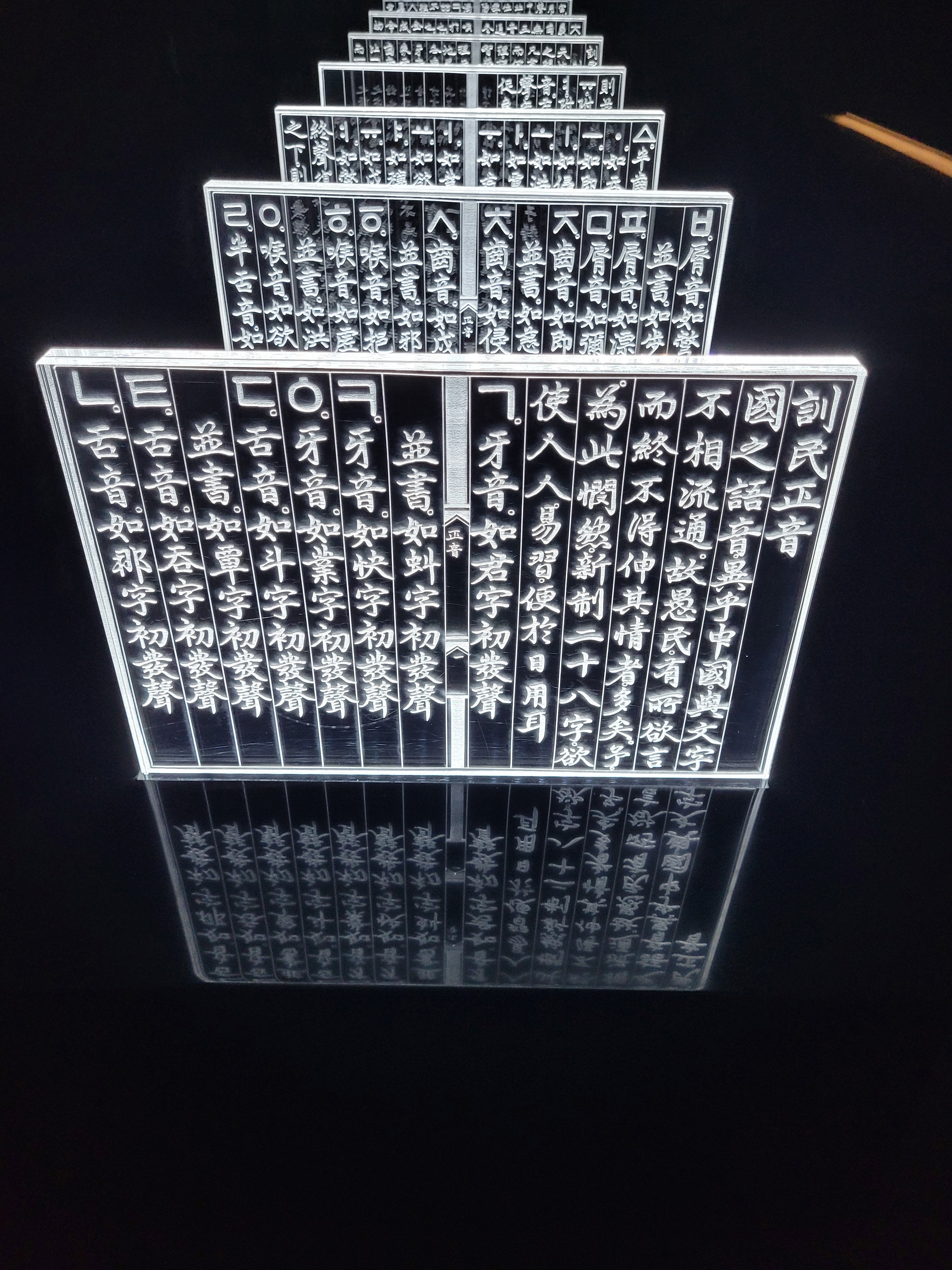
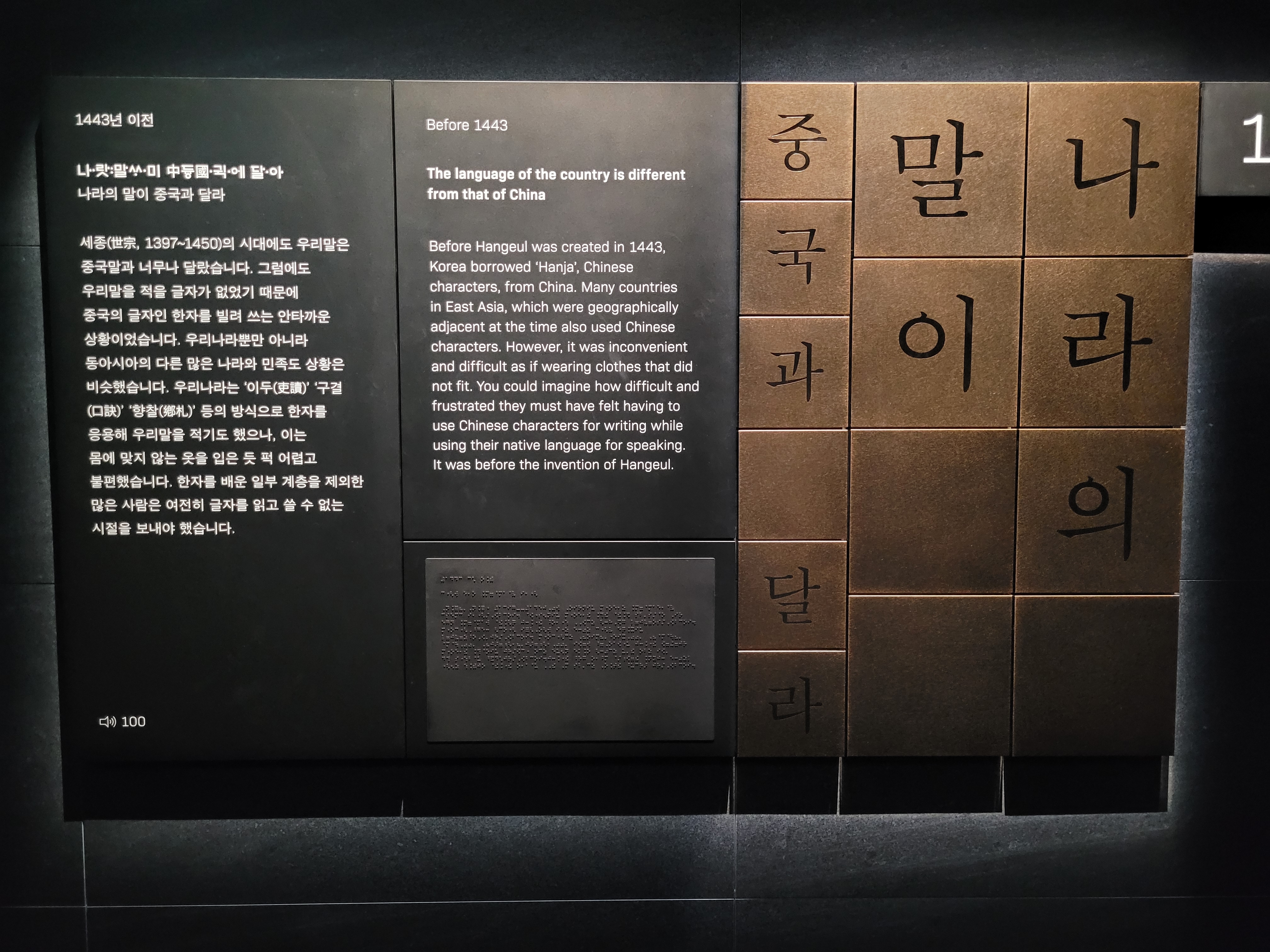
And that statement there should amaze you right away, because the written language of Korea was invented. It isn’t like the majority of languages in the world that had a more natural evolution through pictographs and borrowing from other languages later on; no, it was actually invented from scratch by King Sejong the Great in 1443.
Previous to this, while there was a spoken Korean language used by common and elite people alike, the written system at the time was based on Chinese characters (Hanja) which required a high level of study to learn. Therefore communicating messages to the mass common population was difficult and education amongst the people was limited due to not being able to read and write.
Therefore, in an attempt to improve the literacy of his people, King Sejong invented the 28 basic characters of Hangeul (now 24, some were discarded along the way) based upon the sounds of the spoken language. There is even a written record of how the language was invented, the only such type of document to exist.
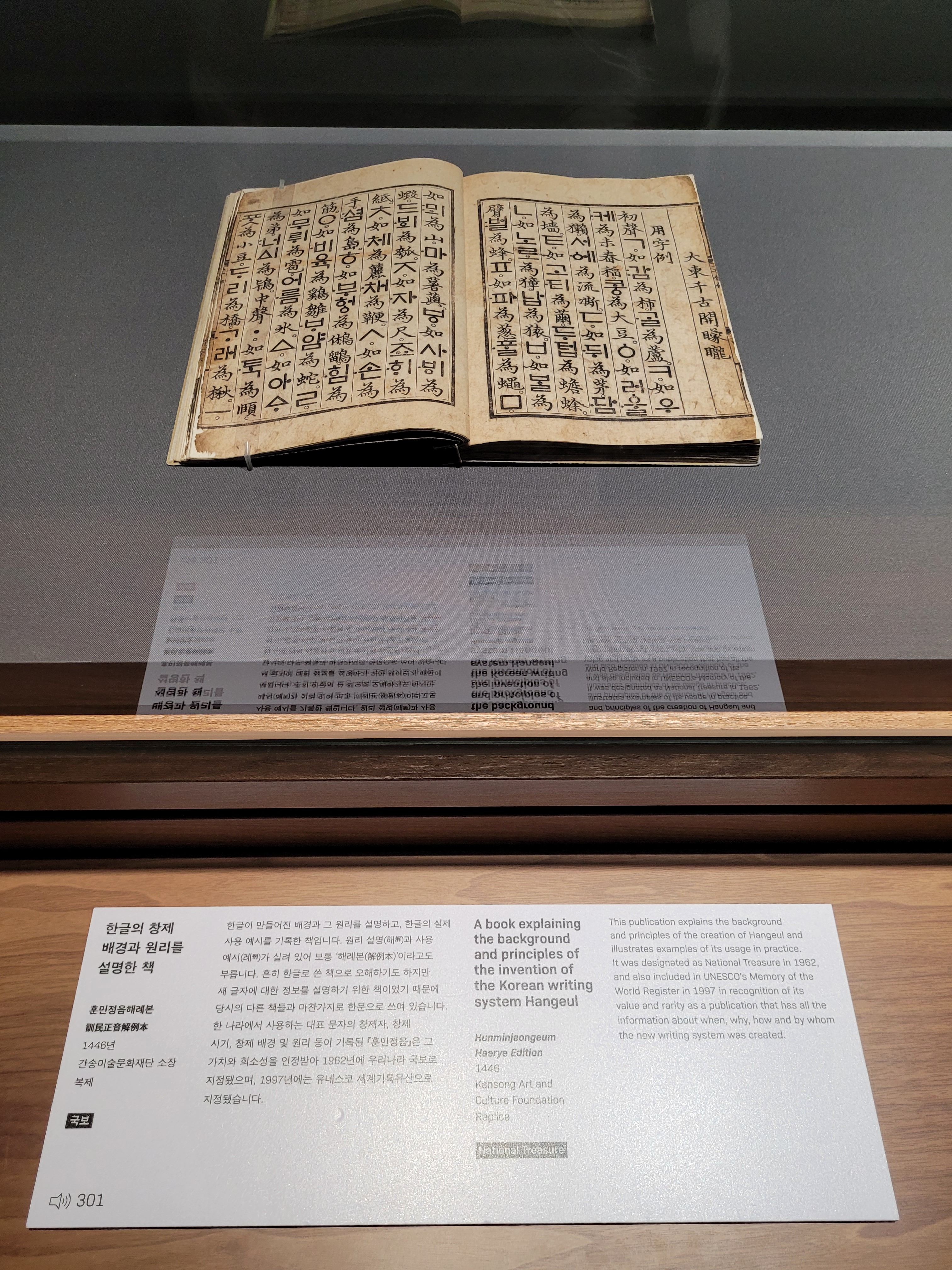
Because of the manner of its invention, it actually makes the reading and pronunciation of Hangeul slightly more straight-forward than other languages (for instance, think how many words we have in English that are spelled the same but can be pronounced differently depending on their meaning i.e. read could sound like ‘reed’ or ‘red’ – not so in Korean).
Once you have the basic sound of the consonant or vowel, you can read any syllable block with relative (!) ease. This technically makes being able to learn to read and pronounce Hangeul slightly more manageable and faster than other languages. Actually understanding what you have said or read is another matter however…
However, I encourage you all, if you have a spare 30-60 minutes and would like to feel slightly smug about learning something most people don’t know to check out Youtube for some of the videos on learning the basics of Hangeul… 화이팅!
The museum exhibits encompass the reasoning for the developments of Hangeul, its actual creation, the transition from using Hanja to Hangeul, and artefacts showing of early uses of Hangeul by common people and block printing methods.
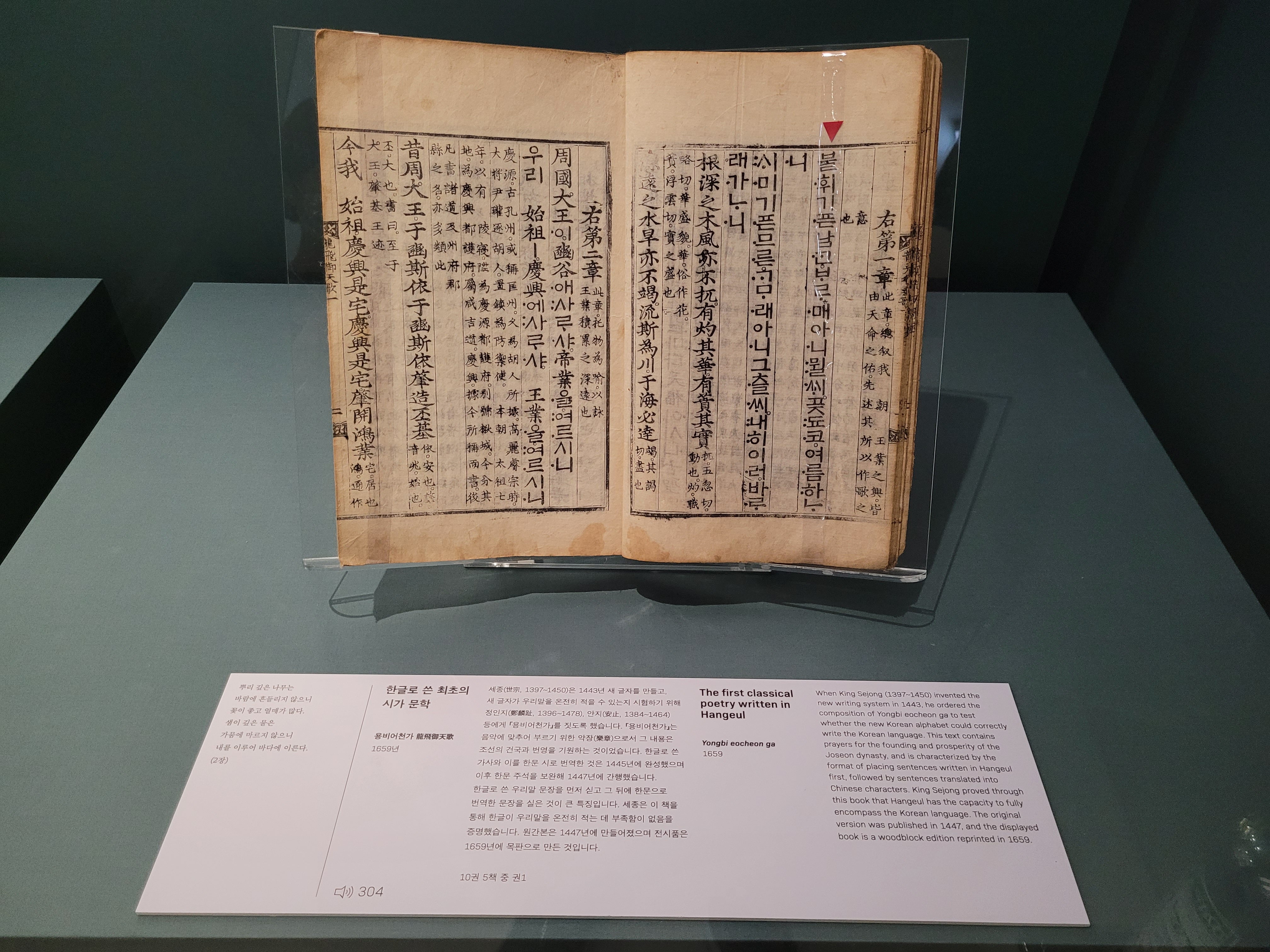
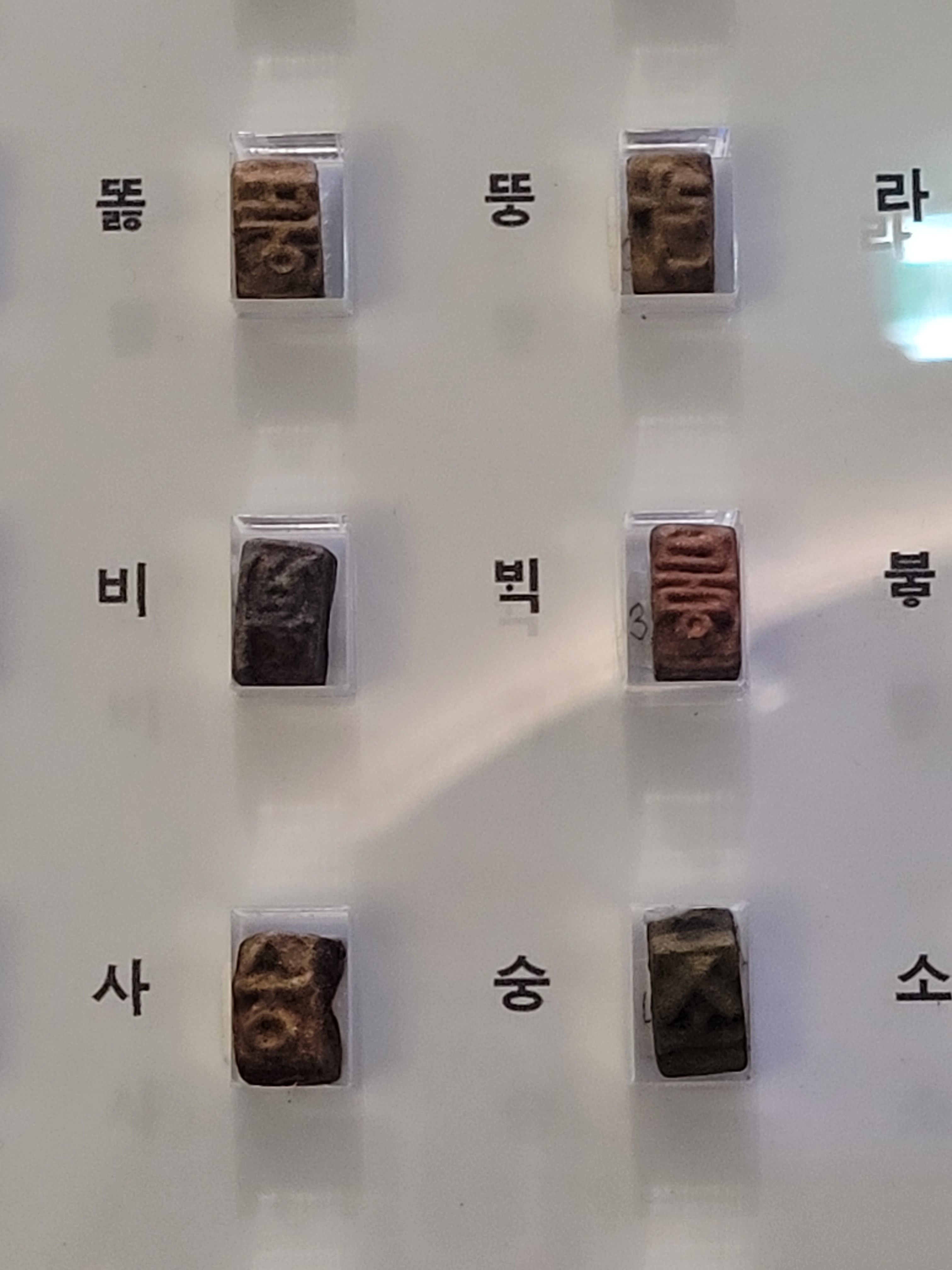
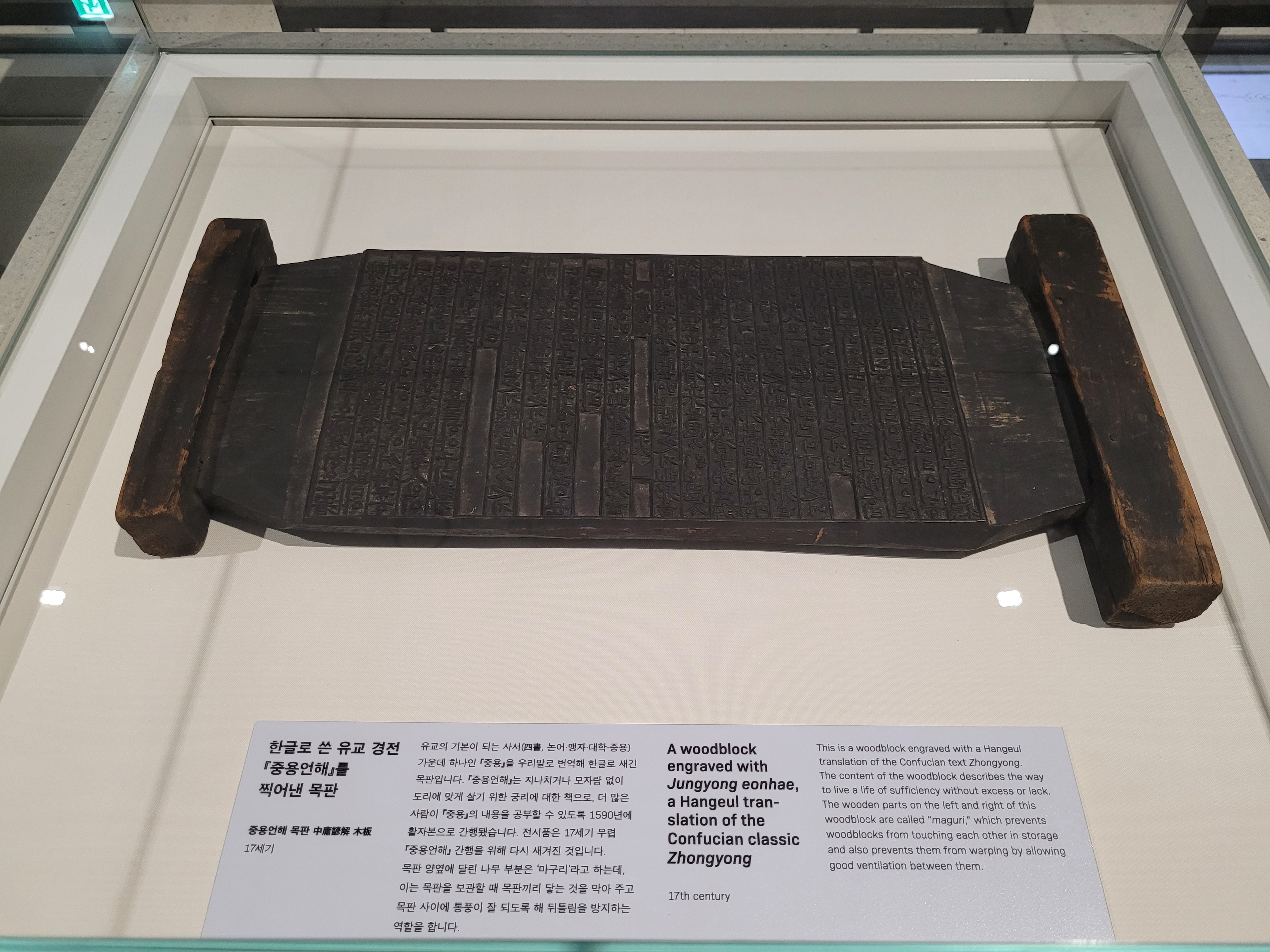
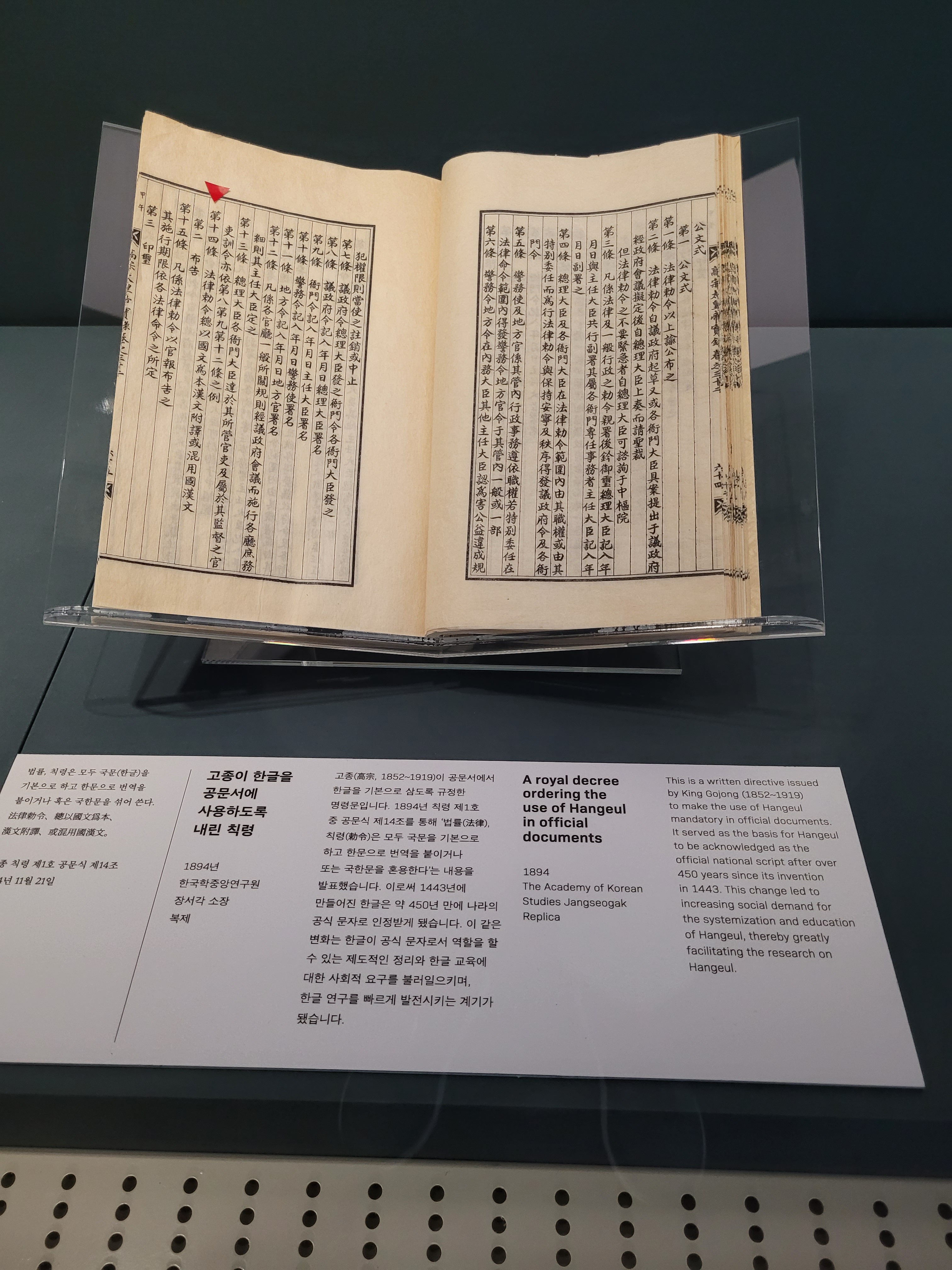
One of the things I found most interesting is that although Hangeul was invented in 1443 during the Joseon era, it did not actually become adopted as the official language of Korea until 1946. The museum does an excellent job explaining the difficulties in making the transition not only from Hanja to Hangeul, but the attempts to hold back the language from the people by banning it during times of war and colonisation.
After exploring the museum I decided to pop downstairs because they have a library on site as well (I really can’t help myself). I wandered in just to see what was there and was greeted by a lovely librarian who encouraged me to take pictures if I wanted. She was so nice that I felt like trying out some of my basic Korean on her and explained that I was a librarian from England (I realise I am not a librarian but a library assistant, however that’s the closest my Korean gets me). I told her I was interested in the Dewey decimal system and if it was the same as ours (in case you are interested it differs in a couple of sections namely the 400, 600, and 700’s) and she took great pride in showing me how perfectly they label their books so they are aligned and colour-coded.
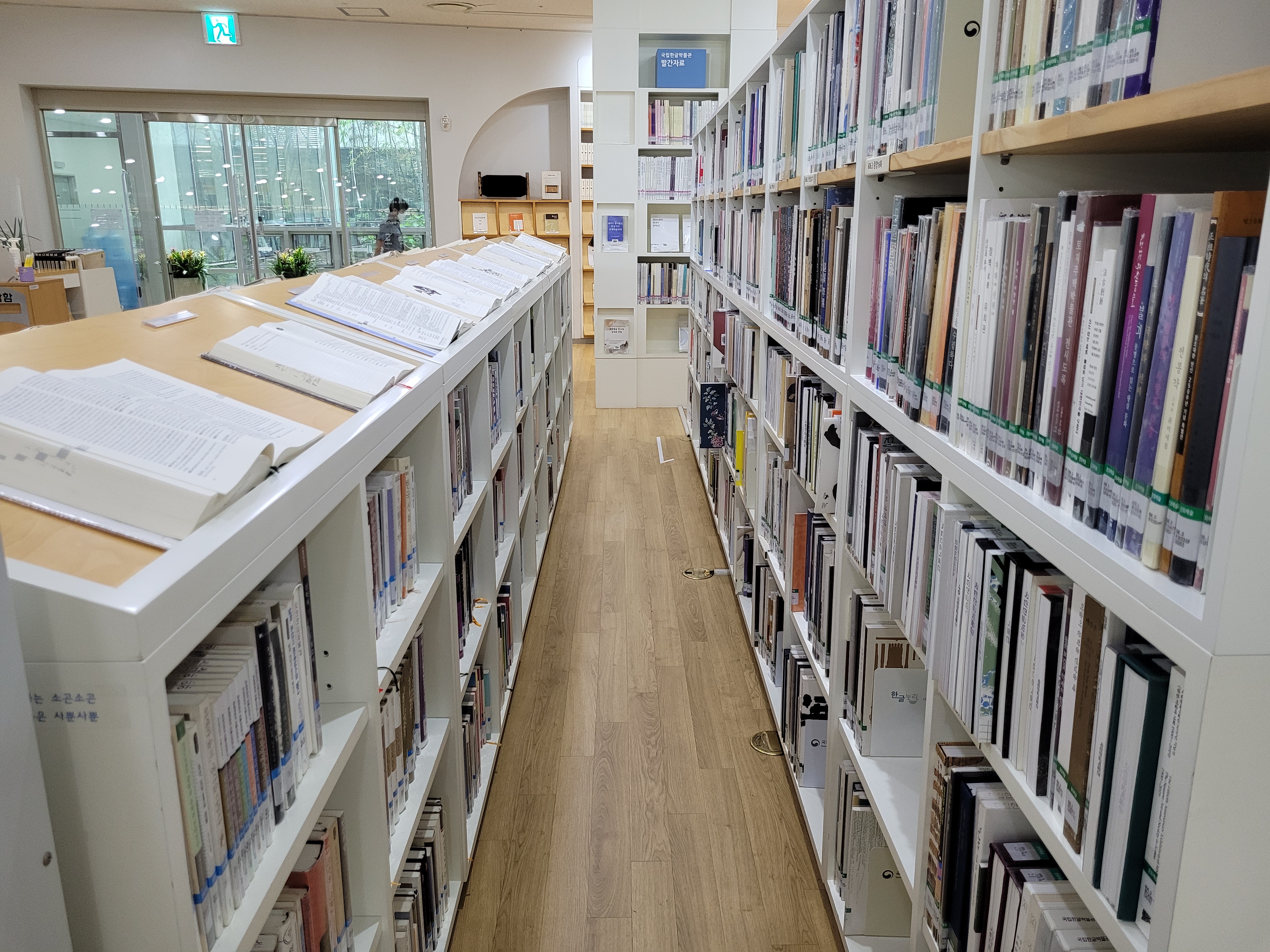
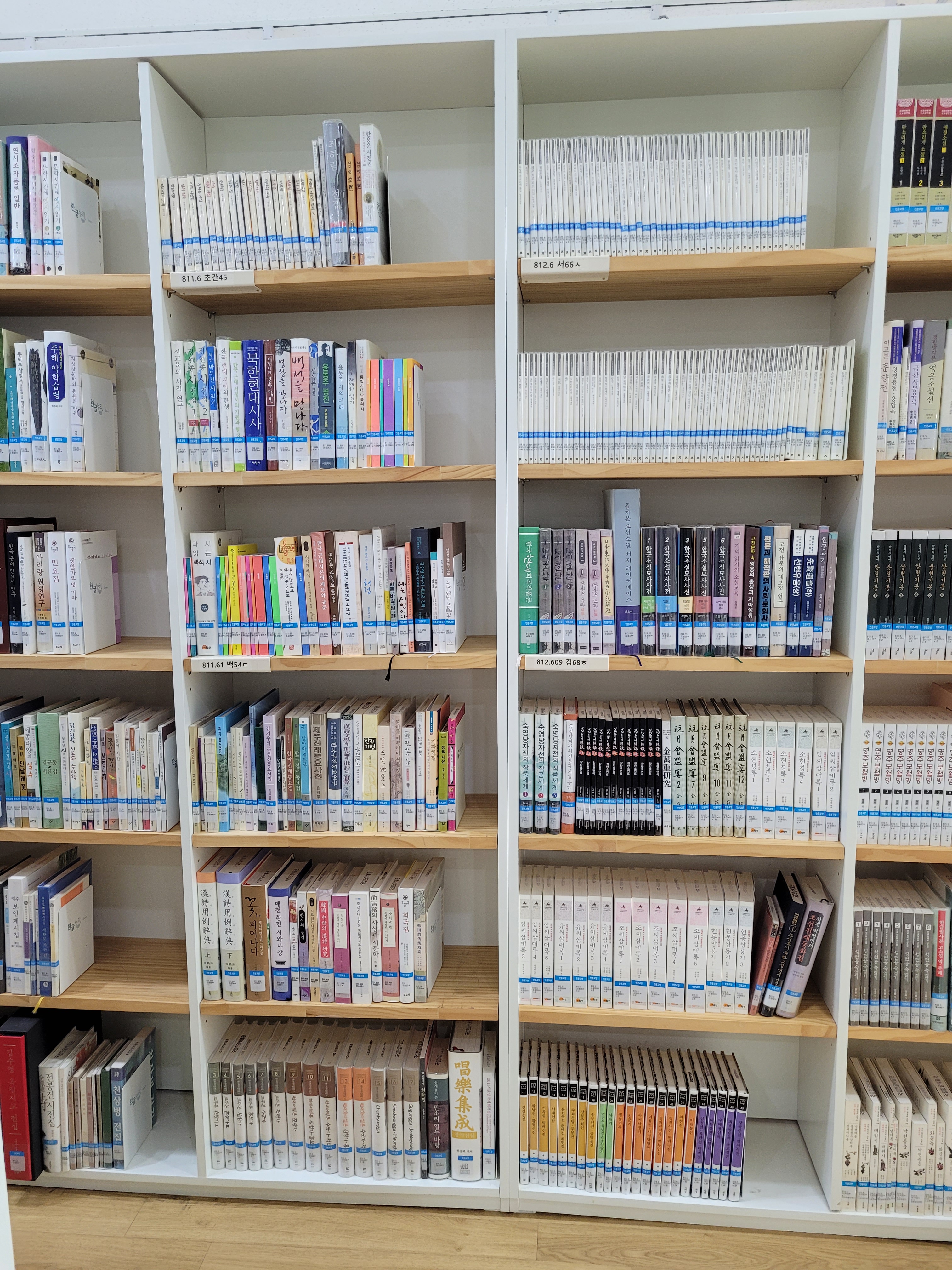
She then brought me a stool to sit on so I could peruse the language books (found 3 more to buy later on to take home) and before I left I thanked her and told her she had a nice selection of books (at least I have some Korean language for the important stuff!). When I managed to use the correct form to say goodbye, she told me I had very good Korean, which made me smile for the whole length of my walk to the next museum.
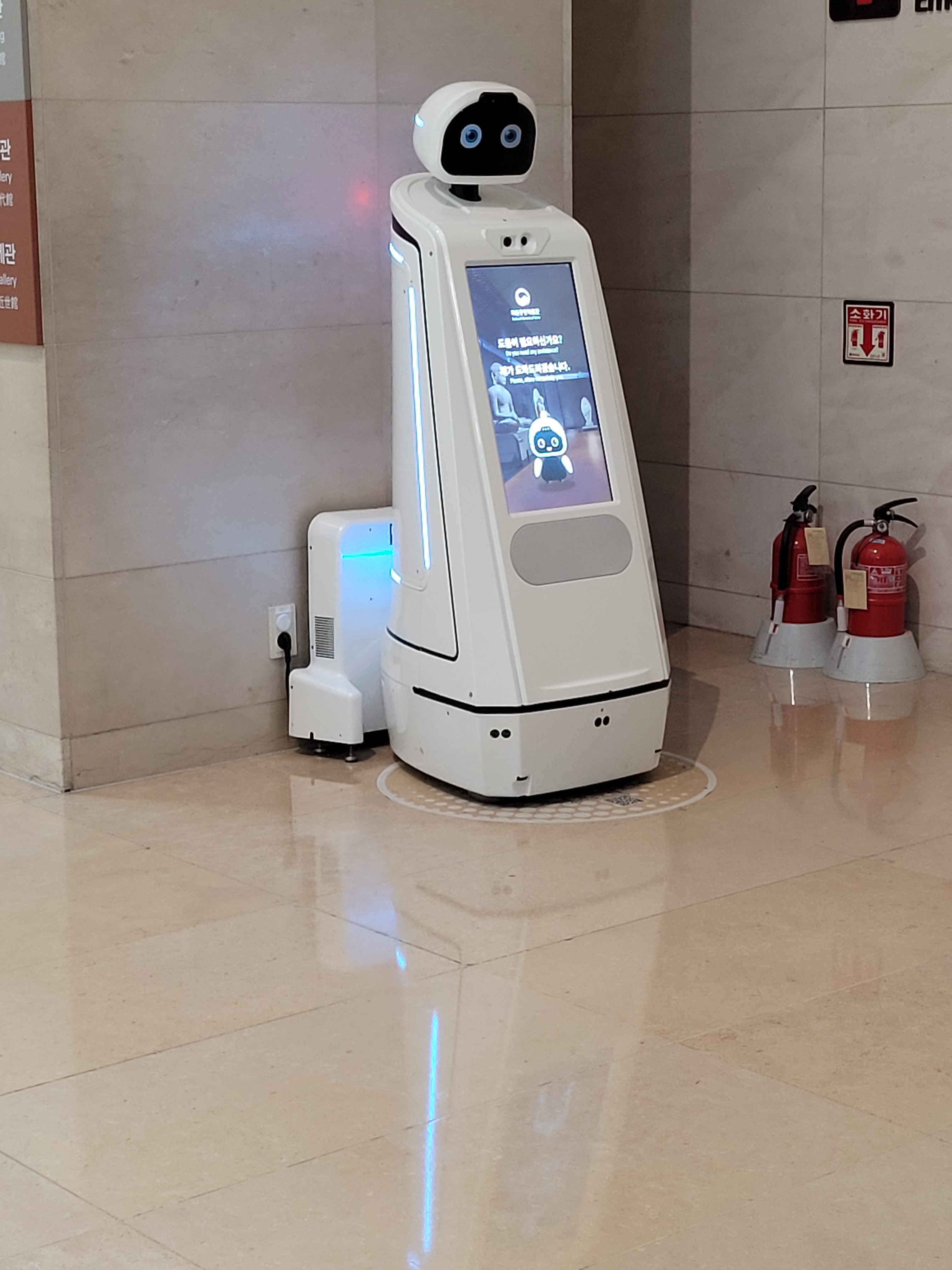
The National Museum of Korea chronicles aspects of history specifically related to the Korean peninsula with artefacts from each period of history from prehistoric to modern, much the same as any national museum in other countries. If you are unfamiliar with Korean history and developments in the different time periods, this is a good starting place to learn. Also, there was a robot here. I have no idea what its function was, but its eyes blinked and it kind of freaked me out.
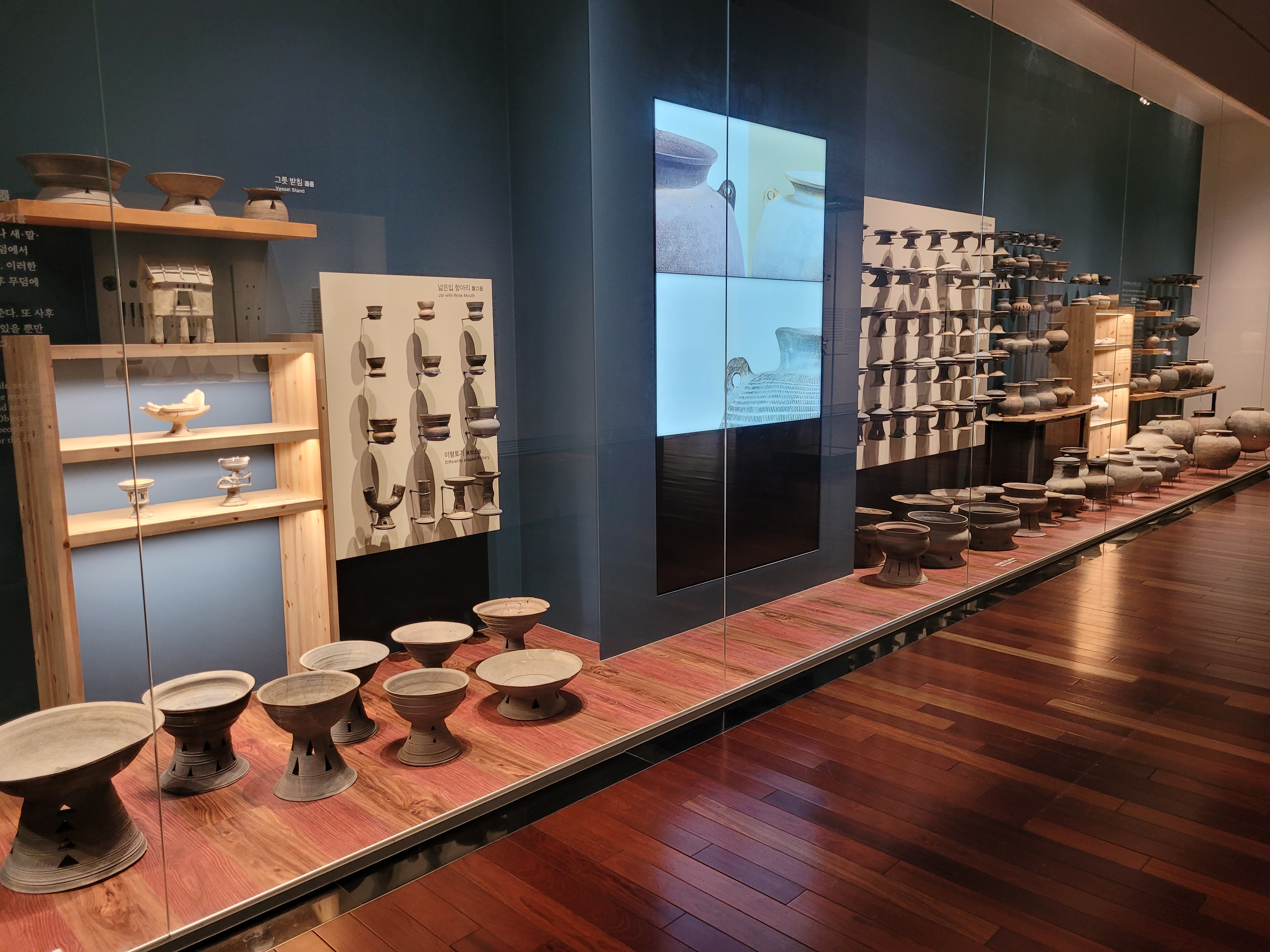
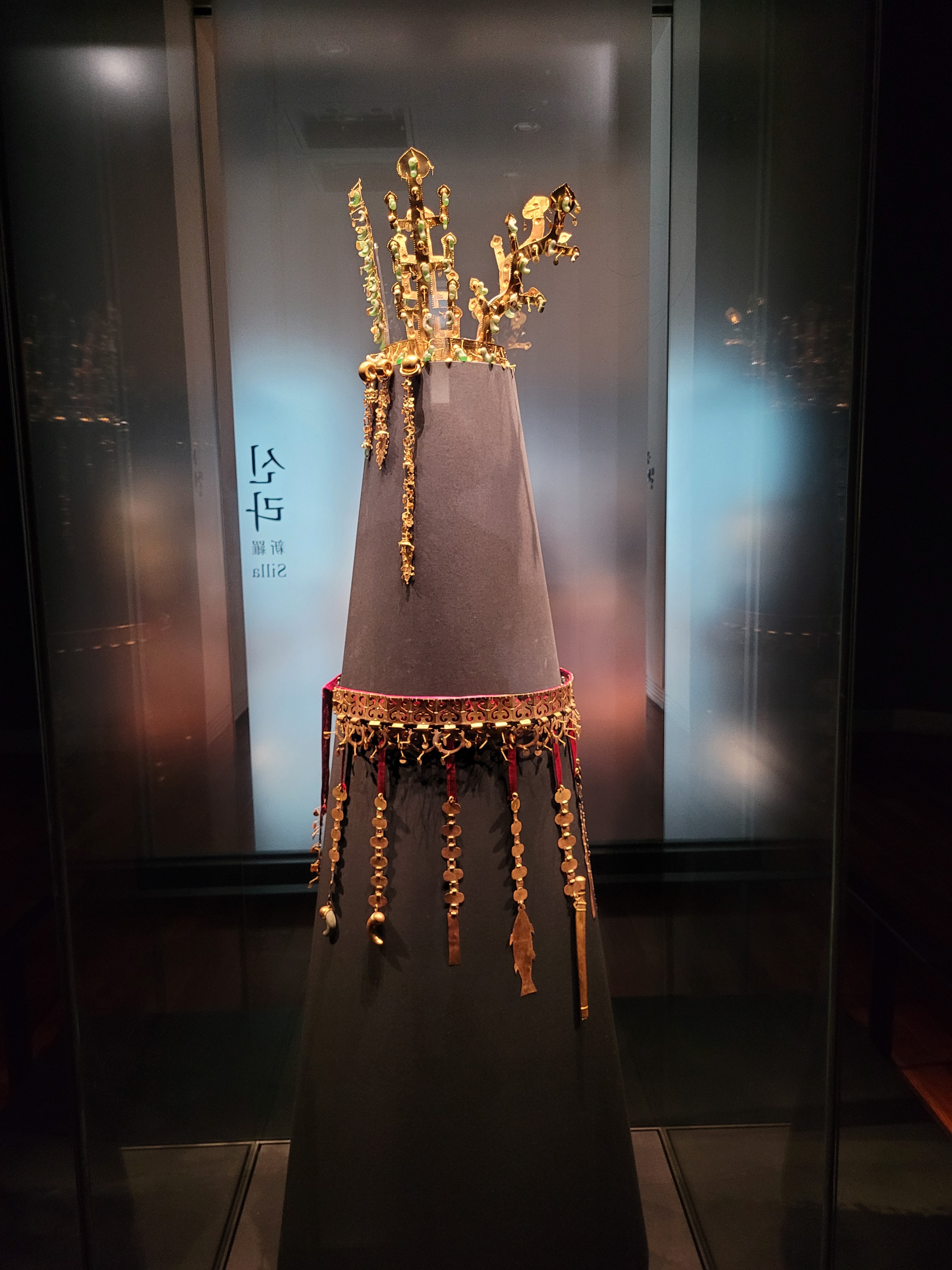
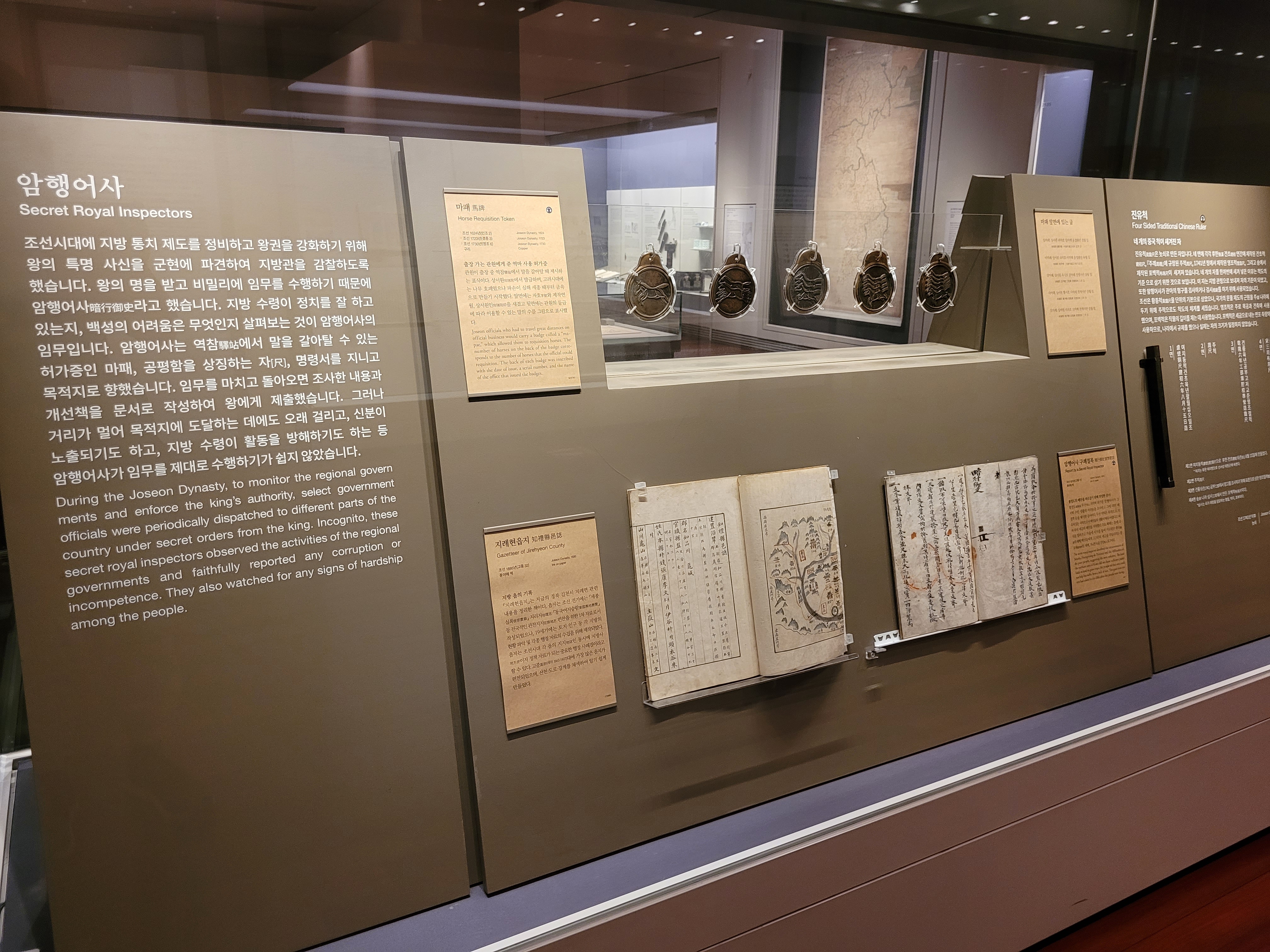
For me, already having a basic background in the history here, there were actually two areas that stood out more to me than the general exhibits – the calligraphy and painting hall and the sculpture and craft section.
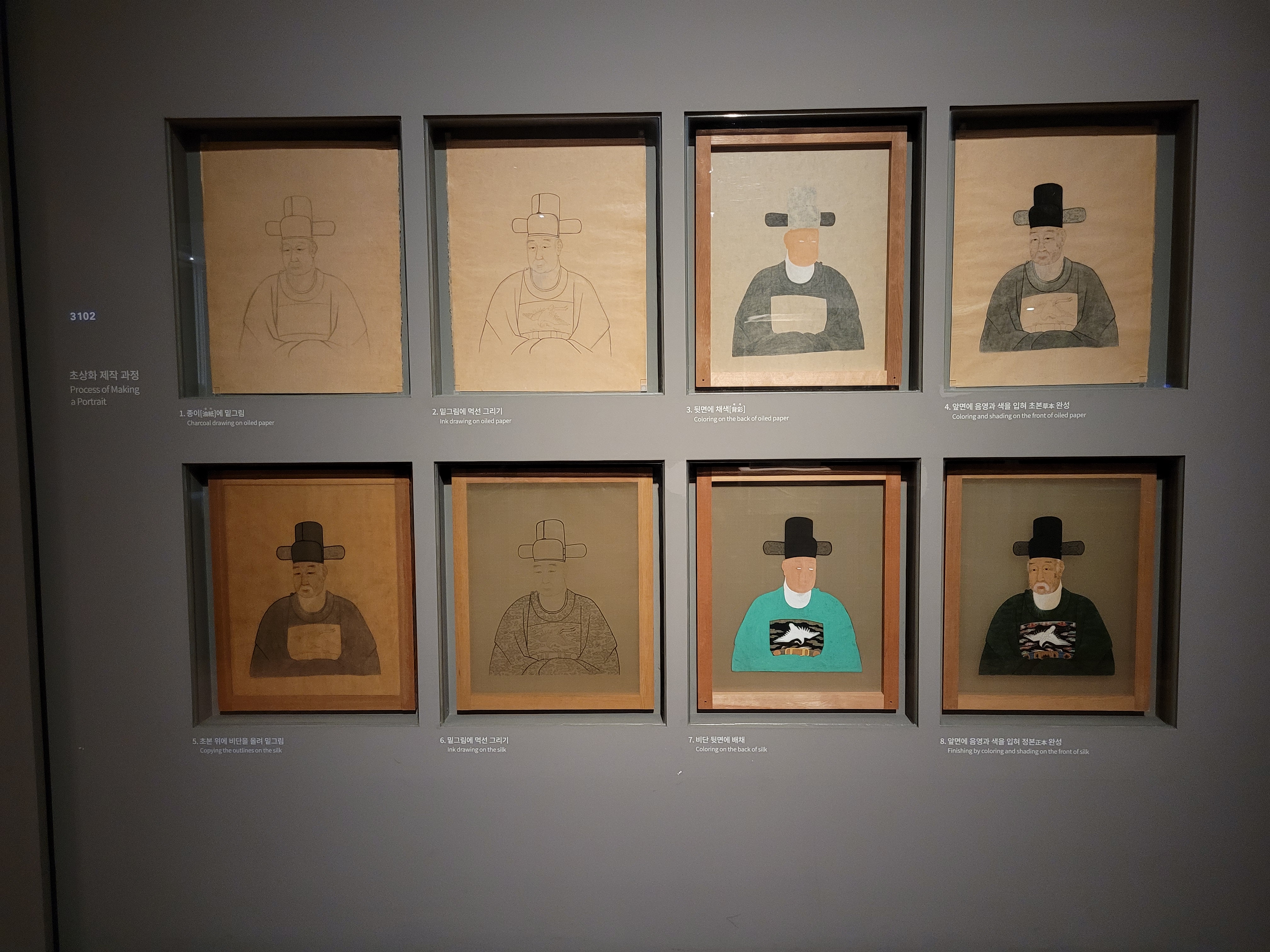
I have had a fondness for Asian-style art for a while now, since discovering Chinese and Japanese silk paintings at the Cleveland Museum of Art in Ohio when traveling through that area a few years ago. I was glad to have the chance to see some Korean examples of this type of work here in the museum. Additionally, there was an exhibit showing the different stages of creating royal portraits which was rather enlightening as to the multiple stages on the front and back of the work as it is completed.
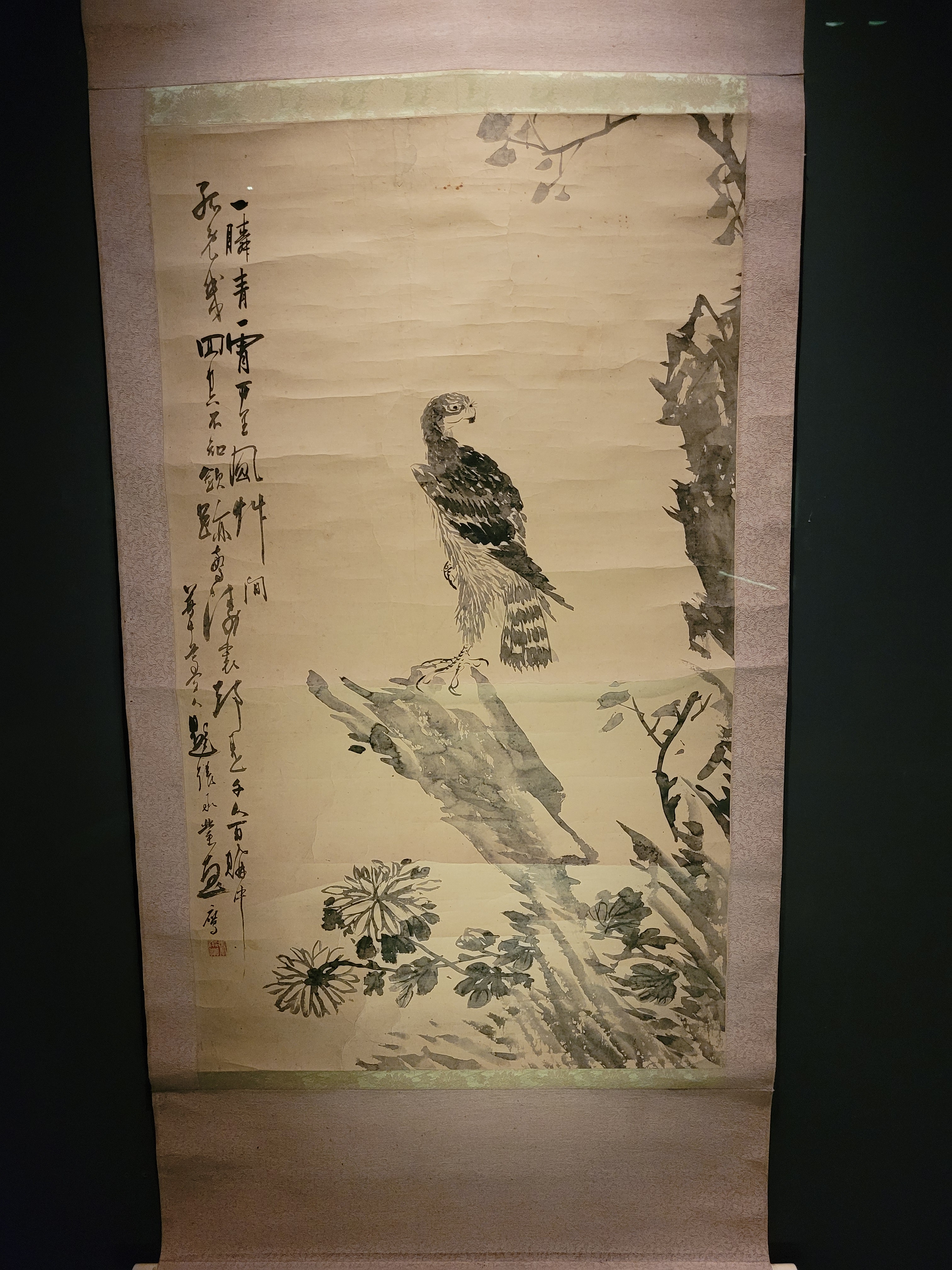
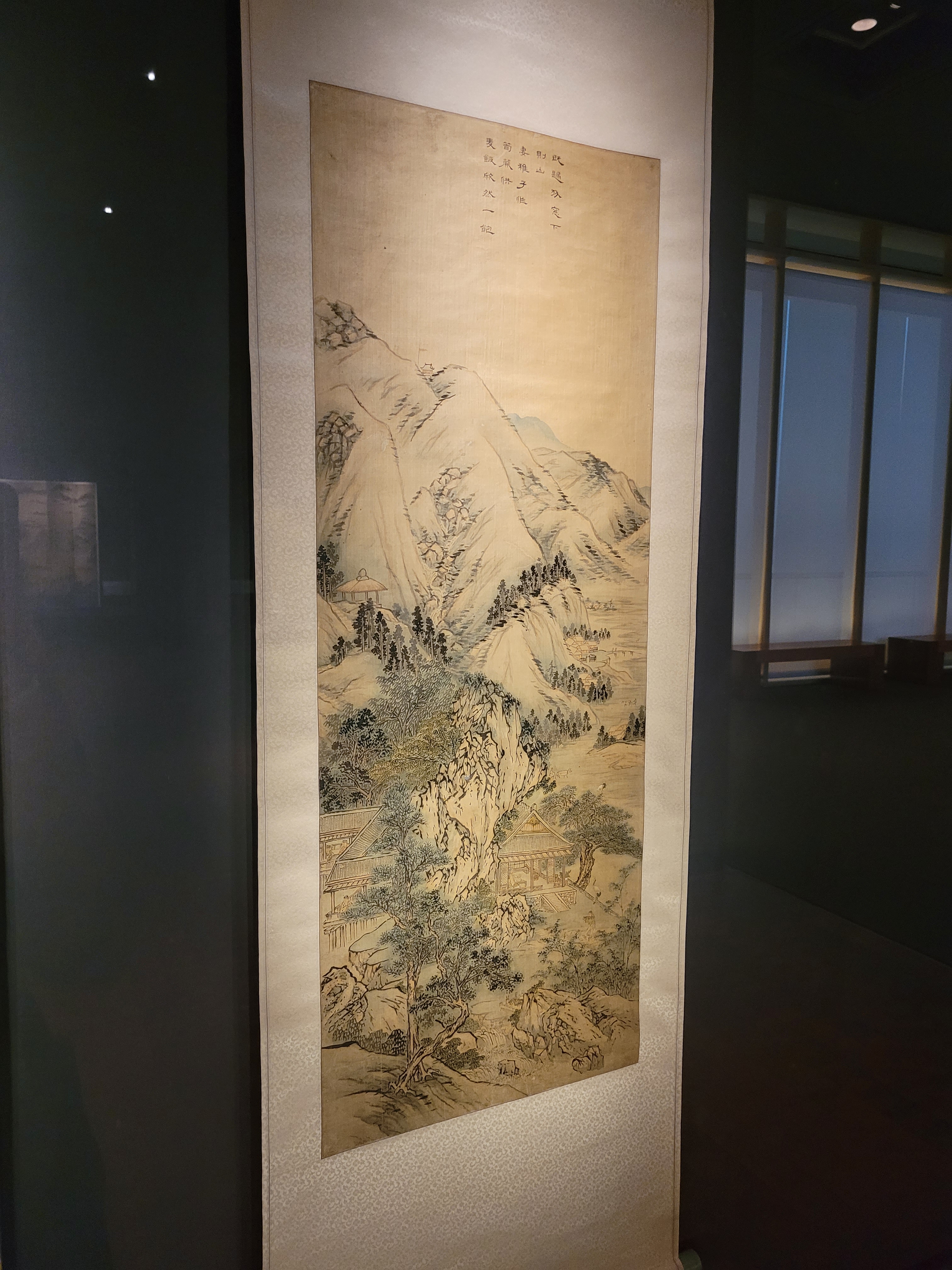
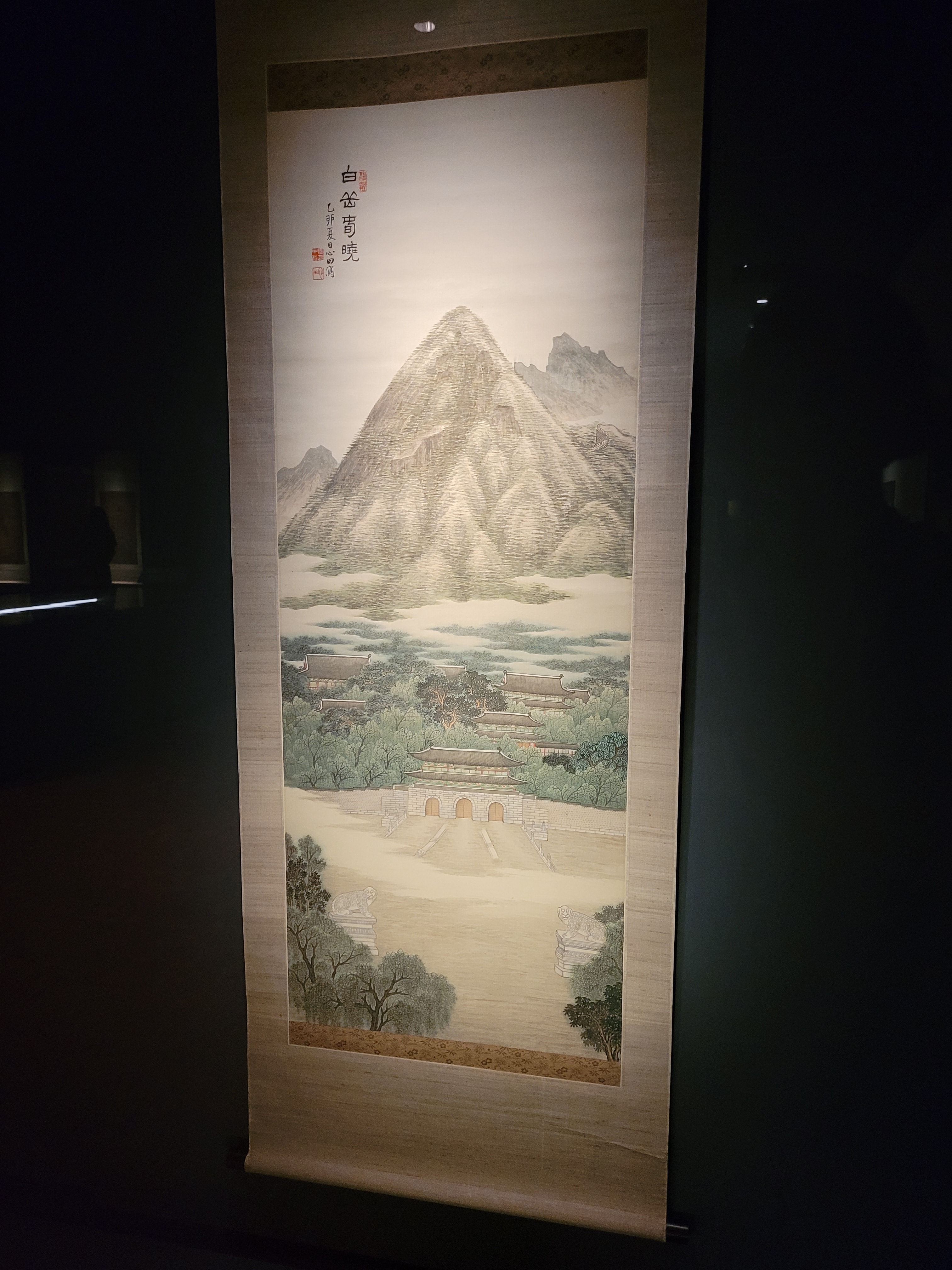
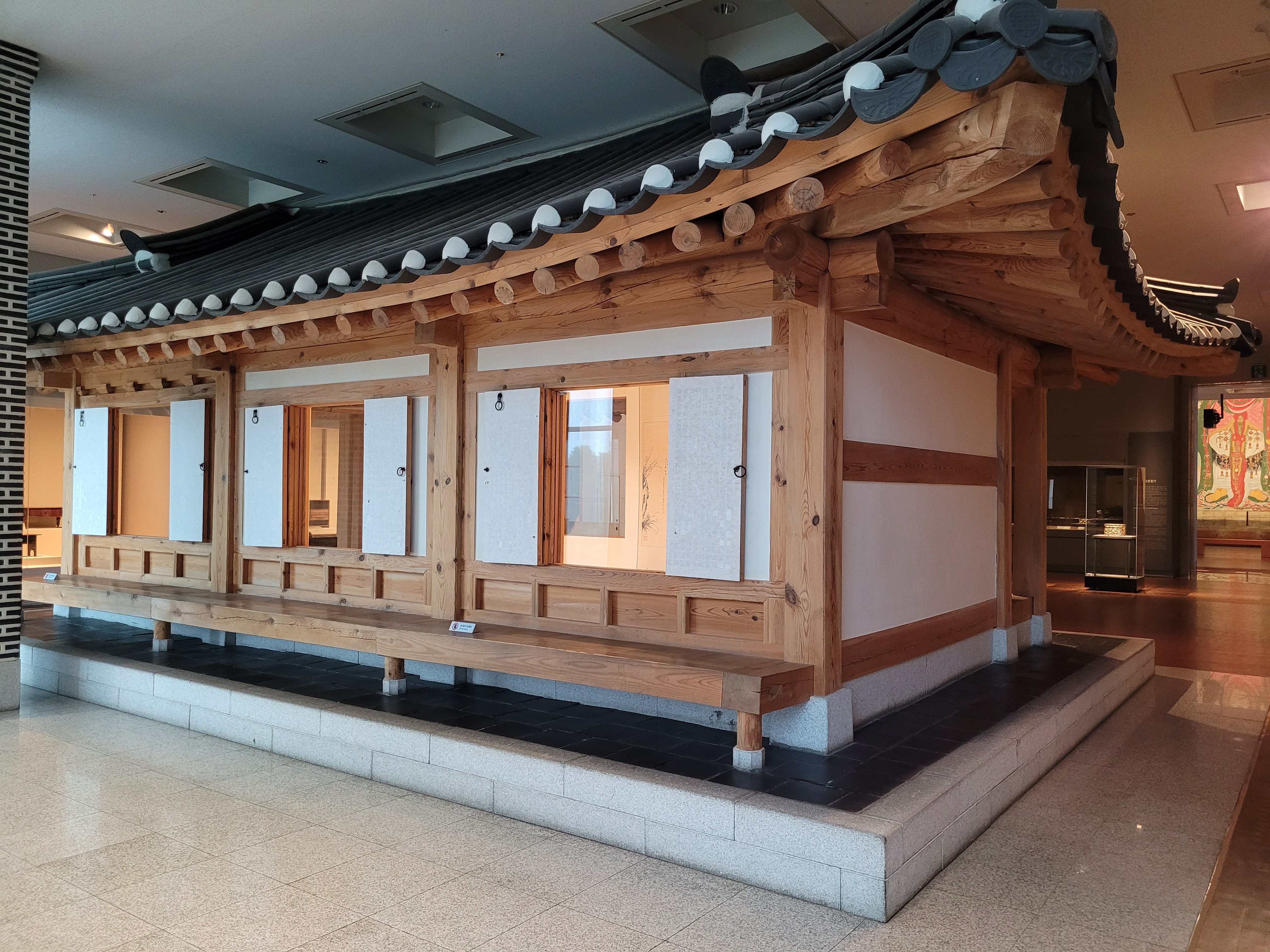
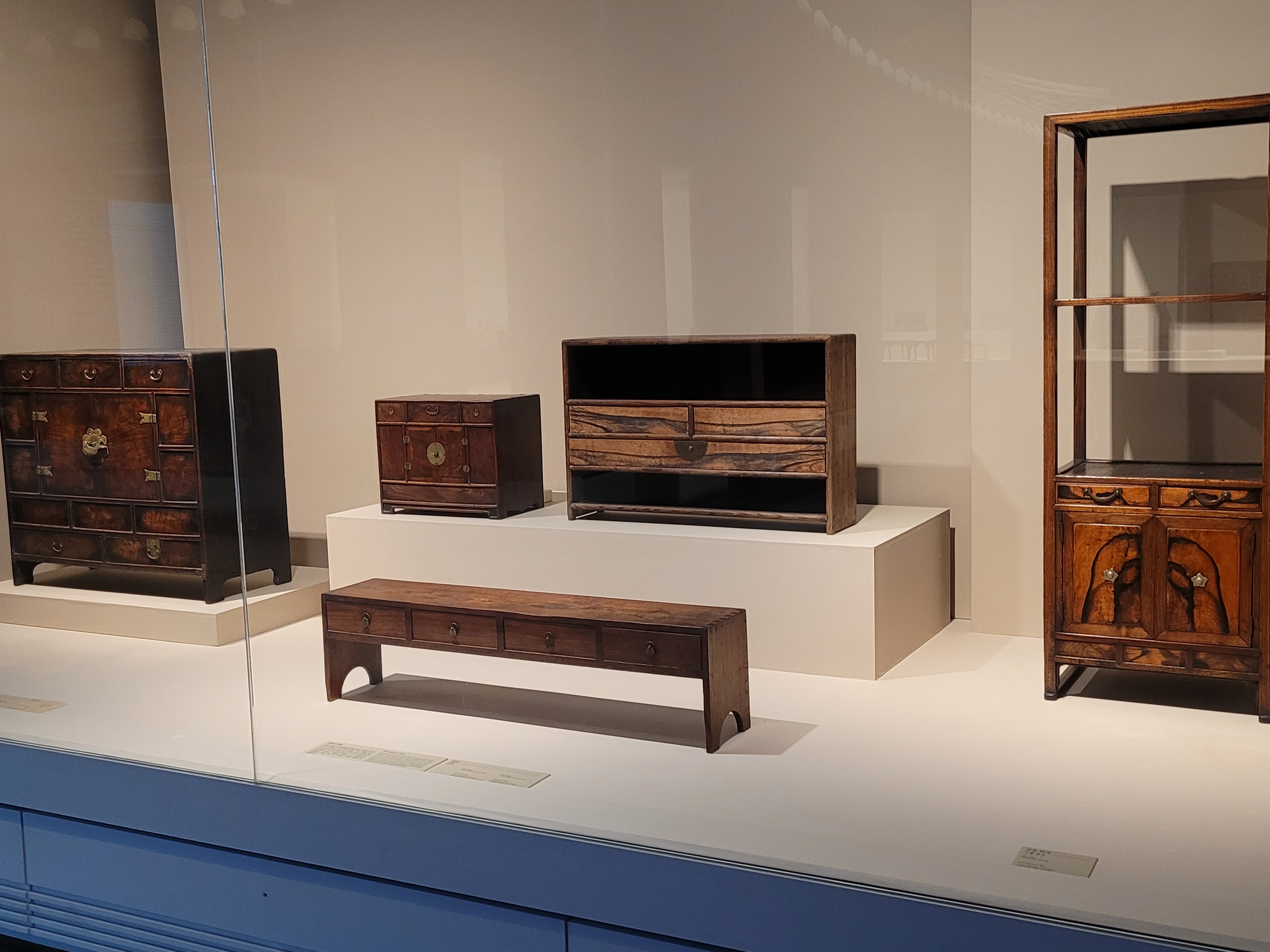
The crafts on display included the traditional furniture that would be found inside a hanok, with a small scale house build inside the museum. I like the solidness and smoothness of the wood furniture and enjoyed learning about the differences between furniture found in male and female rooms as well as the uses for each piece.

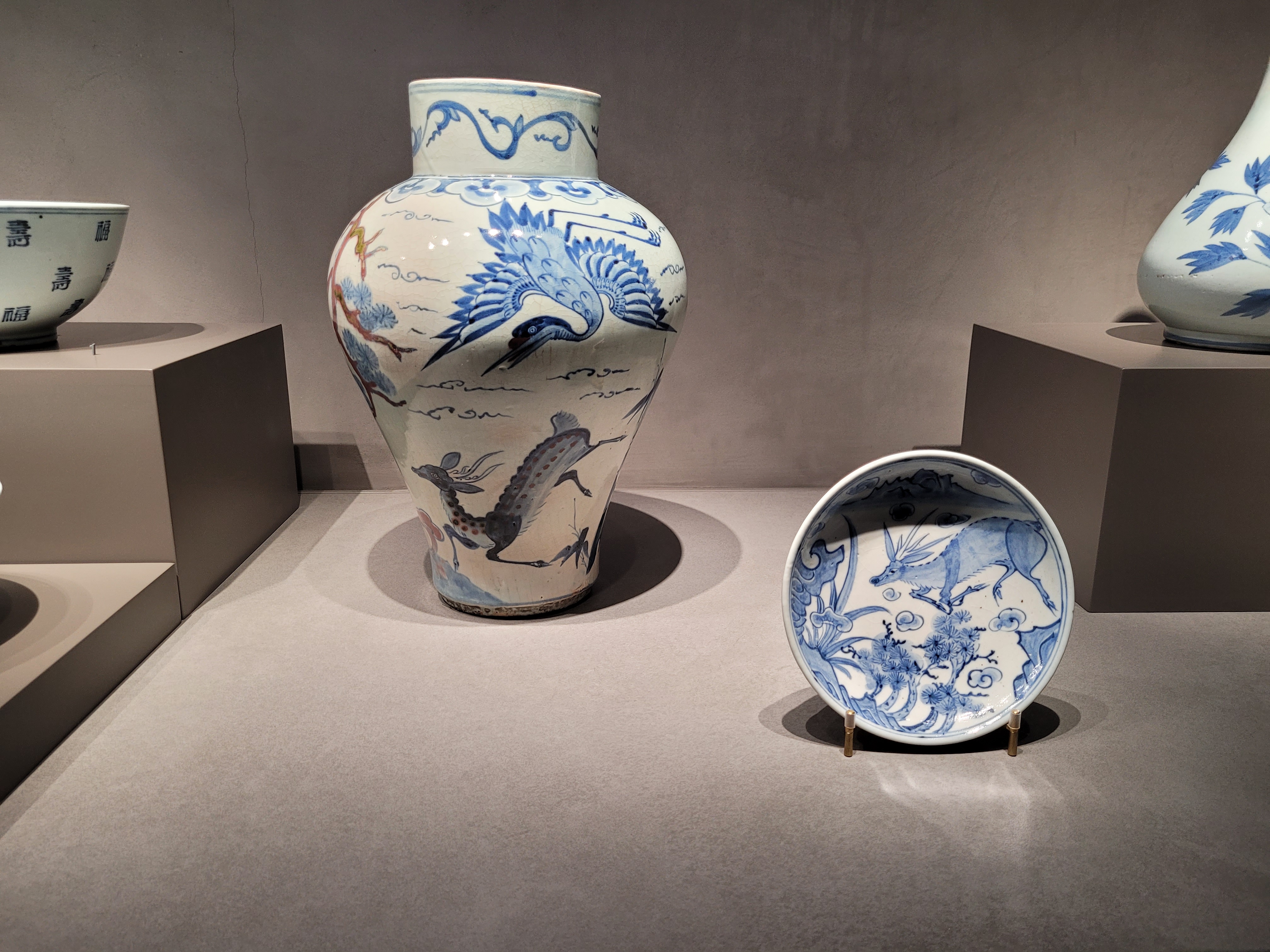
I was also particularly interested in the white porcelain pottery collection here as I had previously seen this discussed in a drama (Mr Sunshine, in case anyone would like to watch it – fantastic, one of my top 10, bring a boat load of tissues though). In the drama mention is made that this pottery was very highly prized and expensive to purchase. The museum has a video playing explaining these pieces were particularly valued during the Joseon era as their design was seen to embody the ideals of the literati of the time; simplicity, restraint, order, and modesty; and therefore were the chosen vessels of the royal court.
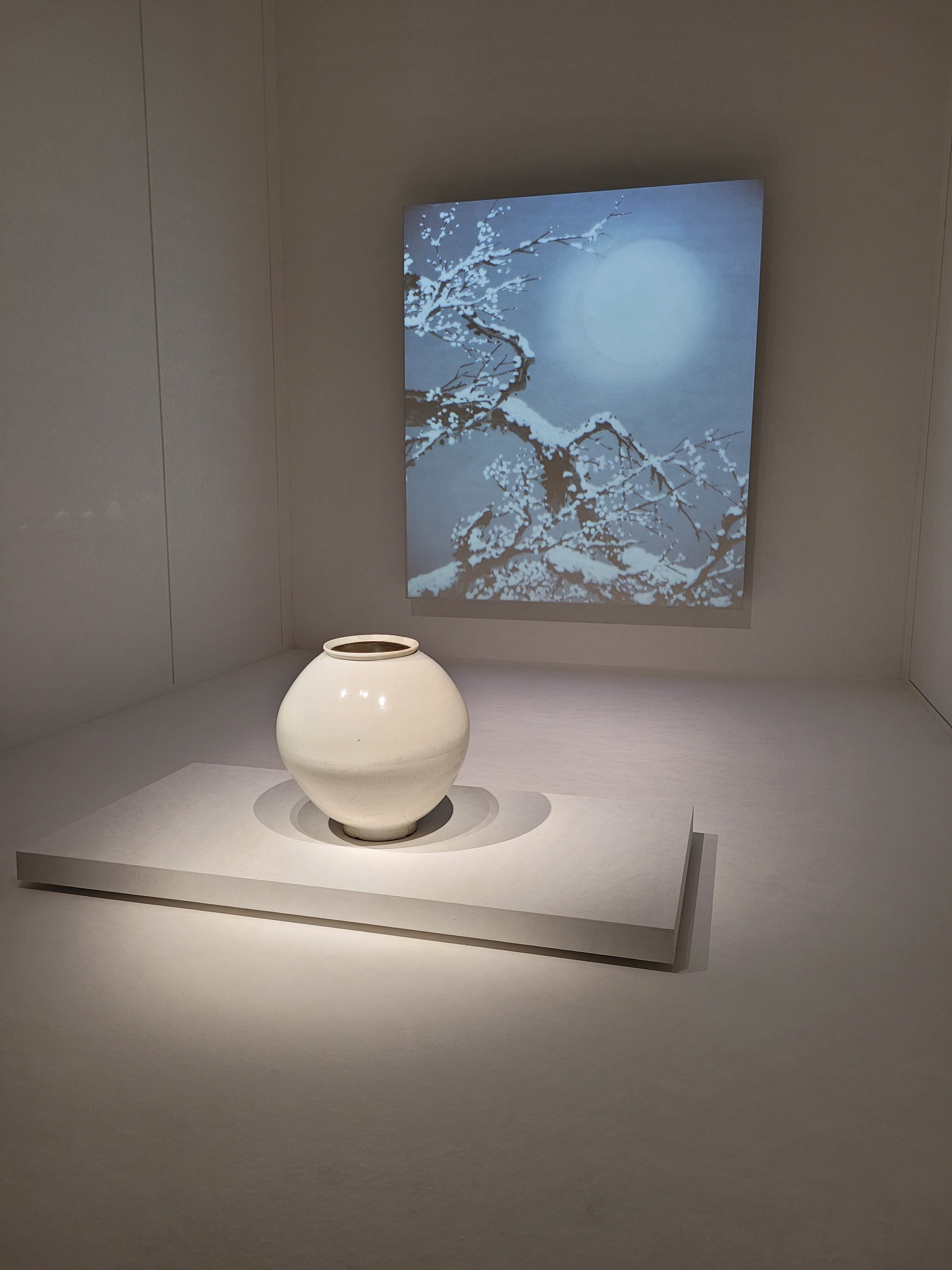
However, white porcelain was extremely difficult to produce due to the purity of the materials required and the temperatures at which they need to be fired, and so the sites where these were produced often had to be moved due to the depletion of firewood in the local areas. Over time the adding of blue cobalt to the porcelain became popular, however, for a piece to be specifically considered a ‘moon jar’ it must have the large bulbous shape and remain completely undecorated.
Happy to have learned more about aspects of the history and culture of country I am currently residing in, it is time to start thinking about my afternoon activities.
I am a little time limited today because I actually have arranged to meet up this evening with a young British lady called Evie, a teacher currently working here in Seoul through the EPIK program – hiring native speaking English teachers to teach in public schools for a year. I have bribed her to come and talk to me in exchange for a meal and a bag of McCoys crisps from home (not kidding about this at all).
We’ve agreed to meet for BBQ (massively excited for this!) in Sindorim, which means I need to hightail it back to my accommodation to change (still super hot and sweaty here) and catch the subway. However, when I check the map I realise I am not too far from the Hannam-dong area of Seoul which I would like to walk through just to be nosey (it is one of the areas where super rich people live).
I think I can squeeze it all in and therefore make a plan to walk over to Itaewon and through to Hannam. I like walking around Seoul. I know I could easily catch the subway and hop from place to place, but I do just like being outside and seeing ‘normal’ things. I see people out and about, going to and from work, hanging about together, doing activities with their children. I look at the different shops as I pass by and am still amazed by the huge number and variety of small local-owned shops – a cavern-like hardware store, fruit and vegetable market, flower shop, trophy-making store, someone sewing badges and logos, a shop filled wall to wall with blankets and duvets, a gold and jewellery store. A random and endless collection.
When I reach Itaewon, I am unimpressed. I know that this area is very popular with foreign residents, I think it is pretty near the US military base, and indeed this is the first time since coming to Korea that I have seen more than a handful of foreign people in one place (I can count on one hand the number of non-Korean people I see in a day usually). The main street upon which I find myself is also the first time I have seen litter and graffiti in Seoul. I see numerous pubs and clubs and notice the majority of signs on buildings are either in English or at least have both Hanguel and English together on them. But my overall impression of the area is just…a bit dirty and not a place I want to spend any time really. Nothing here appeals to me and so I quickly detour through the streets and make my way to Hannam.
I know I’ve reached Hannam when I casually see this sitting on a slightly dodgy-looking backstreet without a care.
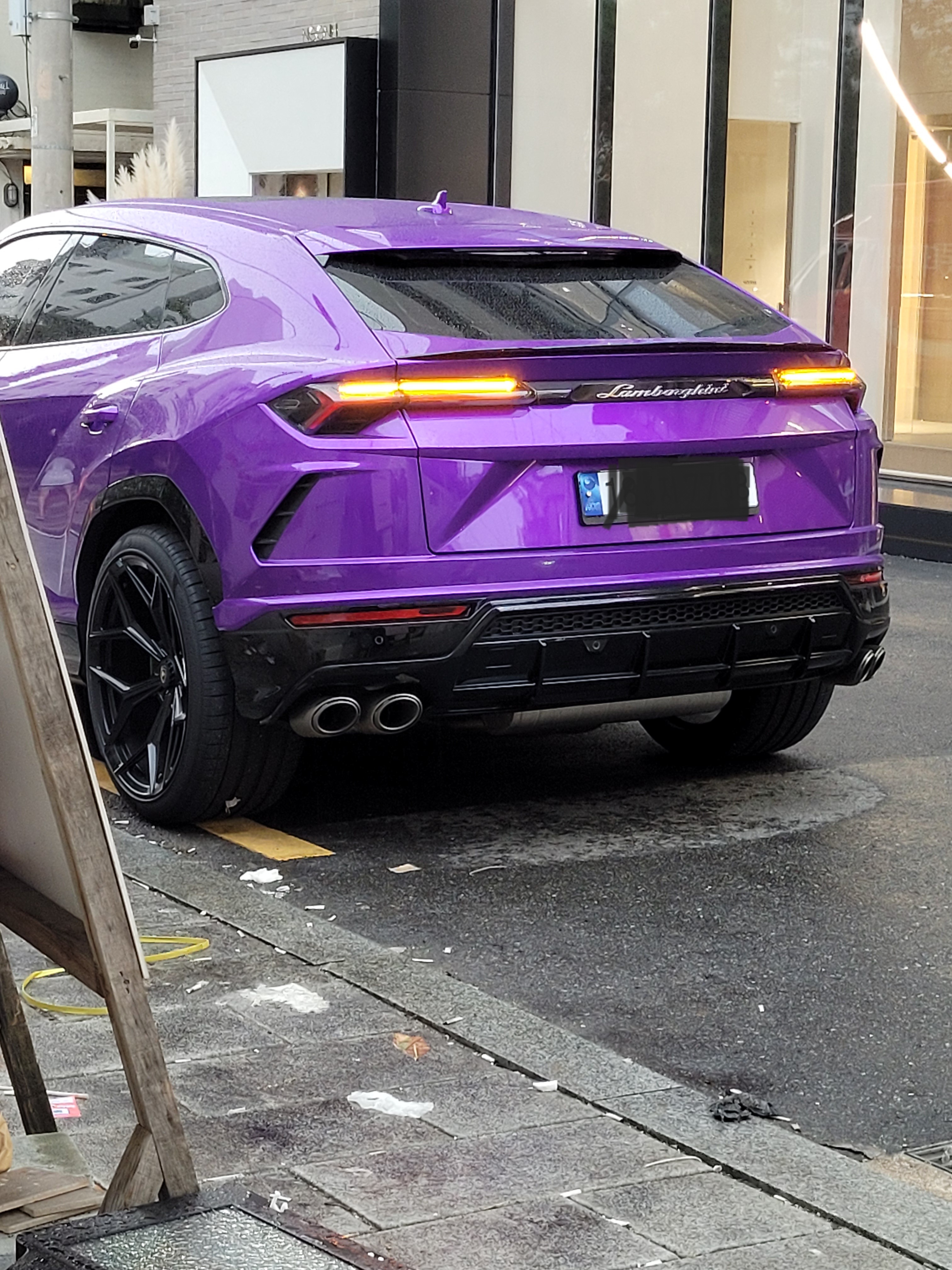
Yup. Lamborghini. And apparently (so I’ve been told recently by someone in the car industry here) that a purple exterior with bright green interior is the style to have. Each to their own, I suppose.
I walk around the area, and take a look at Nine One Hannam and Hannam The Hill, both are apartment complexes for the rich and famous.
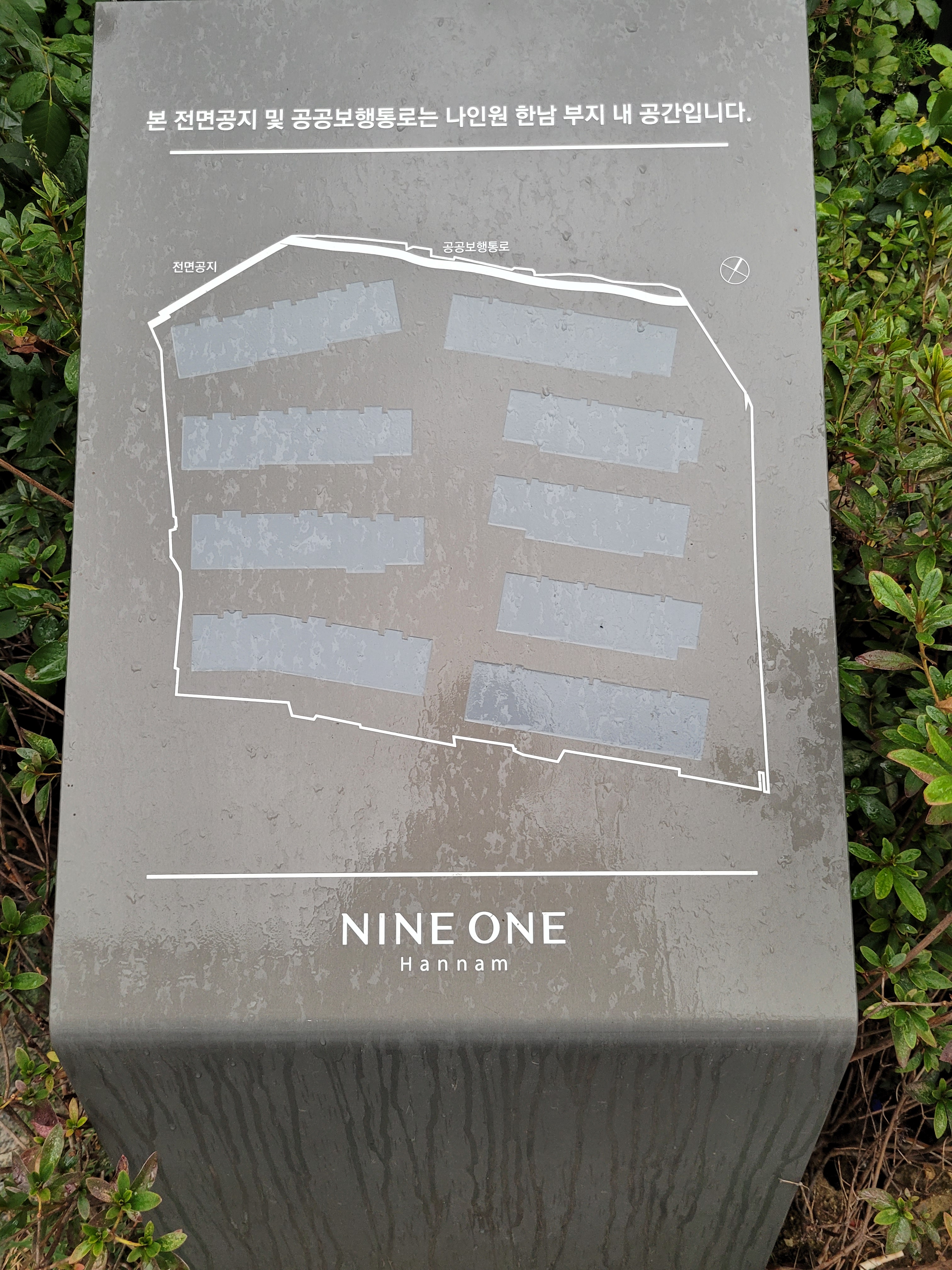
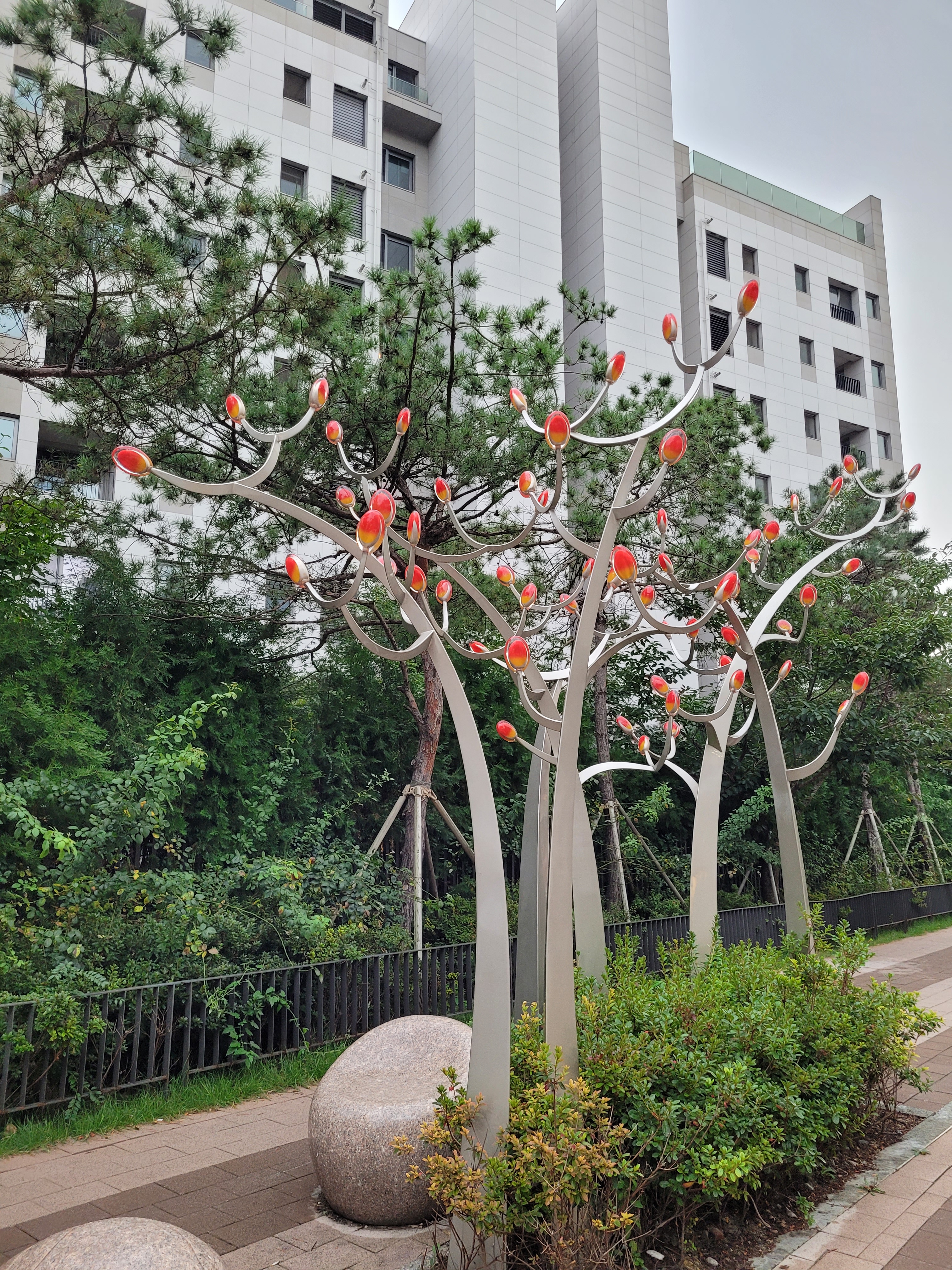
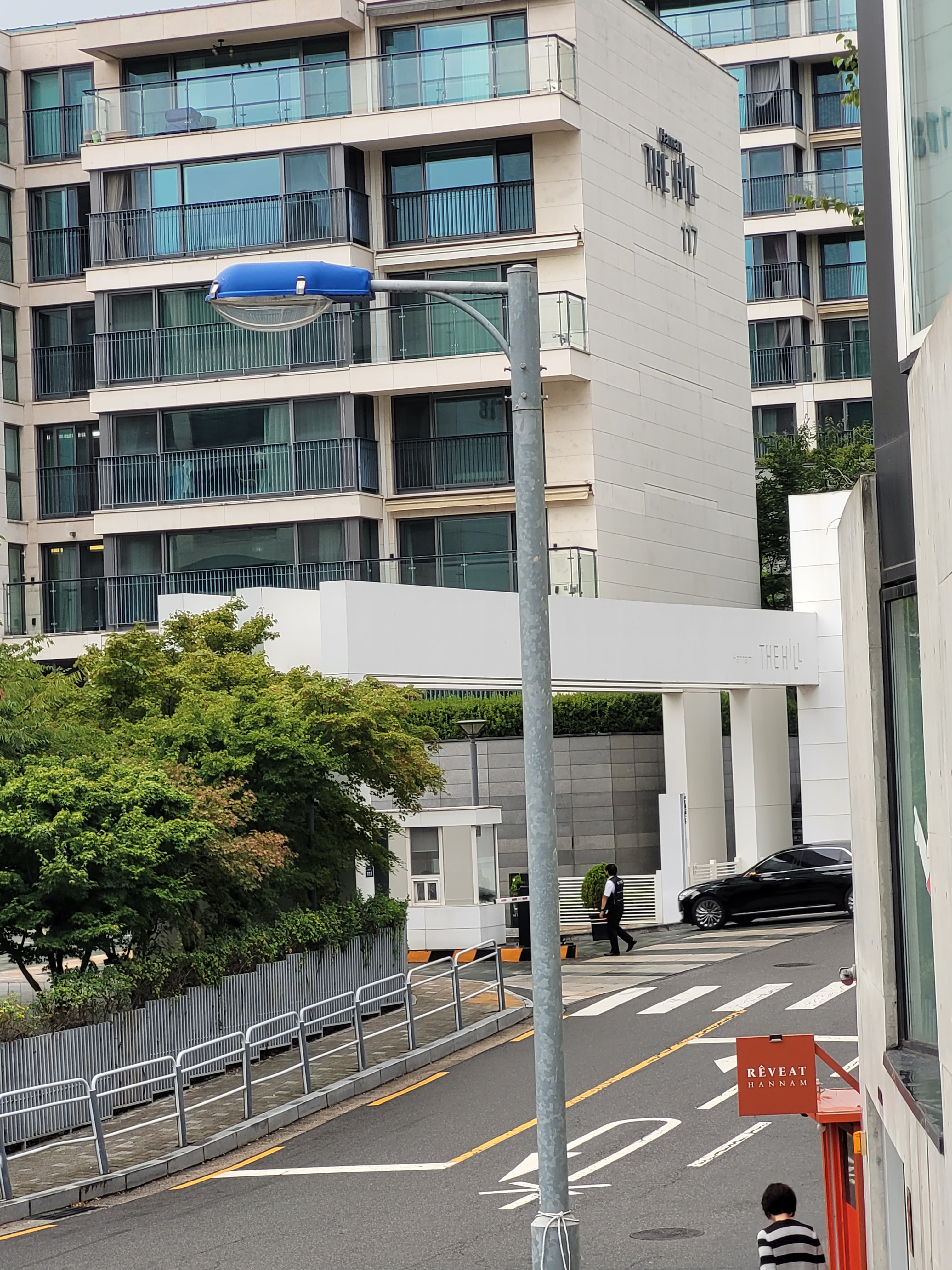
Well, they look OK. The have guards on all the gates and I’m sure the apartments are the height of luxury but…and this is just my opinion of course…if I was super freaking rich and famous I wouldn’t want to live in an apartment in the middle of the city, even one as interesting as Seoul. I’d be out their buying a nice big plot of land in the countryside, mountains as my backdrop, building myself a nice hanok with a courtyard and garden, and then just using the fastest mode of transportation to get me back to the city when I’m needed for work (I’d be a millionaire, I’m sure this would be more than possible).
Maybe I’d be a useless Korean millionaire. We will never know.
Right, let’s talk BBQ.
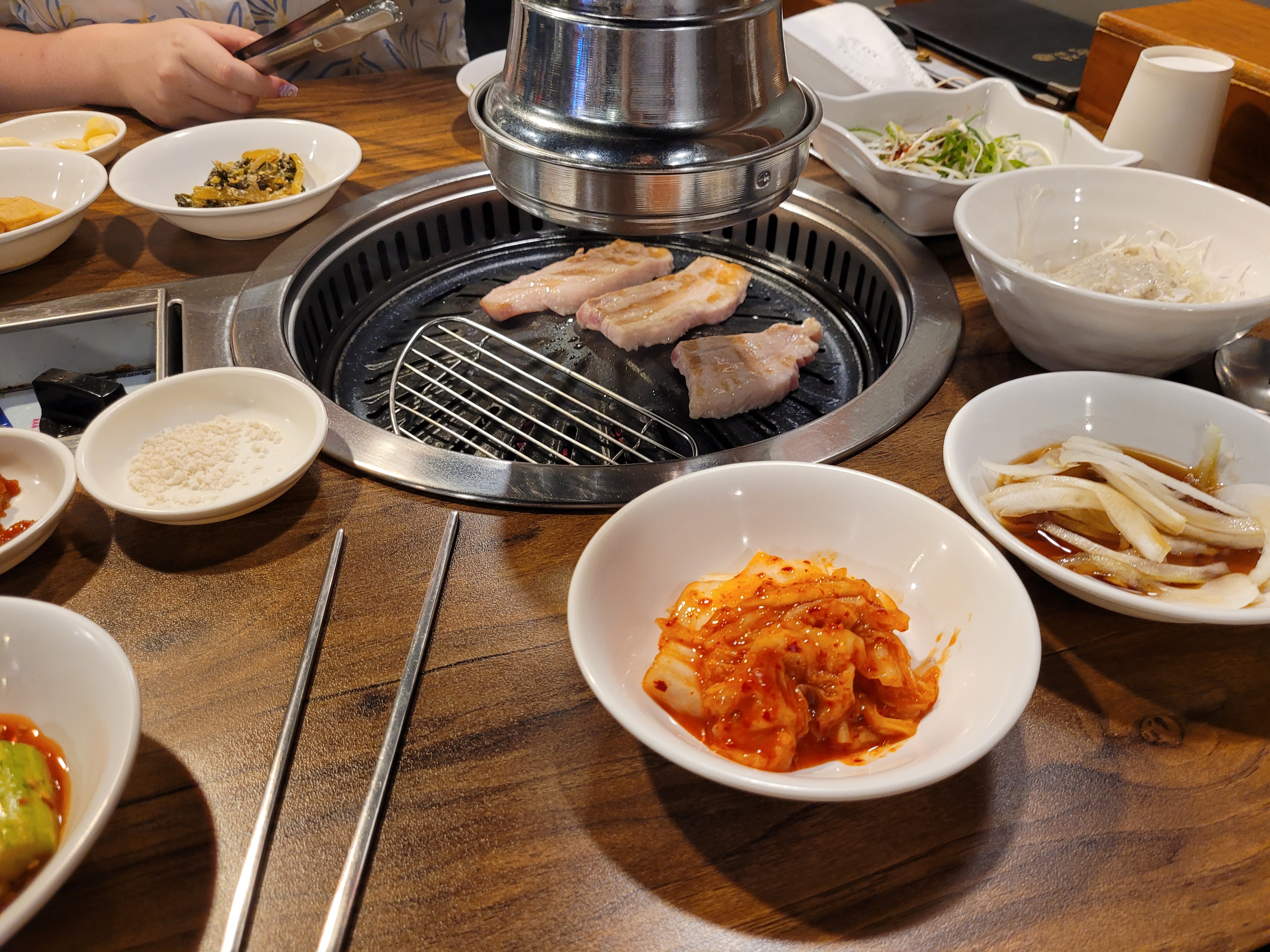
Yes, this is my one shoddy picture of my first BBQ experience here in Korea. I still find it really embarrassing to take photos when I’m about to eat. I know I can’t hide the fact I’m a total tourist, but still, I try to reign it in.
Evie is absolutely lovely. Really easy and nice to talk to. And even better, she’s enjoying her experience here in Korea (believe me, I’ve read some total horror stories from teachers here in the country). She explains the restaurant she has brought me to is, in her words, ‘not judgey about your BBQ skills’ and so we can feel a little at ease if we get things wrong. Because there is a technique to eating BBQ.
Just for clarification, when we are talking about BBQ please banish any thoughts you have of what that word conjures up in your culture. BBQ in Korea is big. It is social. It takes place in restaurants with a gas grilling pit in the centre of your table, a nice extraction tube overhead, and usually one person in charge of the cooking (Evie in this case).
You order the type and amount of meat you want and the banchan (side dishes, remember?) are just naturally brought along with it. You can of course order other dishes if you want more than just meat. For this evening, Evie orders us samgyeopsal and chadolbaegi (that would be pork belly and thin beef brisket strips). We also get a bowl of doenjang-jjigae (soybean paste stew) at my request because I have yet to try it and really want to.
The meat arrives and Evie does a good job managing the cooking which isn’t easy because you cook the strips whole to start with and then kind of at some magic moment you cut them into smaller pieces with scissors for them to finish off cooking. Pieces of meat are plucked from the grill individually using your chopsticks and then you can either dip in a sauce and just eat like that; or you wrap them up in a lettuce leaf with other ingredients to make a ssam (simply a wrap).
No two ways about it, the BBQ is amazing. Every single item on the table is delicious. The meat is full of flavour and not over or undercooked, the chilli dipping sauce is of a good strength and adds to the meat, I never thought I’d eat a whole clove of garlic in one go but when it’s been grilled and wrapped with meat, sauce and lettuce, why the heck not? There is cabbage kimchi, cucumber kimchi, onions in soy sauce, a kind of the equivalent of coleslaw (could eat a whole bowl of this by itself), radish, and some type of mixed greens as the banchan.
The doenjang-jjigae I would say is an acquired taste maybe for some people. To me it has a strong, almost earthy taste to it (not unpleasant), which is obviously the fermented soybean paste. It is something I would enjoy having as a side dish, as it is tonight, but think it might be a little overwhelming as a full dish until I had gotten used to eating it a few times.
Final things to note about the restaurant experience – chopsticks and spoons were kept in a little box on the table, a box of tissues is on the table for use (instead of paper towels or linen napkins), a bottle of water is provided with cups (other drinks can be ordered as needed) and there is a little button attached to the side of the table to call the attention of the server.
Overall, it was an excellent first-time BBQ experience, a really nice night out in general, and I hope to find more people to bribe along my journey to come and eat out with me…because at some point I want to try my hand at doing the cooking. 🙂
Happy Monday everyone!
 Kerry's Korean Quest
And now I know there are Lambo SUVs. Purple and green, who knew?
Mad respect to King Sejong! So cool that he wanted his people literate. I was impressed by this right away and not surprised when you stated that others tried to suppress it.
P.S. Walter loved the robot.
LikeLiked by 1 person
I was also unaware of SUV lambos. We are now both educated.
Ps. Glad he did. Freaky little robot…
LikeLiked by 1 person
It’s nice you met someone to enjoy the Barbecue experience with you. 😊
LikeLiked by 1 person
I hope to meet a couple more people along the way 😊
LikeLike
Hi Kerry,
Love your blog!
Are you aware of this exhibish currently on in London?https://www.vam.ac.uk/articles/hallyu-the-korean-wave-about-the-exhibition
LikeLiked by 1 person
Ahh, you must miss me so much popping into the basement 🙂 Tell everyone I said hi 👋. And yes, I did see that and have a couple kdrama friends going. I think you should pop along too…
LikeLike